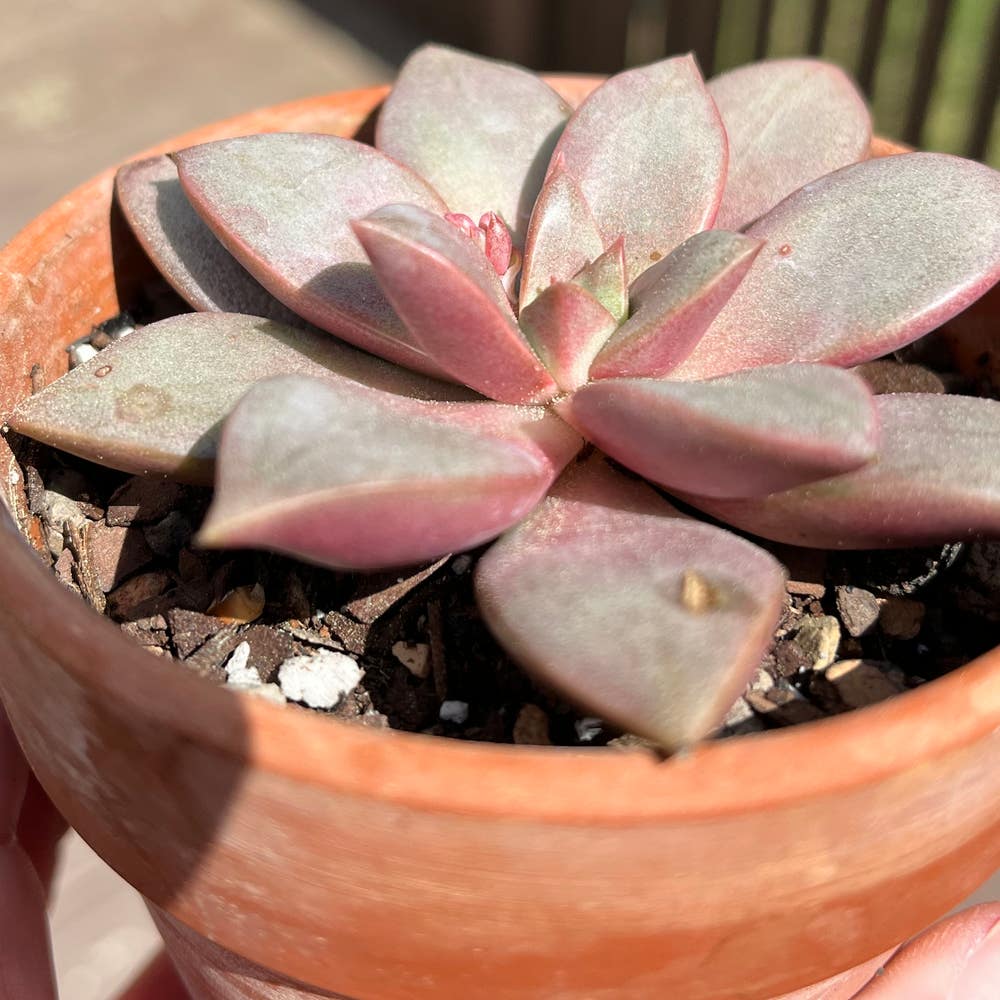
Crested Cubic Frost Echeveria Root Rot Solutions
Echeveria f. cristata 'Cubic Frost'
By the Greg Editorial Team
Jun 16, 2024•3 min read
This article was created with the help of AI so we can cover more plants for you. May contain errors. See one? Report it here.
Rescue your echeveria 🌵 from root rot's clutches with life-saving tips and tricks!
- Yellow leaves and brown spots may signal root rot.
- Sterilized root pruning can save an infected plant.
- Proper drainage and airflow are key to prevention.
Spotting the Red Flags: Symptoms of Root Rot
🍂 Visual Clues on Leaves and Stems
Yellow leaves might scream "fashion statement" in the human world, but in the plant kingdom, they're a distress flare. Your Crested Cubic Frost Echeveria is telling you something's off. Brown spots on leaves? They're not beauty marks; they're trouble. And if the leaves feel like they've lost their plump, juicy texture, think "dehydration station" for your succulent's roots.
🌱 Below the Surface: Unearthing Root Health
To get to the root of the problem—literally—gently unearth your plant. Healthy roots should look like they're ready for a workout, firm and white. If they're giving off a mushy vibe or look like they've been soaking in a tea bath, it's an all-hands-on-deck situation. And that smell? If your soil's aroma is more "forgotten gym locker" than "fresh earth," you've got a classic case of root rot. Don't ignore it; your plant's life depends on your next moves.
First Response: Immediate Actions to Combat Root Rot
🌱 The Delicate Art of Root Pruning
Root rot doesn't play fair, so neither should you. Grab those sterilized shears and get ready for some tough love. Snip off the soft, brown roots that reek of decay. It's a balancing act—remove the infected without compromising the plant's future.
💧 Soil SOS: Drying and Replacing
Overwatered soil is a death sentence for roots. Let's dry out the scene. If the soil feels like a wet sponge, it's time for a complete overhaul. Replace the soggy mess with a well-draining mix, and consider it a fresh start for your Crested Cubic Frost Echeveria. Transition to the new soil with care, ensuring the healthy roots have room to breathe and recover.
Repotting: A Fresh Start for Your Echeveria
🌱 Choosing the Right Pot
When it's time to upgrade your Crested Cubic Frost Echeveria's living quarters, size and drainage take center stage. Select a pot that's 1-2 inches larger in diameter than the old one—big enough for growth but not so vast that moisture lingers. Ensure it has drainage holes; standing water is a succulent's worst nightmare.
🌿 The Perfect Soil Mix
Crafting the ideal soil mix is like mixing a cocktail—it needs the right balance. Start with a base of quality potting soil. Add coarse sand and perlite into the mix for that airy texture that lets roots breathe. This trio is the holy grail for preventing water from overstaying its welcome. Avoid soils with added fertilizers; your Echeveria isn't looking for a nutrient-packed buffet.
Keeping Root Rot at Bay: Prevention Tactics
💧 Watering Wisdom: Finding the Balance
Watering your Crested Cubic Frost Echeveria is less about sticking to a strict schedule and more about tuning into its needs. Check the soil before you water; if the top inch feels like a dry desert, it's time to quench your plant's thirst. If it's damp, hold off—your succulent isn't pining for a pool party.
🚰 Drainage and Airflow: Your Soil's Best Friends
Proper drainage is the unsung hero in the epic battle against root rot. Ensure your pot has drainage holes; they're like lifelines for excess water. Mix in perlite or coarse sand to keep the soil from suffocating your plant's roots. Remember, airflow is key, so don't cram your plants together like sardines. Give them some breathing room.
⚠️ Safety First
This content is for general information and may contain errors, omissions, or outdated details. It is not medical, veterinary advice, or an endorsement of therapeutic claims.
Always consult a qualified healthcare professional before using any plant as food, medicine, or supplement.
Never eat any plant (or feed one to pets) without confirming its identity with at least two trusted sources.
If you suspect poisoning, call Poison Control (800) 222-1222, the Pet Poison Helpline (800) 213-6680, or your local emergency service immediately.
Spotted an error? Please report it here.
Combat echeveria root rot 🛡 with Greg's help in crafting the ideal watering schedule and soil moisture checks for a healthy comeback!