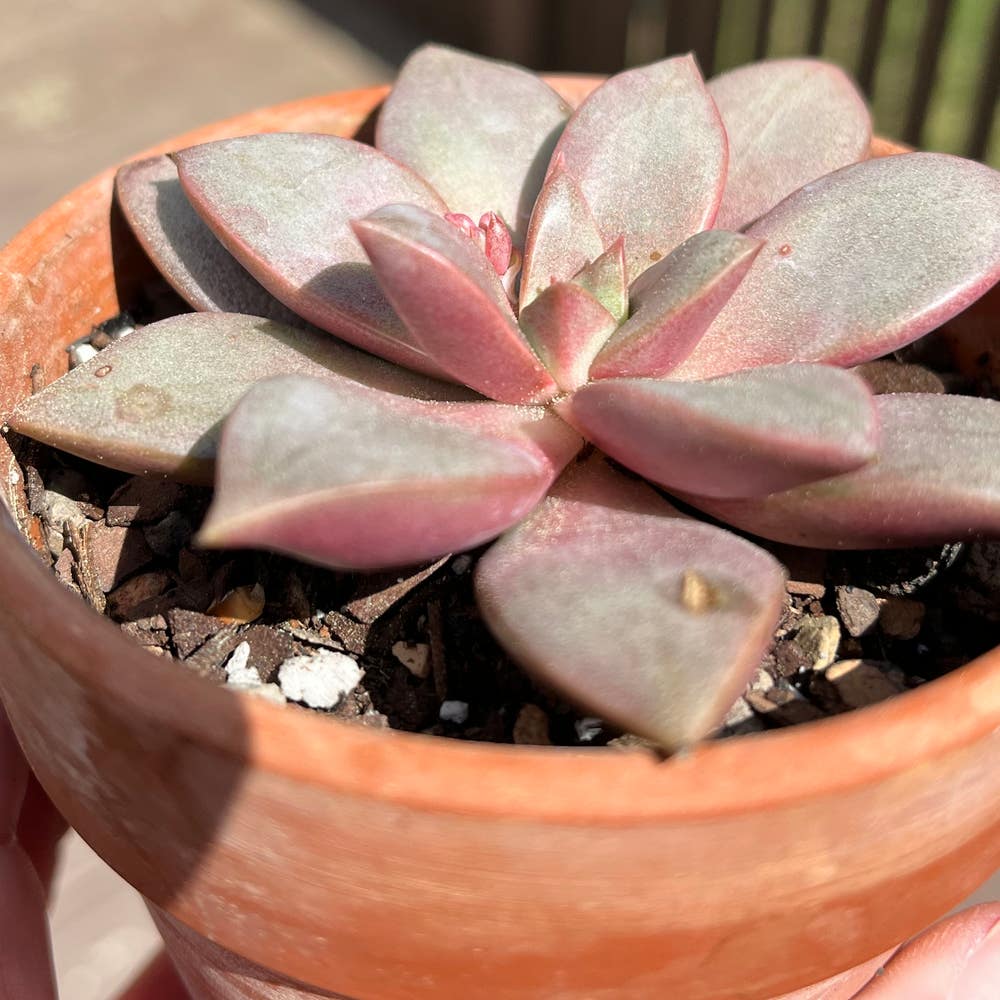
🌞 Does My Crested Cubic Frost Echeveria Need Direct Sunlight?
Echeveria f. cristata 'Cubic Frost'
By the Greg Editorial Team
Jun 16, 2024•3 min read
This article was created with the help of AI so we can cover more plants for you. May contain errors. See one? Report it here.
Nurture your Echeveria to perfection by mastering its precise sun needs. 🌵☀️
- ☀️ 4-6 hours of morning direct sunlight needed for Crested Cubic Frost Echeveria.
- 🌱 Signs of too much sun: bleached spots, curled leaves.
- 📏 Adjust position and protection based on season and hemisphere.
Sunlight and Crested Cubic Frost Echeveria: A Love Story?
🌞 What Does Direct Sunlight Mean for Your Echeveria?
Direct sunlight is like the plant's espresso shot—unfiltered and potent, casting distinct shadows. Indirect sunlight is its decaf counterpart, softer and diffused, as if playing hide-and-seek through curtains or off walls.
🌞 The Sun Worshipper's Dilemma: How Much Sun is Too Much?
Crested Cubic Frost Echeveria loves basking in the sun, but moderation is key. Aim for 4-6 hours of direct sunlight, preferably during the less intense morning hours. Signs of overexposure include bleached spots, curled leaves, or a general appearance of being sun-fried. These are your succulent's way of crying out for a sunscreen equivalent—shade.
Positioning Your Plant for Success
🌞 Window Wisdom: Where to Place Your Echeveria
Window direction is crucial for managing your Crested Cubic Frost Echeveria's sun intake. South-facing windows are the solar sweet spot in the Northern Hemisphere, while in the Southern Hemisphere, you'll want to aim for north-facing light. But don't get too cozy; a few feet back from the glass is the plant's happy place. Too close, and you're practically baking your botanical buddy.
🌍 Hemisphere Hints: Adjusting for Your Location
Your hemisphere isn't just a detail on a map; it's a pivotal factor in your Echeveria's sunbathing routine. Sunlight intensity can make or break your plant's vibe. It's not about getting a tan; it's about getting the right amount of sun-kissed love. As the Earth tilts with the seasons, keep an eye out and shuffle your succulent to avoid a crispy fate.
Seasonal Sunlight Strategies
🌞 Summer vs. Winter: Adapting to the Seasons
In summer, Crested Cubic Frost Echeveria basks in the sun's glory, but too much can lead to a sunburnt succulent. Rotate your plant to ensure even exposure and consider a sheer curtain to diffuse intense rays. As winter whispers its arrival, coax your plant closer to the light. The sun's softer caress during these months is often welcomed by your frosty friend.
🩹 Sunburn and Succulents: Preventing Damage
Sunburn isn't just a human woe; succulents feel the sting too. Spot signs early—discoloration and dry, crispy leaves. Prevention is straightforward: during peak summer heat, pull back from the window or use a protective screen. Remember, once the damage is done, the only remedy is trimming away the afflicted areas. Keep a vigilant eye to maintain your Echeveria's lush, vibrant appearance year-round.
Expert Tips for Balancing Sunlight and Shade
🌞 Creating the Ideal Environment
Bright, indirect light is the goldilocks zone for your Crested Cubic Frost Echeveria. To achieve this, place your plant near a north-facing window or behind sheer curtains. Rotate your plant regularly to ensure even light exposure, preventing favoritism in its growth.
🕶 Monitoring and Adjusting Sunlight Exposure
Light meters are like personal trainers for your plant, ensuring it gets just the right amount of light. If the sunlight is too intense, use shades or sheer curtains as a plant sunscreen. Remember, the sun's angle changes with the seasons, so be ready to tweak your setup. Keep an eye on your plant's response and adjust accordingly—no sunburns allowed on your watch.
⚠️ Safety First
This content is for general information and may contain errors, omissions, or outdated details. It is not medical, veterinary advice, or an endorsement of therapeutic claims.
Always consult a qualified healthcare professional before using any plant as food, medicine, or supplement.
Never eat any plant (or feed one to pets) without confirming its identity with at least two trusted sources.
If you suspect poisoning, call Poison Control (800) 222-1222, the Pet Poison Helpline (800) 213-6680, or your local emergency service immediately.
Spotted an error? Please report it here.
Ensure your Crested Cubic Frost Echeveria gets its ideal sun-kissed glow 🌞 without the risk of sunburn by using Greg's reminders to adjust its exposure to the changing sun.