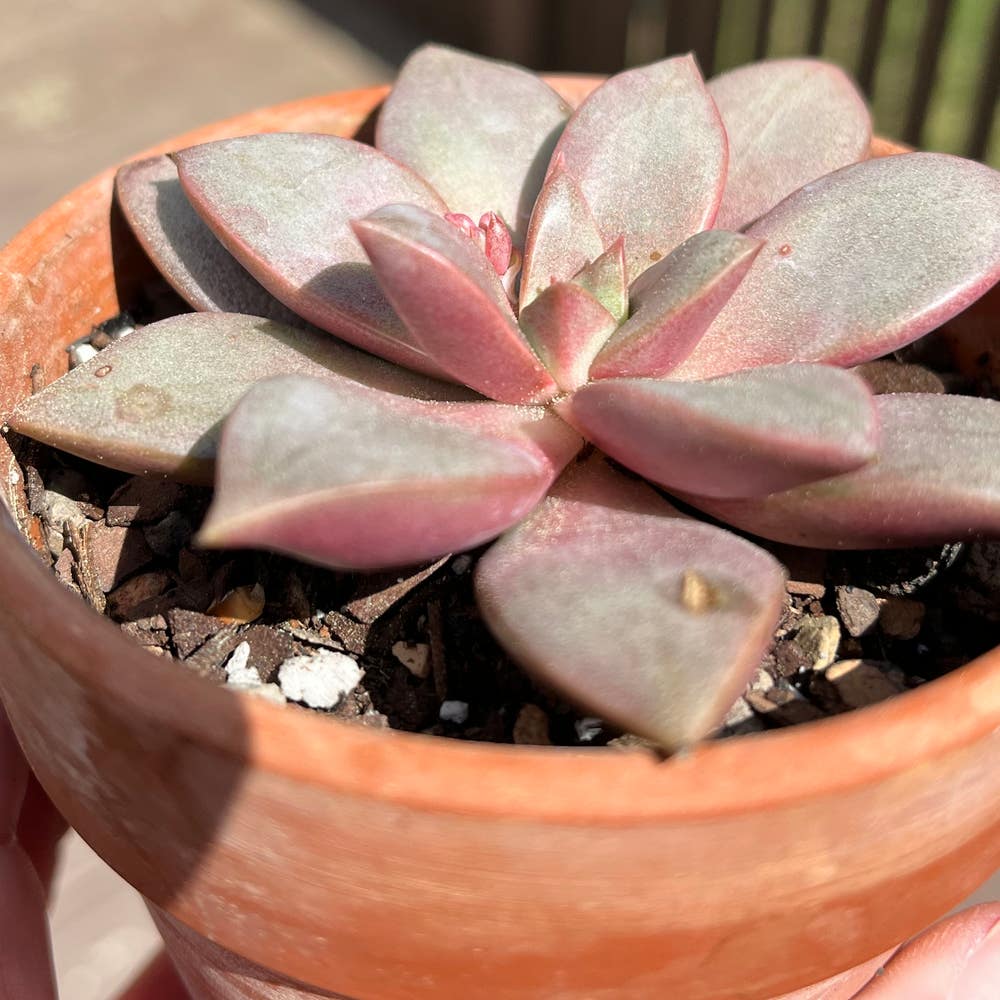
💧 Why Are My Crested Cubic Frost Echeveria Leaves Mushy?
Echeveria f. cristata 'Cubic Frost'
By the Greg Editorial Team
Jun 16, 2024•3 min read
This article was created with the help of AI so we can cover more plants for you. May contain errors. See one? Report it here.
Revive your Echeveria from mushy despair 🍂 and shield it from future woes with these pivotal care strategies.
- 🚱 Overwatering? Yellow, translucent leaves signal too much water.
- 🌱 Improve drainage with perlite/sand and check for brown, mushy roots.
- ✂️ Prune infected areas and sterilize tools to combat foul odor and black spots.
Spotting Trouble: Signs Your Echeveria's Leaves Are Too Mushy
⚠️ Overwatering Red Flags
Yellowing leaves are the first distress flares your Echeveria might send up. If they're going limp or feel like a squished peach, it's a clear sign you've been overzealous with the watering can. Translucent leaves? That's your plant's version of waving a white flag.
🚨 Drainage SOS
When the soil in your Echeveria's pot feels more like a swamp than a desert, you've got a drainage emergency. A pot without proper drainage is like a bathtub with no drain—water has nowhere to go, and your plant's roots are throwing up SOS signals. Roots that are brown and mushy instead of white and firm are crying out for an intervention.
☣️ Infection Invasion
A foul odor emanating from the soil is a telltale sign of infection. If you spot black spots on mushy stems, it's like finding a 'Beware of Dog' sign on your fence—it's a warning that something more sinister, like root rot, is lurking. Don't wait for an engraved invitation; these symptoms mean it's time to act fast.
First Aid for Mushy Leaves
💦 Emergency Watering Interventions
Cut back on watering immediately. Your Crested Cubic Frost Echeveria's survival hinges on this. Water only when the top inch of soil is bone-dry. Use a moisture meter if you must; it's the no-nonsense tool for the job. Remember, overwatering is the helicopter parent of plant care—well-meaning but potentially smothering.
🚰 Drainage and Soil Resuscitation
Perlite or sand are your go-to amendments for improving drainage. Mix them into the soil like you're a barista crafting the perfect blend. Ensure the pot has drainage holes; they're as crucial as an emergency exit. If the soil clings to your fingers, it's a red flag—your plant's roots are gasping for air.
🩺 Infection Eradication Tactics
If you spot signs of infection, it's time for some plant surgery. Sterilize your tools and prune the affected areas with the precision of a brain surgeon. Apply a fungicide or bactericide, depending on the adversary. It's like choosing the right antibiotic—don't guess, know your enemy. Post-op, monitor your plant like it's on life support, because in a way, it is.
Revamping Your Care Routine
💧 Watering Wisdom
Crafting the perfect watering schedule for your Echeveria is less about marking dates on a calendar and more about observing the plant's needs. The top inch of soil should be your guide; if it's dry, it's time to water. Seasonal changes demand adjustments to your routine, with less frequent watering in the cooler months. Use room-temperature water to avoid shocking the plant's roots.
🌱 Soil and Pot Mastery
Choosing the right soil mix is critical for Echeveria health. A well-draining mix prevents root rot and mimics the plant's natural arid environment. When selecting a pot, ensure it has drainage holes and is just the right size for the plant's root ball. A pot too large will retain excess water, while one too small may cramp the roots and stunt growth.
Keeping Mushiness at Bay
🦅 Proactive Plant Parenting
Regular check-ups are non-negotiable. Like a hawk, keep an eye on your Echeveria for early signs of distress. Adjust your care routine with the precision of a fine-tuned instrument—less water in winter, more in summer.
🧼 The Clean Scene
Hygiene is your Echeveria's knight in shining armor. Sterilize your tools as if prepping for surgery to prevent the spread of invisible enemies. Keep the leaves dry and the base clear; it's like setting up a no-entry zone for pathogens.
⚠️ Safety First
This content is for general information and may contain errors, omissions, or outdated details. It is not medical, veterinary advice, or an endorsement of therapeutic claims.
Always consult a qualified healthcare professional before using any plant as food, medicine, or supplement.
Never eat any plant (or feed one to pets) without confirming its identity with at least two trusted sources.
If you suspect poisoning, call Poison Control (800) 222-1222, the Pet Poison Helpline (800) 213-6680, or your local emergency service immediately.
Spotted an error? Please report it here.
Ensure your Echeveria thrives and avoids mushy mishaps 🌵 with Greg's custom watering reminders and soil moisture tips tailored to your plant's needs.