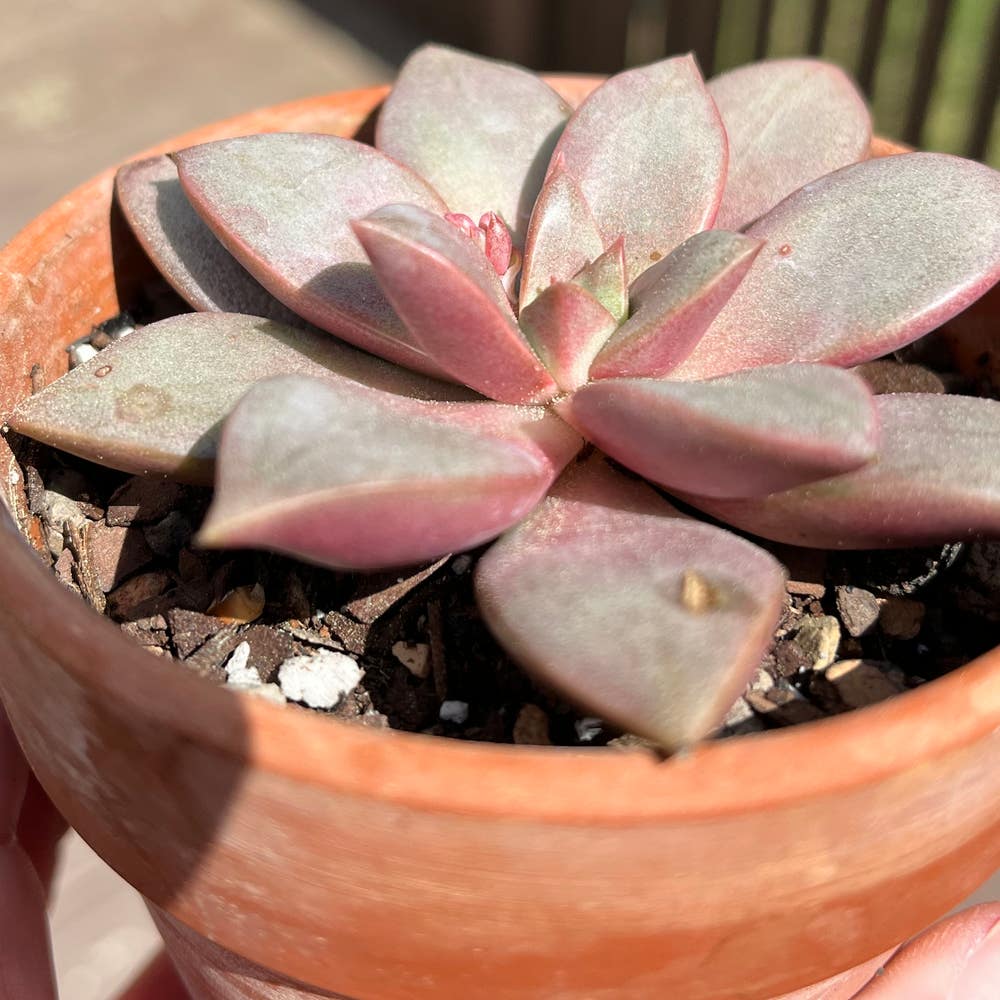
Crested Cubic Frost Echeveria Yellow Leaves
Echeveria f. cristata 'Cubic Frost'
By the Greg Editorial Team
Jun 16, 2024•3 min read
This article was created with the help of AI so we can cover more plants for you. May contain errors. See one? Report it here.
Prevent yellow peril 🌿 in your Echeveria with these expert care tips to keep it vibrantly thriving!
- Quick yellowing or new growth yellowing signals Echeveria distress.
- Balance moisture; avoid over/underwatering for healthy leaves.
- Regular pest checks and treatment keep leaves vibrant.
Spotting the Signs: When Yellow Means Trouble
🚨 Recognizing Natural Aging vs. Warning Signals
In the life cycle of Crested Cubic Frost Echeveria, yellowing leaves can be as benign as natural aging. When only the lower leaves are turning yellow at a slow pace, they're simply taking their final bow. However, when yellowing strikes quickly or targets new growth, it's a clear distress signal.
👀 Visual Clues of Overwatering and Underwatering
Overwatering often leaves its mark with yellow leaves that feel mushy to the touch—think overripe avocado. On the flip side, underwatering will have your Echeveria's leaves looking wrinkled, akin to laundry forgotten in the dryer. Soil texture is a telltale sign here; if it's soggy, you've overdone it, but if it's bone dry, it's time to hydrate.
Root of the Problem: Uncovering Causes of Yellow Leaves
💧 Water Woes: Balancing Moisture Levels
Yellow leaves on your Crested Cubic Frost Echeveria can be a moisture mishap. Overwatering is like giving your plant a swimming lesson when it just needs a sip, leading to root rot. On the flip side, underwatering turns your succulent into a parched desert nomad. The goal is to mimic a wrung-out sponge; moist but not soggy, allowing the soil to dry slightly between waterings.
☀️ Sunlight and Shadows: Finding the Sweet Spot
Sunlight is a game of Goldilocks for your Echeveria. Too much, and you'll have a sunburnt succulent with yellowed leaves. Too little, and it's like living in a cave—leaves turn yellow from light deprivation. Aim for a spot with bright, indirect light where your plant can bask without baking.
🐛 Tiny Troublemakers: Dealing with Pests
Pests are the party crashers nobody invited. They suck the life out of your Echeveria, leaving behind yellow leaves as evidence. Aphids, mealybugs, and spider mites are the usual suspects. Catch them early by inspecting under leaves and at joints, and show them the door with insecticidal soap or neem oil. Remember, prevention is key—keep your plant strong and it'll be less of a bug magnet.
Turning Over a New Leaf: Solutions and Prevention
💧 Fine-Tuning Your Watering Technique
Check the soil before you water—dry two inches down means go time for hydration. Morning watering is prime time, letting leaves dry out and avoiding fungal raves. If you're heavy-handed, let the soil dry out before the next watering spree. For the underwaterers, increase frequency, but don't turn your plant's home into a swamp. A consistent routine is like a good habit; it pays off.
🌞 Creating the Ideal Sunlight Setup
Rotate your plant regularly to avoid leaf favoritism and ensure even light distribution. Adapt to seasonal changes; less sun in winter, more in summer. The right amount of light is crucial—think bright but not blinding. Too much light and you're in sunburn territory, too little and you're not giving your plant the energy it craves.
🐜 Winning the Pest Battle
Pests are party crashers. Spot them? Show them the exit with insecticidal soap or a dab of rubbing alcohol. Keep an eye out for early signs of infestation and act swiftly. Regular monitoring is like a neighborhood watch for your plant's health. Remember, prevention is better than cure, so stay vigilant and your plant will thank you.
⚠️ Safety First
This content is for general information and may contain errors, omissions, or outdated details. It is not medical, veterinary advice, or an endorsement of therapeutic claims.
Always consult a qualified healthcare professional before using any plant as food, medicine, or supplement.
Never eat any plant (or feed one to pets) without confirming its identity with at least two trusted sources.
If you suspect poisoning, call Poison Control (800) 222-1222, the Pet Poison Helpline (800) 213-6680, or your local emergency service immediately.
Spotted an error? Please report it here.
Keep your Crested Cubic Frost Echeveria's leaves from turning yellow by using Greg's custom reminders 🌞 for the perfect balance of water and sunlight, ensuring your succulent stays in tip-top shape.