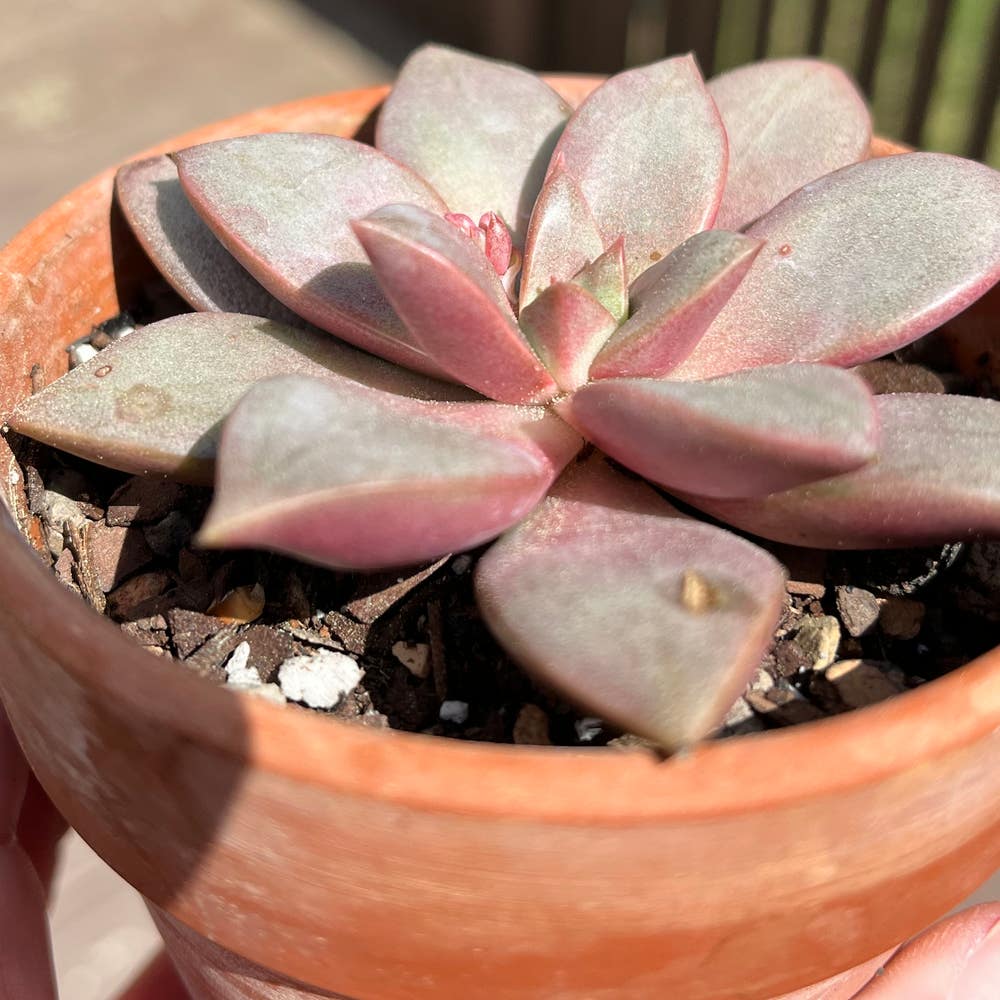
Why Is My Crested Cubic Frost Echeveria Not Doing Well?
Echeveria f. cristata 'Cubic Frost'
By the Greg Editorial Team
Jun 16, 2024•4 min read
This article was created with the help of AI so we can cover more plants for you. May contain errors. See one? Report it here.
Revive your wilting Echeveria 🌵 with these essential care tweaks for a flourishing plant!
- 🚫 Over-watering? Soggy leaves and soil. Under-watering? Shriveled leaves.
- ☀️🌡️ Bright, indirect light and 65-80°F for happy Echeveria.
- 🐛 Watch for pests and root rot; treat promptly with natural or chemical methods.
Water Woes: Over and Under-Watering
💧 Spotting the Signs
Over-watering your Crested Cubic Frost Echeveria can turn it into a soggy mess. Look for leaves that are too soft or appear bloated. If the soil sticks to your fingers like a needy ex, it's too wet. Under-watering, on the other hand, leaves the plant thirsty. Signs include shriveled leaves and a general droopiness, as if the plant has given up on life.
💦 Soggy Solutions and Dry Spells
🚰 Balancing Your Watering Routine
To avoid waterlogged despair or desert-like droughts, poke the soil. If it clings to your finger, skip the water. If it's dry a couple of inches down, it's time for a drink. Consistency is key; establish a routine that suits your plant's needs, adjusting for temperature and season.
🪣 Tips for Perfect Drainage
Drainage holes are non-negotiable; they're the escape route for excess water. If over-watering is a habit, mix in some perlite or sand to help the soil drain better. Water when the sun's up, allowing any excess moisture to evaporate, and always check the soil's moisture before watering. If you're forgetful, a moisture meter can be your plant's best friend.
Light and Temperature: Finding the Sweet Spot
🌞 Too Much Sun, Not Enough Heat
Leaf scorching is your Crested Cubic Frost Echeveria's way of saying it's had too much sun. Brown, crispy edges on leaves are a dead giveaway. To combat this, aim for bright, indirect light. If your plant's leaves are looking like they've been in a desert, it's time to move them to a less intense spot. A sheer curtain can work wonders to soften harsh rays. Make sure to rotate your plant regularly to promote even growth and prevent it from reaching desperately for the light.
🌡️ Creating Ideal Conditions
When it comes to temperature, think of your Echeveria as a creature of habit. It thrives in a stable environment, preferring temperatures between 65°F and 80°F (18°C to 27°C). Avoid placing your plant in spots where temperature swings are more dramatic than a season finale cliffhanger. Consistency is crucial, so keep your plant away from drafty windows, heaters, or air conditioners that could cause sudden changes. Remember, your plant's comfort zone is a cozy one, where it can bask without shivering or sweating.
Pests and Pathogens: Uninvited Guests
🐜 Common Culprits
Mealybugs, aphids, and spider mites are pest royalty in the world of your Crested Cubic Frost Echeveria. Mealybugs leave cotton-like deposits, while aphids are infamous for their sticky residue. Spider mites are more clandestine, leaving behind fine webbing as evidence of their presence.
🍄 Mold and Fungus Among Us
Fungal infections manifest as fuzzy or powdery spots on your plant. These unwanted guests thrive in damp conditions, so spotting these signs should ring alarm bells.
🛡️ Eradication and Prevention
To evict these freeloaders, start with a natural approach: a blast of water or a dab of alcohol on a cotton swab for mealybugs. For a persistent problem, insecticidal soap or neem oil can be the heavy artillery. Prevent future invasions by ensuring good air circulation and keeping leaves dry, because mold and fungus hate a dry party.
Root Rot: The Silent Killer
🍄 Recognizing Root Rot
Root rot is stealthy, often going unnoticed until it's too late. Look for stunted growth, leaves that resemble overripe fruit in texture, and roots that have turned dark, mushy, and possibly smelly. If your plant's growth hits a standstill or the leaves start to feel like a squishy peach, it's time to suspect root rot.
🔄 Turning the Tide
Rescuing your plant from root rot involves a few critical steps. Unpot the plant carefully and inspect the roots. Healthy roots should be firm and white, while rotten ones will be soft and dark. Prune the affected roots with sterile scissors; think of it as a life-saving operation. Repot the plant in fresh, well-draining soil and ensure the pot has adequate drainage. Adjust your watering habits; overwatering is a common cause of root rot, so let the soil dry out between waterings. Consider using fungicides to tackle any fungal infections. Prevention is crucial; keep a balanced watering schedule and regularly check the roots to keep root rot at bay.
⚠️ Safety First
This content is for general information and may contain errors, omissions, or outdated details. It is not medical, veterinary advice, or an endorsement of therapeutic claims.
Always consult a qualified healthcare professional before using any plant as food, medicine, or supplement.
Never eat any plant (or feed one to pets) without confirming its identity with at least two trusted sources.
If you suspect poisoning, call Poison Control (800) 222-1222, the Pet Poison Helpline (800) 213-6680, or your local emergency service immediately.
Spotted an error? Please report it here.
Ensure your Crested Cubic Frost Echeveria thrives by using Greg to monitor moisture 💧 and get tailored care advice, preventing overwatering and pest woes.