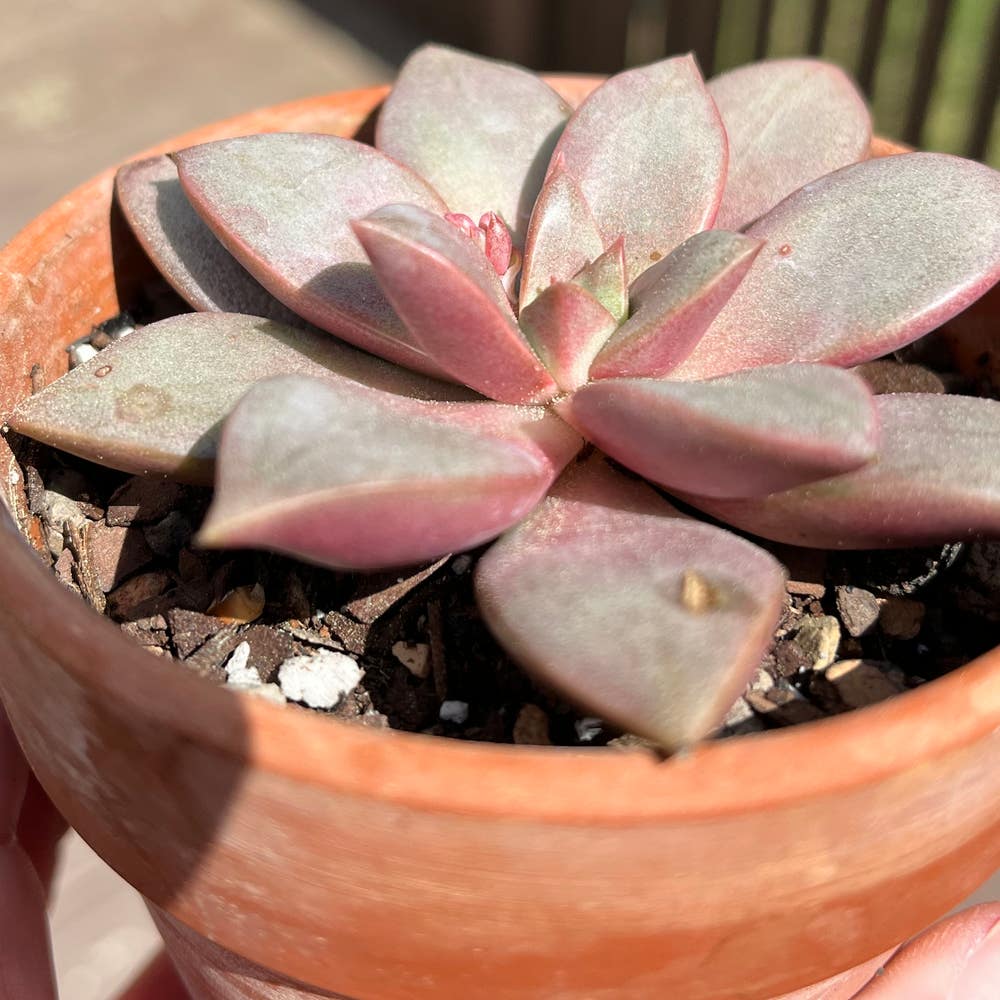
Brown Spots On Crested Cubic Frost Echeveria Leaves
Echeveria f. cristata 'Cubic Frost'
By the Greg Editorial Team
Jun 16, 2024•4 min read
This article was created with the help of AI so we can cover more plants for you. May contain errors. See one? Report it here.
Banish brown spots 🍂 and keep your Echeveria pristine with these proven plant care secrets!
- Overwatering and sunburn are top causes of brown spots; adjust water and light.
- 🐛 Pests and diseases can cause spots; remove pests and improve air flow.
- Prevent future issues with a tailored watering schedule and well-draining soil.
Spotting the Trouble: Identifying Brown Spots
🍂 What Do Brown Spots Look Like?
Brown spots on Crested Cubic Frost Echeveria leaves are visual alarms. They range from tiny specks to large blotches, with edges that might be sharply defined or blurry. The spots' texture varies—crispy spots often indicate dryness, while slimy ones suggest excessive moisture.
🕵️ Common Culprits Behind the Spots
Overwatering is a frequent offender, leading to soggy, brown spots with a wet appearance. Sunburn can cause crispy, dry discoloration, especially on leaves directly exposed to harsh light. Pests leave behind telltale signs like irregular spots or holes, while diseases manifest through patterns such as concentric rings or spots with a yellow halo. Regular inspections are crucial for early detection and intervention.
First Aid for Your Echeveria
💧 Water Woes: Finding the Balance
Overwatering is the archenemy of your Crested Cubic Frost Echeveria. To combat this, only water when the topsoil feels like a dry debate—completely devoid of moisture. This usually means watering less frequently, especially during the plant's dormant winter season.
Letting the soil dry between waterings encourages healthy root growth, which is crucial for your succulent's overall vigor. It's like giving your plant a thirst for life, ensuring it drinks up only when necessary.
☀️ Sunburn and Shade: Striking the Right Amount of Sun
Your Echeveria's leaves can get sunburnt, just like you after a day at the beach without sunscreen. Adjust light exposure by moving your plant to a spot with bright, indirect sunlight. If it's already sporting a sunburn, provide some shade to prevent further damage.
Acclimating your plant to new lighting conditions should be a gradual process. Think of it as a slow dance rather than a lighting blitzkrieg. This helps prevent the shock that can lead to more brown spots or worse, a full-on plant meltdown.
Battling the Brown Spots
🐜 Kick Out the Critters: Pest Control
Pests are like uninvited guests, and your Echeveria is the party they've crashed. Identify the culprits—mealybugs, aphids, or vine weevils—by their telltale signs: sticky residue, clusters of white fluff, or tiny insects. Evict them with a blast of soapy water or a swipe of a damp cloth. For the stubborn gatecrashers, bring in the big guns: horticultural oils or insecticidal soaps. Apply with care, targeting only the affected areas to avoid stressing the plant.
🍄 Fungal Foes and Bacterial Baddies: Disease Management
Brown spots with yellow halos scream fungal or bacterial infection. It's time to play doctor. Remove affected leaves with sterilized pruners—think of it as surgical removal of the infected tissue. Improve air circulation; it's like giving your plant room to breathe. Fungicides can help, but use them sparingly and as directed. Remember, the goal is to cure, not to douse your plant in chemicals. Keep humidity levels in check; your Echeveria isn't a fan of the sauna.
Keeping Your Echeveria Spotless
💧 Watering Wisdom: Preventing Future Issues
Crafting a watering schedule is not about slavishly following the calendar. It's about tuning into your Echeveria's needs. Dry soil is your green light to water; a moisture meter can be your guide here. Overwatering is the fast track to a brown spot disaster, so keep the soil moist but never soggy.
Well-draining soil is your Echeveria's best friend. A mix with perlite or vermiculite allows roots to breathe, not swim. Ensure your pot has adequate drainage holes—think Swiss cheese. This setup helps prevent the dreaded soggy bottom syndrome.
☀️ Light Lessons: Protecting Your Plant
Sunlight is a game of balance. Your Echeveria craves bright, indirect light. Too much, and you're in sunburn territory; too little, and you'll have a sad, light-starved succulent on your hands. Find that sweet spot where the light is just right.
Shades or covers can be lifesavers during peak sun hours. Think of them as sunscreen for your plant. Adjust your Echeveria's exposure with the seasons—less direct sun in the scorching summer, a bit more in the gloomy winter. It's all about adapting to keep those leaves spot-free.
⚠️ Safety First
This content is for general information and may contain errors, omissions, or outdated details. It is not medical, veterinary advice, or an endorsement of therapeutic claims.
Always consult a qualified healthcare professional before using any plant as food, medicine, or supplement.
Never eat any plant (or feed one to pets) without confirming its identity with at least two trusted sources.
If you suspect poisoning, call Poison Control (800) 222-1222, the Pet Poison Helpline (800) 213-6680, or your local emergency service immediately.
Spotted an error? Please report it here.
Eradicate brown spots 🍂 on your Echeveria with Greg's custom watering schedule and real-time community support for a spotless plant care journey!