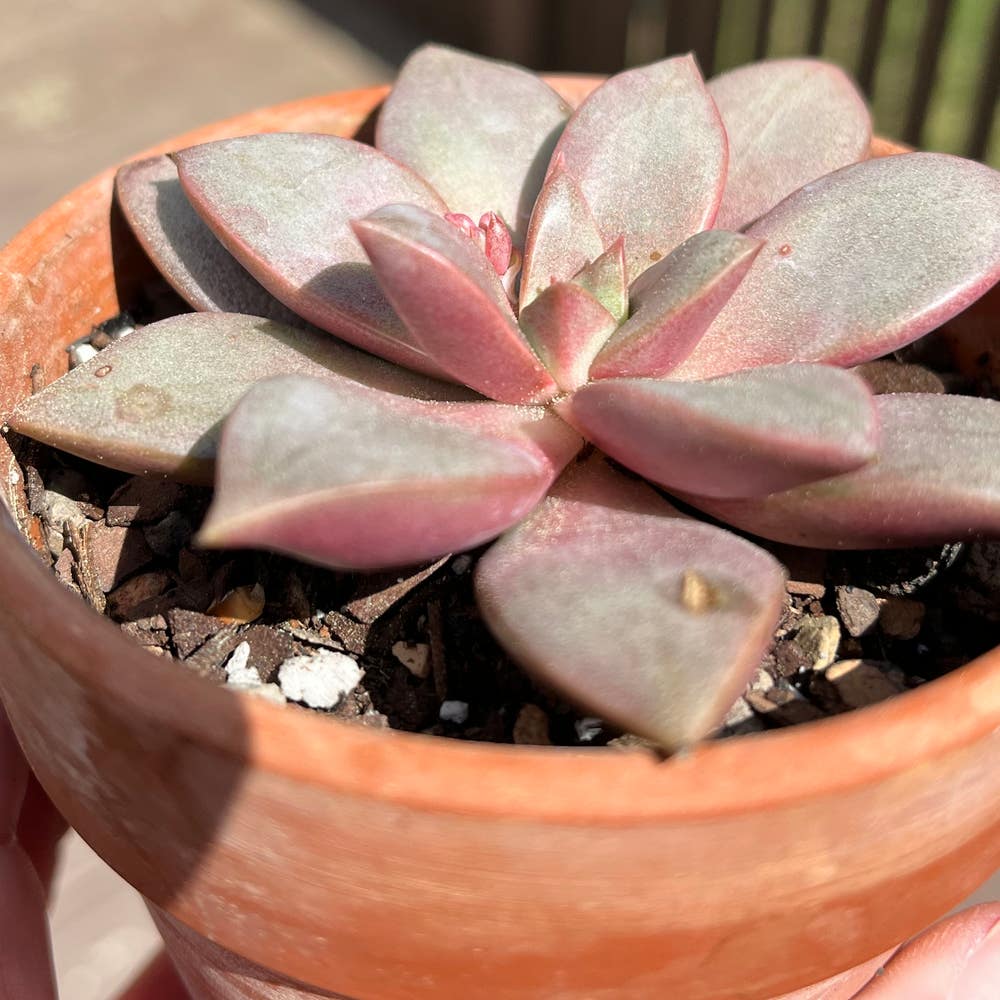
Black Spots on My Crested Cubic Frost Echeveria Leaves
Echeveria f. cristata 'Cubic Frost'
By the Greg Editorial Team
Jun 16, 2024•4 min read
This article was created with the help of AI so we can cover more plants for you. May contain errors. See one? Report it here.
Banish black spots 🕵️♂️ from your Echeveria and keep it thriving with expert tips! 🌿
- Fungal infections or damage cause black spots on succulent leaves.
- 🌞 Prevent sunburn by acclimating and shading your succulent.
- 💧 Water wisely and ensure drainage to avoid black spots.
Spotting the Culprits: Identifying Causes of Black Spots
🕵️ Visual Inspection: What Do Those Black Spots Look Like?
Black spots on your Crested Cubic Frost Echeveria can be telltale signs of trouble. A close look at these spots is crucial in determining whether you're dealing with a fungal invasion or just the aftermath of a clumsy encounter. Fungal spots often present as circular lesions with a yellow halo, while physical damage results in irregular marks that don't spread.
🌞 Environmental Check-Up: Sun and Water as Potential Villains
Sunlight and moisture can be double-edged swords for your succulent. Too much sun leads to scorched, brownish-black spots, primarily on the leaves most exposed to light. On the flip side, excessive moisture creates a playground for fungi, resulting in black spots that can spread like gossip. Assessing the balance of these elements is key to maintaining a spotless existence for your plant.
Plant Care 101
Choosing the Right Plants
Watering Tips
Soil and Fertilizer
Dealing with Pests and Diseases
Sunburn and Succulents: Preventing Solar Scars
🌞 Gradual Tanning: Acclimating Your Plant to the Sun
Echeverias crave sunlight, but too much too fast is a recipe for crispy leaves. To avoid sunburn, introduce your plant to sunlight with the finesse of a barista crafting the perfect latte—gradually. Start with a spot that gets bright, indirect light and slowly increase its time in direct sun over a period of weeks. This way, your succulent builds up a tolerance, much like your skin does to the summer sun.
🏖️ Creating Shade: Protecting Your Plant from Harsh Rays
When the sun's relentless, your Echeveria needs a break. Shade cloth is the sunscreen of the plant world, cutting down the intensity without plunging your succulent into darkness. Positioning it to receive gentle morning light and then protecting it from the harsher afternoon rays can prevent those unsightly sunburn scars. And remember, if you wouldn't sit out in the midday sun without protection, your Echeveria shouldn't either.
Water Wisdom: Balancing Moisture for Spotless Leaves
💧 The Right Sip: Perfecting Your Watering Technique
Watering your Crested Cubic Frost Echeveria is less about sticking to a rigid schedule and more about understanding its thirst. Water deeply until it drains out the bottom, then wait until the top inch of soil feels like a dry martini—crisp and slightly parched.
🚰 Drainage and Dryness: Keeping Roots Happy and Healthy
A well-draining soil mix is the unsung hero in the battle against black spots. It's like a good pair of breathable sneakers for your plant's roots—comfort without the sweat. Ensure pots have drainage holes to let excess water escape because nobody likes wet feet, least of all your succulent.
Keeping Spots at Bay: Proactive Plant Parenting
🌿 The Perfect Environment: Crafting a Spot-Free Sanctuary
Creating the ideal environment for your Crested Cubic Frost Echeveria is like setting up a fortress against black spots. Bright, indirect light is your plant's best friend, shielding it from the harshness of direct sunlight that can cause stress and sunburn. Air circulation is another ally, keeping the leaves dry and less hospitable to fungal invaders. Space out your plants to give them room to breathe; think personal space, but for succulents.
👩⚕️ Regular Check-Ups: Monitoring Your Plant's Health
Consistency is key when it comes to plant health. Make regular inspections a part of your routine, like a morning coffee ritual, but for your Echeveria. Be on the lookout for early signs of distress, such as unusual leaf discoloration or texture changes. Act swiftly if you spot trouble; early intervention can prevent a full-blown fungal fiesta. Keep your tools as clean as a chef's knife—sterilize them after each use to prevent the spread of disease. And remember, quarantine new plants like they're the latest gossip—until you're sure they're spot-free.
⚠️ Safety First
This content is for general information and may contain errors, omissions, or outdated details. It is not medical, veterinary advice, or an endorsement of therapeutic claims.
Always consult a qualified healthcare professional before using any plant as food, medicine, or supplement.
Never eat any plant (or feed one to pets) without confirming its identity with at least two trusted sources.
If you suspect poisoning, call Poison Control (800) 222-1222, the Pet Poison Helpline (800) 213-6680, or your local emergency service immediately.
Spotted an error? Please report it here.
Banish those pesky black spots 🌵 with Greg's personalized care reminders, ensuring your Crested Cubic Frost Echeveria gets just the right amount of sun and water.