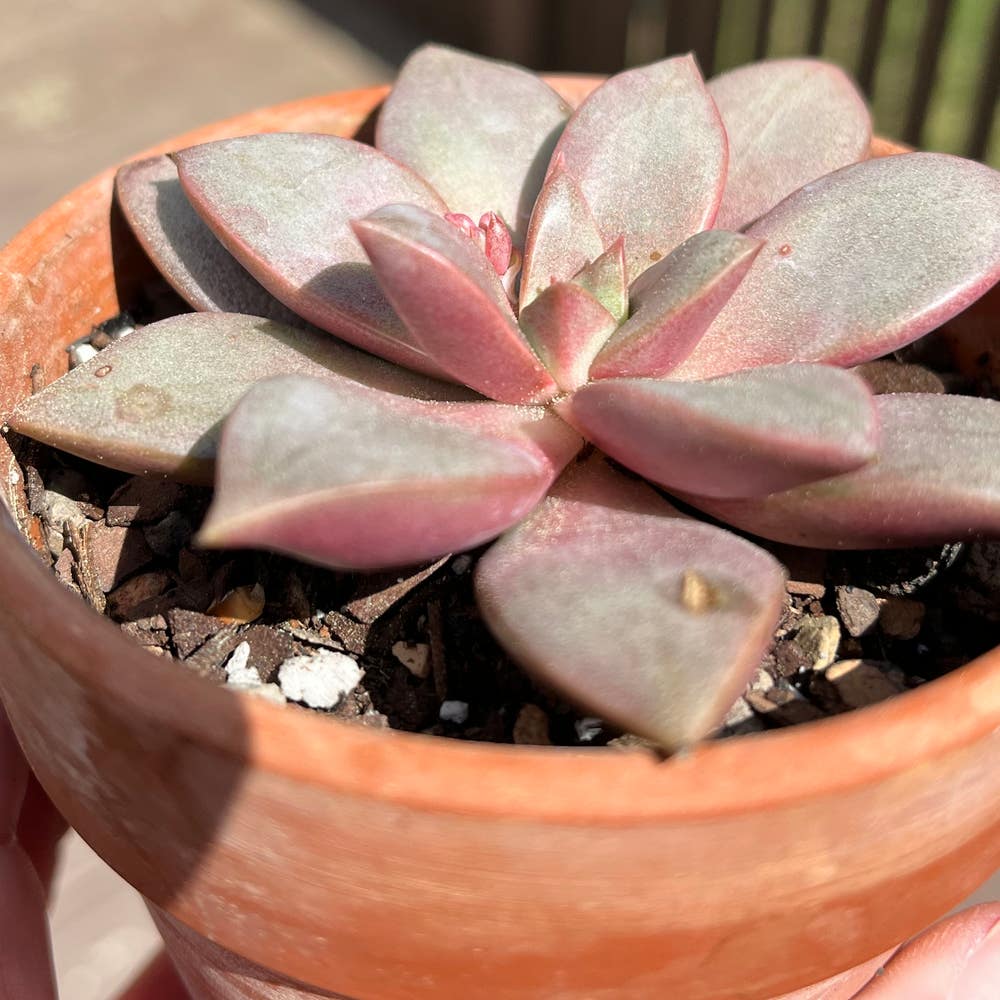
How Often Should I Water My Crested Cubic Frost Echeveria?
Echeveria f. cristata 'Cubic Frost'
By the Greg Editorial Team
Jun 16, 2024•4 min read
This article was created with the help of AI so we can cover more plants for you. May contain errors. See one? Report it here.
Nurture your Echeveria into a desert jewel 💎 with the perfect watering rhythm. 🌵
- 🌵 Touch test for dry soil to know when to water your Echeveria.
- Wrinkled leaves need water; mushy leaves mean overwatering. Adjust accordingly.
- 🌞💧 Adapt watering to climate and seasons for a happy succulent.
When to Water: Reading Your Plant's Thirst
💧 Soil Dryness: The Ultimate Cue
To gauge when your crested cubic frost echeveria needs water, trust the touch test. Plunge a finger into the soil up to the second knuckle. Hit a dry patch? It's time to water. For the clean-fingered crowd, a chopstick or moisture meter can sub in. Remember, the soil should feel dry before you give it a drink.
🌿 Leaf Health: Wrinkles vs. Mush
Your plant's leaves are tattletales when it comes to hydration. Wrinkled leaves are a cry for water—they should be plump, not puckered. Conversely, leaves that feel mushy or look discolored might be victims of overwatering. Keep an eye out for these signs and adjust your watering habits accordingly.
How to Water: Techniques for Hydration without Harm
💧 Deep Soak Method: Emulating Desert Rains
To master the deep soak method, imagine treating your echeveria to a desert thunderstorm. Here's how to get it right:
- Wait until the soil is bone-dry.
- Pour water slowly at the base until it drains out of the bottom.
- Let the plant bask in its post-storm bliss until dry again.
Deep soaks are superior because they encourage robust root growth. Frequent light sprinkles? They're just a tease, leaving roots shallow and wanting.
🍃 Avoiding the Foliage: Keeping Leaves Dry
When watering, think sniper, not shotgun. Target the soil, not the leaves, to keep your echeveria's crested foliage pristine. Use a watering can with a long spout or a drip system to avoid splashback.
Moisture-laden leaves are an open invite for fungal parties. And trust me, that's one shindig you want your plant to skip.
The Environmental Equation: Adapting to Your Echeveria's World
🌞 Light, Temperature, and Humidity: The Big Three
Your crested cubic frost Echeveria doesn't need a weatherman to know which way the wind blows, but you might. Adjust watering based on your home's unique climate cocktail. A sun-bathed sill can turn your succulent into a bit of a lush, guzzling water like it's going out of style. Meanwhile, a dim corner could put its thirst on snooze mode.
Seasonal shifts can flip your plant's watering needs on their head. When summer's in full swing, your green buddy might be parched more often. Winter, on the other hand, is a hydration holiday. Stay sharp and tweak your watering rhythm with the calendar.
🍽️ Pot and Soil: The Support Cast
Choosing the right pot and soil for your Echeveria is like picking a sidekick for a superhero—crucial for success. Terracotta or unglazed ceramic pots are the Robin to your Batman, breathable and preventing water from getting too cozy. Size matters; too big, and you're swimming in moisture; too small, and it's cramped quarters for your plant's roots.
For soil, think fast drainage. A store-bought succulent mix will do the trick, or you can play mad scientist and whip up your own. Remember, your Echeveria's comfort is all about the balance of space, air, and moisture. Keep these in check, and you're golden.
Troubleshooting Water Woes: From Soggy to Parched
🌊 Overwatering: The Slippery Slope to Soggy Doom
If your crested cubic frost Echeveria is more swamp than succulent, pause the watering. Check for limp leaves and a heavy pot, which signal excess moisture. To rescue your plant, let the soil dry out until it feels like a neglected houseplant, not a wetland.
🏜️ Underwatering: The Dry Spell Dilemma
Conversely, if your Echeveria is as dry as yesterday's toast, it's time for a drink. Revive your parched plant with a thorough watering, ensuring the soil is moist like a wrung-out sponge. Afterward, let the soil return to its dry, desert-like state before the next watering session.
⚠️ Safety First
This content is for general information and may contain errors, omissions, or outdated details. It is not medical, veterinary advice, or an endorsement of therapeutic claims.
Always consult a qualified healthcare professional before using any plant as food, medicine, or supplement.
Never eat any plant (or feed one to pets) without confirming its identity with at least two trusted sources.
If you suspect poisoning, call Poison Control (800) 222-1222, the Pet Poison Helpline (800) 213-6680, or your local emergency service immediately.
Spotted an error? Please report it here.
Revive your Crested Cubic Frost Echeveria and banish watering woes with Greg's custom reminders 🌵, ensuring just the right amount of hydration for your succulent's success.