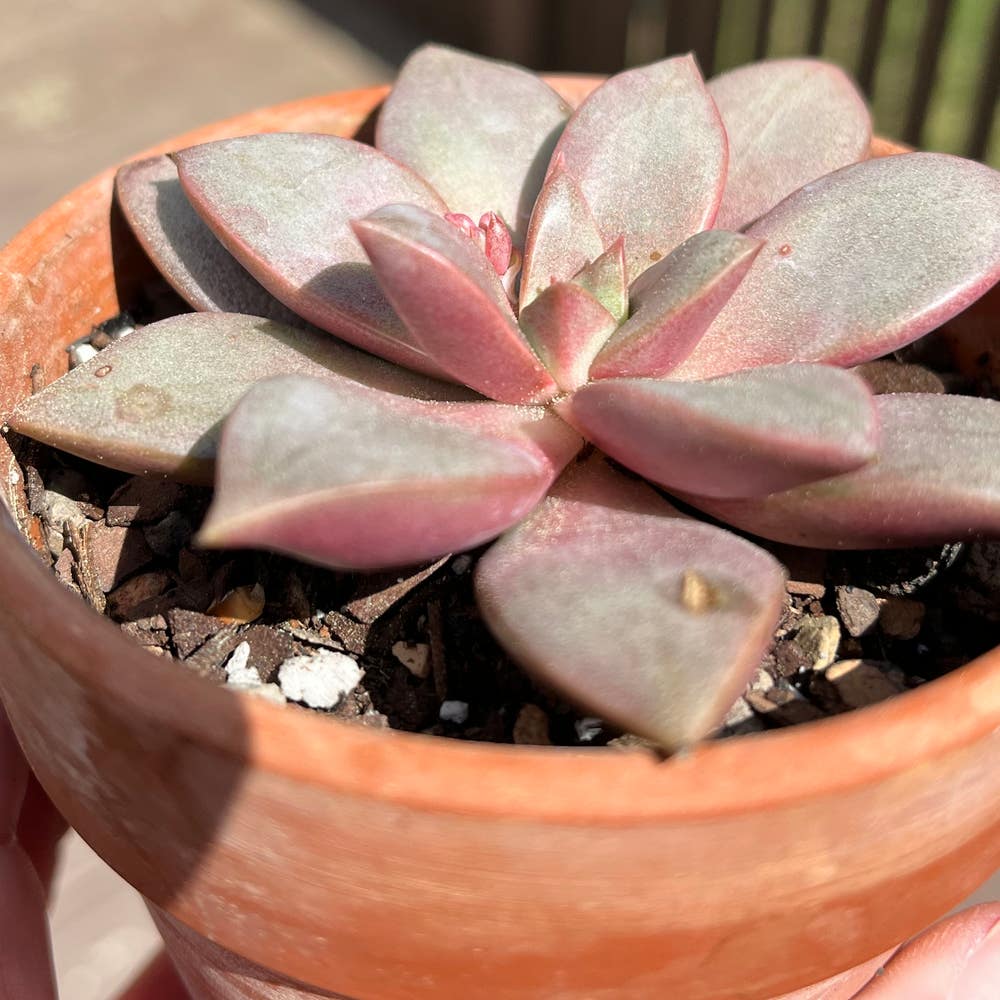
Why Are My Crested Cubic Frost Echeveria Leaves Dropping?
Echeveria f. cristata 'Cubic Frost'
By the Greg Editorial Team
Jun 16, 2024•4 min read
This article was created with the help of AI so we can cover more plants for you. May contain errors. See one? Report it here.
Prevent your Echeveria's leaf drop 🍂 and ensure its splendor with these vital care secrets.
- 🌡️ Temperature extremes cause leaf drop; maintain consistent conditions.
- 💧 'Soak and dry' method combats overwatering, preventing root rot.
- 🐛 Regular pest checks and clean environment keep Echeveria healthy.
Spotting the Signs of Trouble
🍂 Recognizing Leaf Drop Symptoms
When your Crested Cubic Frost Echeveria starts dropping leaves, yellowing is the first red flag. Rapid leaf loss is a clear signal that your plant needs help. Look for leaves that wilt, appear deflated, or show black spots with a yellow halo—these are cries for attention.
🌿 Assessing Plant Health
Consistency in leaf appearance is crucial. If leaves are falling unpredictably, it's time to act. Regular checks can prevent minor issues from escalating. Ensure the soil is dry before watering again, and keep an eye out for any signs of pests on the underside of leaves.
Root of the Problem: Common Causes for Leaf Drop
💦 Too Much Love: Overwatering Woes
Overwatering is a classic case of too much of a good thing. It's the plant equivalent of a backfired bear hug, suffocating the roots and inviting root rot to take hold. If the soil feels like a wet sponge, it's a red flag. Root rot manifests as blackened stems or leaves, and a soil that's more swamp than desert is a telltale sign.
🏜️ Thirsty Roots: The Underwatering Issue
Underwatering, on the other hand, leaves your Echeveria as parched as a desert wanderer. The soil will be bone-dry, and the plant will shed leaves like a tree in fall. Wrinkled, droopy leaves with crispy edges are your plant's way of crying out for a drink.
🌡️ Feeling the Heat (or Cold): Temperature Stress
Temperature stress can make your Echeveria drop leaves faster than a clumsy waiter drops plates. Extreme temperatures and sudden changes can shock your plant, leading to a leafy downfall. It's about keeping things steady—avoid the chill of cold snaps and the scorch of heat waves.
🐜 Unwanted Guests: Pest Infestations
Pests are the uninvited party crashers that wreak havoc on your Echeveria. Look out for signs like yellowing leaves or the presence of tiny critters. These pests can cause leaf drop and a host of other issues. Effective pest control is like a bouncer at the door, keeping these troublemakers out.
Turning Over a New Leaf: Solutions to Stop the Drop
💧 Fine-Tuning Watering Habits
Overwatering is the silent killer of Echeveria, leading to root rot and a cascade of falling leaves. To combat this, embrace the 'soak and dry' method. Water your plant deeply, then hold off until the soil is bone-dry. This technique encourages strong root growth and mirrors the Echeveria's natural habitat.
- Check the soil moisture before watering; it should be dry up to an inch deep.
- Adjust your watering schedule with the seasons, watering less in winter.
🏡 Creating a Cozy Environment
Echeverias don't appreciate the cold shoulder or a scorching embrace. They thrive in temperatures between 65-80°F (18-27°C). Keep them away from drafts and direct heat sources. Humidity should be moderate, so if your air is drier than a stand-up comedian's humor, consider a humidifier or a pebble tray.
- Maintain consistent temperatures and avoid sudden changes.
- Monitor humidity and avoid wetting the leaves to prevent fungal diseases.
🐜 Evicting Pests
Pests are like uninvited guests at a party; they show up unannounced and wreak havoc. Keep your plant's environment clean and avoid overwatering to deter these critters. If pests do appear, prune the affected areas and treat with insecticidal soap or neem oil, following label instructions.
- Ensure good air circulation around your plant to prevent pest infestations.
- Isolate new plants to keep potential pests from spreading to your collection.
Proactive Plant Parenting: Preventing Future Leaf Drop
🌱 The Right Foundation: Soil and Pot Essentials
Well-draining soil is the unsung hero in the epic of plant care. For your Crested Cubic Frost Echeveria, think less swamp, more desert. Mix in perlite or coarse sand to keep it airy. This is your plant's bed, and it should be comfy but not soggy.
Terracotta pots get a thumbs-up. They're like the breathable cotton of the plant world, wicking away excess moisture. Ensure your pot has drainage holes; it's not just a suggestion, it's a must. No one likes wet feet, especially not your Echeveria.
🍂 Seasonal Smarts: Adapting to Change
As the seasons shift, so should your care routine. Less water is the mantra during the winter months. Your Echeveria isn't guzzling as much when the sun takes a hiatus.
When summer hits, don't let your plant fry. Shade and hydration will keep it from turning into a crispy critter. It's about balance—think of it as keeping your plant in a comfortable, climate-controlled bubble.
⚠️ Safety First
This content is for general information and may contain errors, omissions, or outdated details. It is not medical, veterinary advice, or an endorsement of therapeutic claims.
Always consult a qualified healthcare professional before using any plant as food, medicine, or supplement.
Never eat any plant (or feed one to pets) without confirming its identity with at least two trusted sources.
If you suspect poisoning, call Poison Control (800) 222-1222, the Pet Poison Helpline (800) 213-6680, or your local emergency service immediately.
Spotted an error? Please report it here.
Avoid the dismay of dropping leaves 🍂 on your Echeveria by letting Greg tailor your watering and care routine to keep your succulent thriving through the seasons.