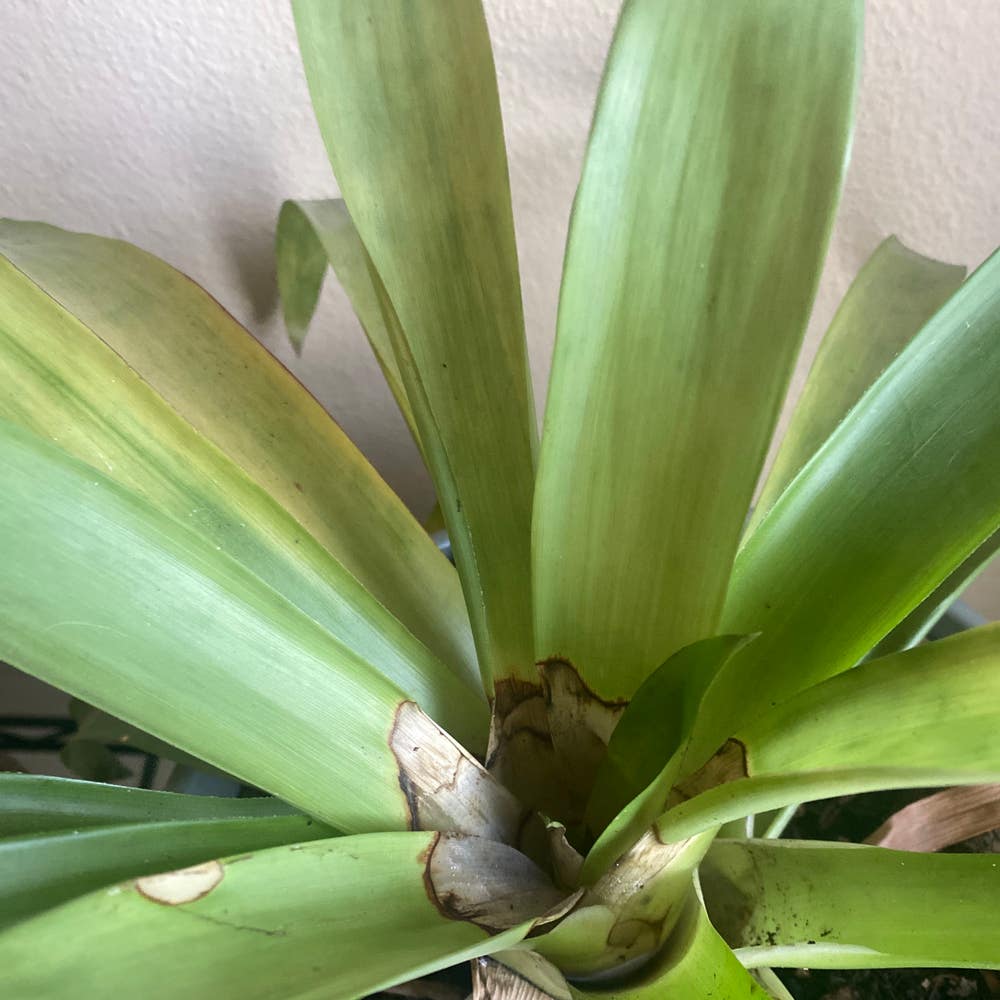
💧 Why Are My Neoregelia 'Cotton Candy' Leaves Mushy?
Neoregelia 'Cotton Candy'
By the Greg Editorial Team
Mar 19, 2024•4 min read
This article was created with the help of AI so we can cover more plants for you. May contain errors. See one? Report it here.
- Overwatering, poor drainage, root rot cause mushy leaves.
- 🌱 Proper watering and drainage are essential for health.
- Regular monitoring and repotting prevent future mushiness.
Spotting Trouble: Signs Your Neoregelia 'Cotton Candy' Has Mushy Leaves
👀 Visual Cues: Identifying Mushy Leaves and Related Symptoms
When your Neoregelia 'Cotton Candy' starts to feel like a soggy sponge rather than a vibrant plant, it's time to pay attention. Yellow-brown discoloration is a distress signal you can't ignore. If the leaves are clinging to your fingers with a depressing lack of resistance, you've got mush on your hands.
🌱 Beyond the Surface: Understanding the Implications of Mushy Leaves for Plant Health
Mushy leaves are more than just an eyesore; they're a red flag for your plant's health. Dark spots and a wilted appearance are the plant's way of crying out for help. If you're catching a whiff of something foul near the soil, or if the roots are looking more like overcooked noodles than firm anchors, your Neoregelia 'Cotton Candy' is in trouble.
The Usual Suspects: Common Causes of Mushy Leaves
💦 Overwatering Woes
Overwatering is the most common misstep leading to mushy leaves in Neoregelia 'Cotton Candy'. It's not a sign of generosity but a misjudgment, where roots suffocate from too much water. Finding balance in watering is key; the soil should be moist, not soggy.
🚰 Drainage Dilemmas
Proper drainage is non-negotiable. Without it, you're setting the stage for a root rot drama. Container choice matters; ensure your pot facilitates quick water escape, preventing the dreaded mushy leaf syndrome.
🌱 The Root of the Problem: Root Rot
Spotting root rot requires a keen eye. Look for roots that are soft and dark, often accompanied by a foul smell. This condition is the domino that knocks down plant health, leading directly to mushy leaves.
Turning the Tide: How to Alleviate Mushy Leaves
💧 Watering Wisdom
Proper watering is like a secret handshake for plant enthusiasts; it's all about timing. For your Neoregelia 'Cotton Candy', the soil should feel like a day-old sponge cake – slightly dry on top. Check the top inch of soil; if it's dry, your plant is ready for a drink. Overwatering is the fast track to mushy leaves, so resist the urge to water on a strict schedule. Instead, let the plant's soil be your guide.
🚰 Drainage Dos and Don'ts
Your plant's pot should be more than just a pretty face; it needs to function like a sieve. Ensure your container has drainage holes that could make a colander jealous. When it comes to the potting mix, think of it as a tailored suit for your plant's roots – it should be loose and airy. A mix of peat, perlite, and pine bark can create the perfect environment for water to flow through, not stagnate. If your current setup is more like a raincoat in a sauna, it's time for a change. Consider a terracotta pot for its moisture-wicking superpowers, and remember, a cozy fit is better than a spacious but soggy abode.
Prevention Is Key: Keeping Your Neoregelia 'Cotton Candy' Happy and Healthy
🕵️ Routine Checks
Regular monitoring is your first line of defense against mushy leaves. Inspect your Neoregelia 'Cotton Candy' often, looking for early signs of distress like discoloration or a spongy texture. A well-draining environment isn't just important, it's critical. Ensure your plant's setup allows excess water to escape swiftly, preventing the dreaded soggy bottom.
🌱 Root Care
Healthy roots are the heart of a thriving Neoregelia. Repot every 2-3 years to refresh the soil and give those roots room to dance. When repotting, be gentle but thorough—remove any dead or decaying matter. If the roots are entangled, untangle them with care. Snip away any that resemble overcooked pasta, as these are likely past their prime. Remember, it's not just about avoiding mushiness; it's about promoting vigor and vitality.
⚠️ Safety First
This content is for general information and may contain errors, omissions, or outdated details. It is not medical, veterinary advice, or an endorsement of therapeutic claims.
Always consult a qualified healthcare professional before using any plant as food, medicine, or supplement.
Never eat any plant (or feed one to pets) without confirming its identity with at least two trusted sources.
If you suspect poisoning, call Poison Control (800) 222-1222, the Pet Poison Helpline (800) 213-6680, or your local emergency service immediately.
Spotted an error? Please report it here.
Prevent the distress of mushy leaves in your Neoregelia 'Cotton Candy' by relying on Greg's custom watering reminders to keep your plant's health on point 🎯.