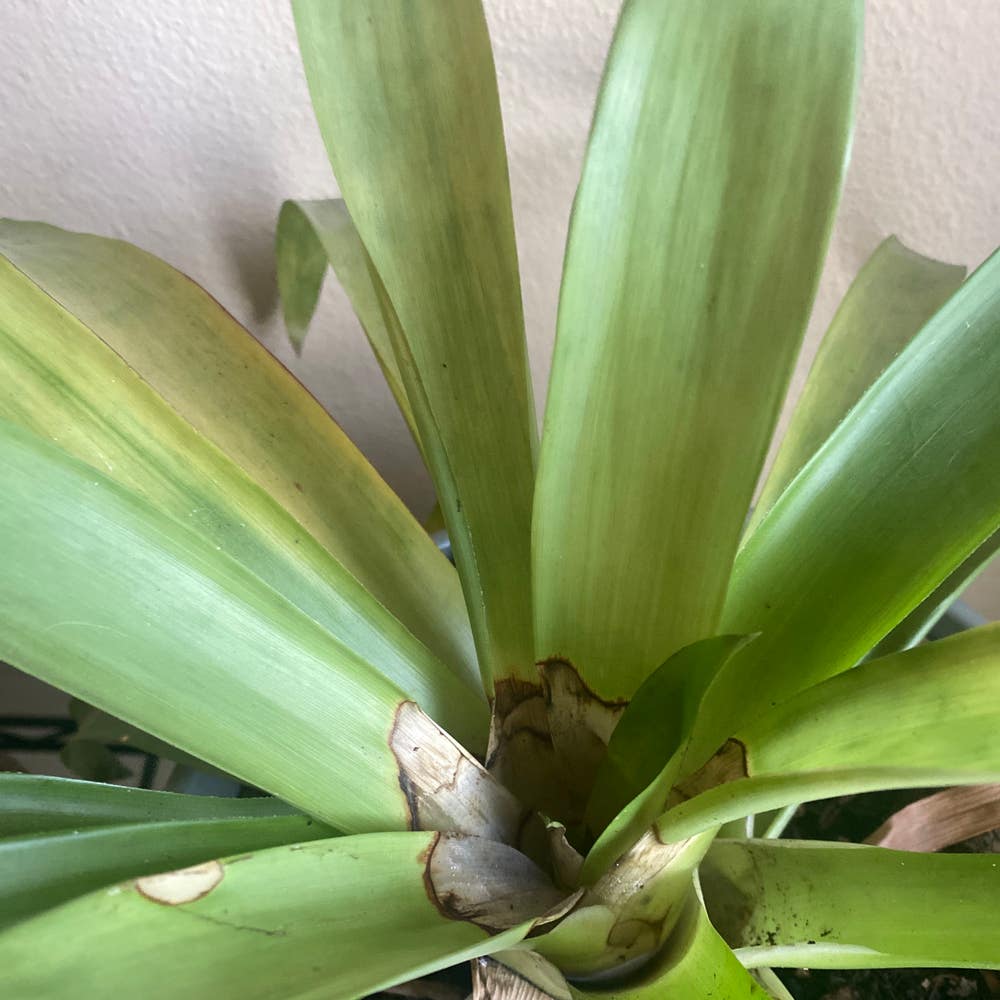
Why Are There Brown Spots on My Neoregelia 'Cotton Candy'?
Neoregelia 'Cotton Candy'
By the Greg Editorial Team
Mar 19, 2024•3 min read
This article was created with the help of AI so we can cover more plants for you. May contain errors. See one? Report it here.
- Sunburn and overwatering lead to brown spots; indirect light and dry soil help.
- Fungal/bacterial infections? Isolate and treat with fungicides or bactericides.
- Feed with balanced fertilizer to prevent and correct nutrient deficiencies.
Spotting the Culprits: Causes of Brown Spots
🌞 Too Much Sun, Too Little Shade
Brown, crispy spots on your Neoregelia 'Cotton Candy'? Sunburn is likely the villain. The affected areas are typically the most exposed to light, signaling a plea for less sun.
Sweet spot for light: Bright, indirect sunlight. Think of it as your plant's preferred sunscreen.
💧 When Water Becomes a Foe
Overwatering can turn your 'Cotton Candy' into a soggy mess. Look for soft, dark spots, particularly on the underside of leaves.
Proper watering: Let the soil dry out between waterings. Ensure your pot has good drainage to avoid waterlogged roots.
🦠 Unwanted Guests: Fungal and Bacterial Invasions
Yellow halos or concentric rings on leaves? That's the hallmark of a fungal or bacterial invasion.
Quick action: Isolate the plant and remove affected leaves. Sterilize your tools to prevent spreading the infection.
🍽️ Starving for Attention: Nutrient Deficiencies
Nutrient deficiencies manifest as various symptoms, including but not limited to brown spots.
Feeding your plant: Use a balanced fertilizer, but don't overdo it. Your 'Cotton Candy' shouldn't have to beg for its next meal.
First Aid for Your 'Cotton Candy'
🌞 Healing from a Sunburn
If your Neoregelia 'Cotton Candy' is showing signs of sunburn, it's time for some plant first aid. Move it to a spot with bright, indirect light—no more harsh rays. Consider using a shade cloth as a temporary parasol to protect those tender leaves.
💧 Drying Out the Problems
Overwatering can lead to root rot, a silent killer. Adjust your watering schedule to when the top inch of soil is dry. Ensure the pot has good drainage to avoid waterlogged roots. If root rot is suspected, inspect and trim any brown, mushy roots, then repot in fresh soil.
🦠 Fighting the Fungus Among Us
Fungal and bacterial infections require swift action. Isolate your 'Cotton Candy' to prevent spread. Use a fungicide or bactericide appropriate for the infection, following label instructions meticulously. Keep the area around your plant clean to reduce the risk of reinfection.
🍽️ Nutrient Boosters
Yellowing leaves might signal a nutrient deficiency. Feed your 'Cotton Candy' with a balanced fertilizer, but don't overdo it—more isn't always better. Stick to the recommended dosage to avoid nutrient burn and ensure your plant gets back to its vibrant self.
Keeping Your 'Cotton Candy' Spot-Free
💡 Light and Water Harmony
Finding the Goldilocks zone for your Neoregelia 'Cotton Candy' is crucial. Too much sun and you're left with a sunburned mess; too little, and it's a sad, pale imitation of its potential. Aim for bright, indirect light and rotate the plant regularly to prevent reaching. Watering should be consistent—enough to keep the soil moist but not soggy. Adjust with the seasons: more in summer, less in winter.
🛡️ Cleanliness and Care
A clean plant is less likely to succumb to diseases. Dust off those leaves; think of it as giving your plant a shield against fungal foes. Inspect regularly for pests and treat promptly with insecticidal soap or horticultural oil if they crash the party. Good air circulation is your ally—keep it breezy to ward off unwanted moisture that invites disease.
🍽️ Feeding Finesse
Your 'Cotton Candy' doesn't need a feast of fertilizer—just a well-balanced diet. Stick to a regular fertilization schedule, opting for a half-strength, water-soluble fertilizer during the growing months. Consistency is your friend here; erratic feeding leads to nitrogen overload, and nobody wants that. Remember, it's about giving your plant a boost, not overwhelming it.
⚠️ Safety First
This content is for general information and may contain errors, omissions, or outdated details. It is not medical, veterinary advice, or an endorsement of therapeutic claims.
Always consult a qualified healthcare professional before using any plant as food, medicine, or supplement.
Never eat any plant (or feed one to pets) without confirming its identity with at least two trusted sources.
If you suspect poisoning, call Poison Control (800) 222-1222, the Pet Poison Helpline (800) 213-6680, or your local emergency service immediately.
Spotted an error? Please report it here.
Eradicate those pesky brown spots 🍂 with Greg's tailored care reminders, ensuring your Neoregelia 'Cotton Candy' gets just the right amount of light, water, and nutrients.