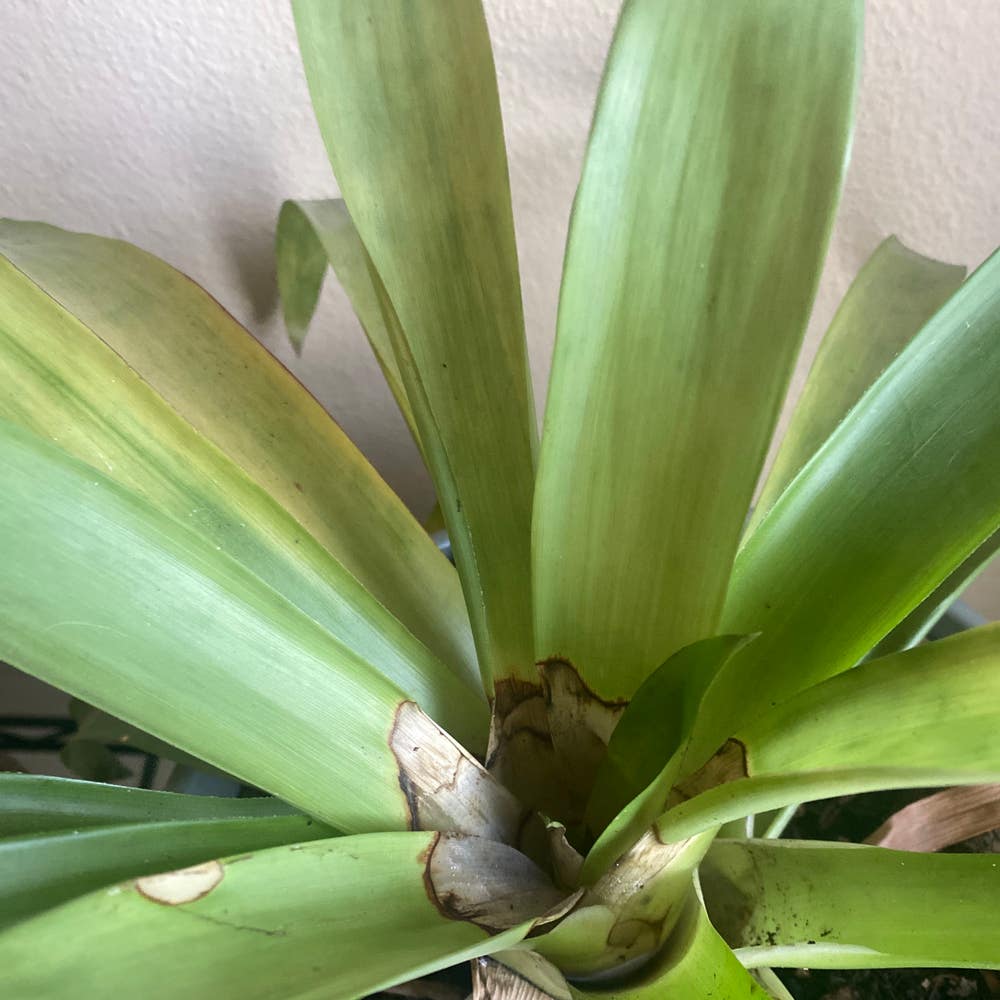
Black Spots on My Neoregelia 'Cotton Candy' Leaves
Neoregelia 'Cotton Candy'
By the Greg Editorial Team
Mar 19, 2024•4 min read
This article was created with the help of AI so we can cover more plants for you. May contain errors. See one? Report it here.
- Fungal infections, sunburn, or damage can cause black spots on leaves.
- Use fungicides for fungi, prune and adjust care for non-fungal spots.
- Prevent spots with regular care: airflow, dry leaves, and inspections.
Spotting the Trouble: Recognizing Black Spots
🕵️ What Do Black Spots Look Like?
Black spots on Neoregelia 'Cotton Candy' leaves are alarm bells. They may masquerade as tiny specks or escalate to larger blotches, often with a yellowish fringe. These spots might appear circular or irregular, sometimes boasting a distinct border. Check both sides of the leaves; these troublemakers favor the undersides but don't discriminate against the more visible areas.
Common Culprits
The causes of black spots are varied, but fungal infections top the list. They thrive in damp conditions and can turn a leaf into a fungal frat house. Sunburn is another perpetrator, leaving behind black badges of overexposure. Physical damage can also manifest as black spots, akin to plant scabs. Lastly, don't overlook pests; their sap-sucking antics often leave behind telltale black marks.
Zeroing In: Pinpointing the Cause of Black Spots
🍄 Fungal Foes
Circular lesions or spots with a yellow halo are the fingerprints of fungal infections. If your Neoregelia 'Cotton Candy' is sporting these unsightly marks, it's likely hosting a fungal fiesta. Fungi love moisture, so if your plant's leaves are often wet, you're rolling out the red carpet for these uninvited guests.
Increased airflow and dry leaves are your best defense. If the spots seem to be expanding their territory, it's time to bring out the fungicide artillery.
☀️ Sunburn and Scars
Sunburn spots are the plant equivalent of a bad sunburn on human skin—dry, crispy, and often on the leaves' top side. If your plant's been basking in too much light, these spots are its way of crying out for some shade.
Physical damage, on the other hand, leaves a flat, non-spreading mark. Think of it as a plant bruise, a reminder of that time you were a bit too rough while moving it. If the spots don't change in size or shape, they're likely just cosmetic battle scars, not a cause for a full-blown plant panic.
The Battle Plan: Treating Black Spots
🛡️ Fungicide to the Rescue
When black spots infiltrate the vibrant leaves of your Neoregelia 'Cotton Candy', it's time for a strategic counterattack. Fungicides are your allies in this covert operation. Opt for a protectant fungicide to shield your plant like an invisible cloak against early fungal invaders. If the infection has already set up camp, reach for a systemic fungicide—think of it as a healing serum coursing through your plant's veins to obliterate the infection from within.
Apply with the precision of a master calligrapher, ensuring every leaf, front and back, is covered. Over-application is your enemy; it's like pouring an entire salt shaker on your fries. To prevent the fungi from developing resistance, rotate your fungicides like you would your weekly wardrobe. Always adhere to the label's instructions as if they were sacred texts.
💖 TLC for Sunburn and Wounds
For black spots caused by sunburn or physical damage, it's time to don your nurse's cap. Begin by pruning the affected areas with sterilized precision—think surgical scalpel, not rusty scissors. After removing the damaged tissue, reassess your plant's living conditions. A slight adjustment in watering or a gentle shift in light exposure can work wonders.
Remember, recovery is a marathon, not a sprint. Monitor your plant's progress, and continue to provide tender loving care. Adjust your care routine like a finely tuned instrument, and your Neoregelia 'Cotton Candy' will bounce back with resilience and grace.
Fortifying the Fortress: Preventing Black Spots
💡 Environmental Tweaks
Adjusting light and humidity is crucial for preventing black spots on your Neoregelia 'Cotton Candy'. Ensure the plant receives bright, indirect sunlight to avoid the harshness of direct rays that can scorch leaves. Humidity should be moderate; use a hygrometer to keep tabs on moisture levels. Stagnant air is a fungal playground, so promote good airflow around your plant.
🕵️ Routine Checks and Balances
Regular inspections are your best defense against black spots. Make it a habit to examine your plant closely during watering or while admiring its beauty. Look for early signs of distress, such as unusual leaf discoloration or wilting. Early detection allows for prompt intervention, potentially saving your plant from a more serious outbreak.
Keep your gardening tools sanitized; think of them as surgical instruments for your plant's health. Clear away fallen leaves and debris promptly; they're nothing but trouble, offering a haven for pests and diseases. Rotate your plant periodically to encourage even growth and prevent vulnerable areas that could be exploited by pathogens.
Lastly, be consistent with your care. A stable environment with consistent temperatures and adequate fertilization forms a strong foundation against the threat of black spots. It's about being proactive, not just reactive, in your plant care routine.
⚠️ Safety First
This content is for general information and may contain errors, omissions, or outdated details. It is not medical, veterinary advice, or an endorsement of therapeutic claims.
Always consult a qualified healthcare professional before using any plant as food, medicine, or supplement.
Never eat any plant (or feed one to pets) without confirming its identity with at least two trusted sources.
If you suspect poisoning, call Poison Control (800) 222-1222, the Pet Poison Helpline (800) 213-6680, or your local emergency service immediately.
Spotted an error? Please report it here.
Keep your Neoregelia 'Cotton Candy' spotless 🌟 by using Greg to monitor and adjust care routines, ensuring early detection and prevention of black spots.