Neoregelia 'Cotton Candy' Fertilizer: How and When to Use It
Neoregelia 'Cotton Candy'
By the Greg Editorial Team
Mar 18, 2024•3 min read
This article was created with the help of AI so we can cover more plants for you. May contain errors. See one? Report it here.
- NPK ratio is key for selecting the right 'Cotton Candy' fertilizer.
- 🌱 Fertilize in growing season, not winter, to match plant's needs.
- Dilute properly to avoid burn; over-fertilization can harm your plant.
Picking the Perfect Fertilizer
🌱 What's in the Mix?
NPK ratio—it's the secret sauce for your Neoregelia 'Cotton Candy'. Think of it as the plant's dietary label: nitrogen (N) for lush leaves, phosphorus (P) for robust roots and radiant blooms, and potassium (K) for overall health. A balanced ratio, say 10-10-10, is your best bet. But don't snooze on the micronutrients; they're like the vitamins in this plant meal.
💧 Liquid Gold
Water-soluble fertilizers are the quick-fix for your bromeliad's nutrient needs. They're like a nutrient-packed juice cleanse—easy to mix, fast to act. Perfect for the growth phase, they get to the plant's system pronto. But remember, less is more. A half-strength mix can prevent the dreaded nutrient burn.
🐢 Slow and Steady
Then there's the tortoise in the race—slow-release fertilizers. These guys are the set-it-and-forget-it option, doling out nutrients at a steady pace. They're the crockpot to the liquid fertilizer's microwave—low maintenance and consistent. Ideal for those who prefer a hands-off approach or have too many plants to pamper individually.
Timing is Everything: When to Fertilize
🌱 Growing Season Gourmet
Spring marks the start of the Neoregelia 'Cotton Candy' growing season. This is when your plant comes out of its winter dormancy, hungry for nutrients. Begin your fertilization routine as new growth appears, typically around March. This initial boost is like a wake-up coffee for your plant, setting the stage for vibrant growth.
❄️ Winter Woes
During winter, your 'Cotton Candy' is more couch potato than athlete. It's a time for rest, not growth, so put the fertilizer away. Continuing to feed your plant in winter is like offering a heavy meal to someone who's napping. It's not just unnecessary; it can be harmful, leading to nutrient buildup and potential root damage.
Serving Up Nutrients: How to Fertilize
🌱 The Dilution Solution
Dilution is crucial when mixing fertilizer for Neoregelia 'Cotton Candy'. Start with a half-strength solution of the recommended dose to prevent root burn. Always water your plant immediately after applying fertilizer, helping the nutrients reach the roots and reducing the risk of nitrogen loss.
🌿 Root vs. Shoot
Deciding between soil application and foliar feeding is like choosing between a hearty meal and a snack. Soil feeding is the main course, providing sustained nutrition to the roots. In contrast, foliar feeding is a quick nutrient boost, best done during cooler hours to prevent leaf burn. Remember, leaves are delicate; they need a gentle touch, not a scorching shower.
Spotting and Solving Over-Fertilization
🚩 Telltale Signs
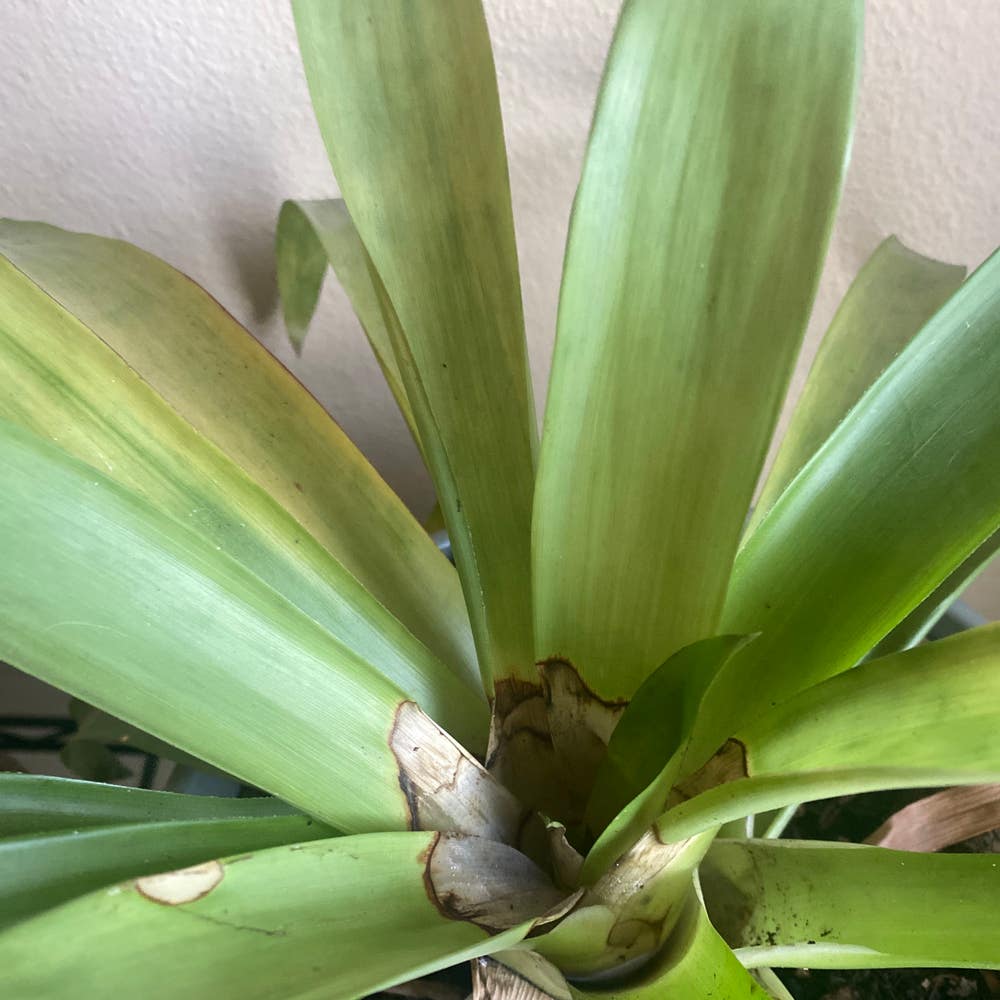
Recognizing the symptoms of nutrient overload is key to maintaining the health of your Neoregelia 'Cotton Candy'. Leaf discoloration, such as yellowing or browning, is a glaring red flag. A white, crusty layer of mineral salts on the soil surface screams excess. If the roots resemble overcooked spaghetti, you've likely been heavy-handed with the plant food. And when leaves drop like flies, it's a clear signal to reassess your fertilization strategy.
The Recovery Recipe
If you've been overzealous with the fertilizer, it's time for damage control. Cease all fertilization immediately to prevent further harm. Gently remove any visible crust of fertilizer without disturbing too much soil. The next step is a thorough flush; drench the soil with water to leach out those excess salts. Repeat this a few times, ensuring good drainage to avoid waterlogging. If the soil is beyond redemption, consider repotting in fresh, nutrient-free soil. Keep a close eye on your plant's recovery, and remember, when it comes to fertilizer, less is often more.
⚠️ Safety First
This content is for general information and may contain errors, omissions, or outdated details. It is not medical, veterinary advice, or an endorsement of therapeutic claims.
Always consult a qualified healthcare professional before using any plant as food, medicine, or supplement.
Never eat any plant (or feed one to pets) without confirming its identity with at least two trusted sources.
If you suspect poisoning, call Poison Control (800) 222-1222, the Pet Poison Helpline (800) 213-6680, or your local emergency service immediately.
Spotted an error? Please report it here.
Nourish your Neoregelia 'Cotton Candy' to perfection by partnering with Greg for season-smart 📅 fertilizer advice, avoiding over-fertilization pitfalls and ensuring year-round plant bliss.