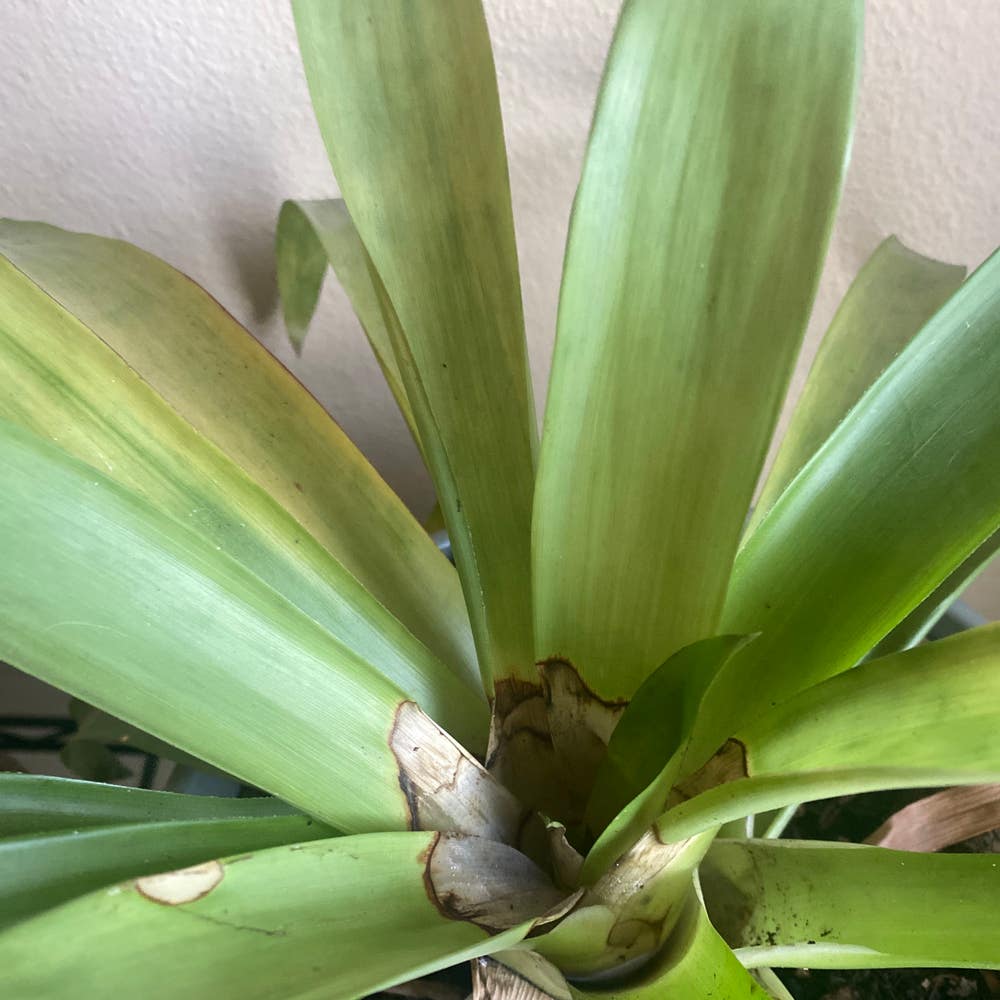
Why Are My Neoregelia 'Cotton Candy' Leaves Curling?
Neoregelia 'Cotton Candy'
By the Greg Editorial Team
Mar 19, 2024•5 min read
This article was created with the help of AI so we can cover more plants for you. May contain errors. See one? Report it here.
- Water balance is crucial: Over/underwatering causes leaves to curl.
- Sun and temperature matter: Too much sun or cold drafts can stress leaves.
- Tropical humidity needed: Dry air may lead to curling; mimic natural environment.
Spotting the Signs: When Your Plant's Leaves Start to Curl
🌀 Identifying Leaf Curling: What Does It Look Like?
When your Neoregelia 'Cotton Candy' starts resembling a contortionist rather than a plant, take note. Curling can range from a subtle inward twist to a dramatic spiral. Leaves should be open and relaxed, not tight like a scroll. If they're starting to look more like origami than foliage, it's a signal that they're not basking in plant paradise.
🚫 Common Mistakes: Misinterpreting Normal Growth vs. Curling Issues
Don't confuse a natural curve with a cry for help. Neoregelia leaves have a bit of a flair, but if they're folding more than a lawn chair at a BBQ, there's an issue. Watch out for leaves that start to roll inwards or display sharp bends—these aren't just showing off their flexibility; they're stressed out. Remember, a slight arch is just their style; a tight coil is a distress signal.
Unraveling the Curl: Pinpointing the Culprits
💧 Water Woes: Too Much or Too Little
🌱 The Balancing Act: Finding the Sweet Spot for Moisture
Neoregelia 'Cotton Candy' has a moisture sweet spot. Aim for soil that's damp like a wrung-out towel—hydrated but not dripping. Overwatered roots are suffocating roots, and underwatering is like sending your plant on a desert trek without a water bottle.
Signs of Thirst vs. Drowning: What to Look For
Curling down? Your plant might be swimming in excess water. Curling up? It's parched. Use your finger or a moisture meter to check soil dampness. Remember, soggy is the enemy, and bone-dry is a no-go.
🌞 Light and Temperature Tango
☀️ Too Much Sun: When Leaves Get Sunburned
Leaves curling tighter than a roll of dimes? Too much sun. Brown, crispy patches are sunburn signals. Your plant is begging for some shade or a gentler sunbath.
Chilly Reception: How Cold Drafts Can Cause Curls
If your plant's leaves are curling like they're bracing for winter, it's probably too cold. Neoregelia 'Cotton Candy' doesn't appreciate a drafty windowsill. Keep it away from cold drafts and sudden temperature drops.
💨 Humidity Havoc: The Air Your Plant Breathes
🌴 Tropical Dreams: Mimicking Neoregelia's Ideal Humidity
These plants crave tropical humidity. Use a hygrometer to check the air moisture. Too low, and your plant's leaves will curl up in a desperate attempt to conserve water.
Signs of Dry Times: When Your Air is Too Arid
Leaves curling like they're holding onto every drop of moisture? The air's too dry. Consider a humidifier or a pebble tray to up the humidity ante. Your plant will thank you with flat, happy leaves.
The Curl Correction: Simple Fixes for Happy Leaves
💧 Fine-Tuning Watering Habits
Consistency is your plant's best friend when it comes to watering. It's about syncing with the plant's needs rather than sticking to a rigid schedule. Water when dry, typically when the top inch of soil feels like a summer's day in the Sahara. Early morning watering is like a wake-up call for your plant, allowing it to absorb moisture before the sun turns up the heat.
For those who love a good gadget, a moisture meter can be your green thumb guide. It's the informant that whispers when it's time to quench your plant's thirst. If you're more of a hands-on person, the finger test works too—just remember it's not an exact science.
☀️ Lighting the Way to Flat Leaves
Finding the perfect spot for your Neoregelia 'Cotton Candy' is like a game of musical chairs with sunlight. It craves bright, indirect light—think of it as a beach umbrella on a sunny day, protection without the burn. Too much direct sun, and you'll have leaves curling faster than a gymnast.
Temperature checks are vital too. Your plant doesn't appreciate the chills any more than you do. Keep it away from drafty windows and doors to avoid unwanted leaf curls.
💦 Humidity Helpers: Keeping the Air Just Right
Humidity can be a diva, and your Neoregelia 'Cotton Candy' loves the spotlight. Aim for that 40%-60% humidity sweet spot. If your home is drier than a stand-up comedian's wit, consider a humidifier or a pebble tray to up the ante on moisture.
Daily misting? It's like a morning dew—refreshing but not always necessary. Watch your plant's response and adjust accordingly. Too much and you're in a rainforest, too little and it's desert vibes.
Prevention: Keeping Those Leaves Flat and Fabulous
💧 Consistency is Key: Establishing a Care Routine
Routine is the backbone of thriving Neoregelia 'Cotton Candy'. Like clockwork, a consistent care schedule prevents leaf curling. Water when the soil feels just shy of dry, and keep feeding times as regular as your favorite TV show.
🌡️ Monitoring for Changes: When to Adjust Your Care Tactics
Stay vigilant. Your plant's needs shift with the seasons—less water when it's cooler, a bit more when it's warmer. If the leaves start to curl, it's not being quirky; it's signaling for help. Adjust your care like you would your thermostat: with a keen eye on the weather.
🏡 The Right Environment: Creating a Plant-Friendly Space
Location isn't just a real estate mantra; it's a plant care principle. Find a spot where light and temperature are as stable as your morning routine. No drafts, no direct sunbathing sessions—just a cozy, consistent spot for your Neoregelia to call home. Rotate the pot occasionally for even growth, and if pests crash the party, show them the exit promptly.
⚠️ Safety First
This content is for general information and may contain errors, omissions, or outdated details. It is not medical, veterinary advice, or an endorsement of therapeutic claims.
Always consult a qualified healthcare professional before using any plant as food, medicine, or supplement.
Never eat any plant (or feed one to pets) without confirming its identity with at least two trusted sources.
If you suspect poisoning, call Poison Control (800) 222-1222, the Pet Poison Helpline (800) 213-6680, or your local emergency service immediately.
Spotted an error? Please report it here.
Keep your Neoregelia 'Cotton Candy' leaves serenely flat 🌿 with Greg's tailored watering schedules and environment monitoring to combat stress-induced curling.