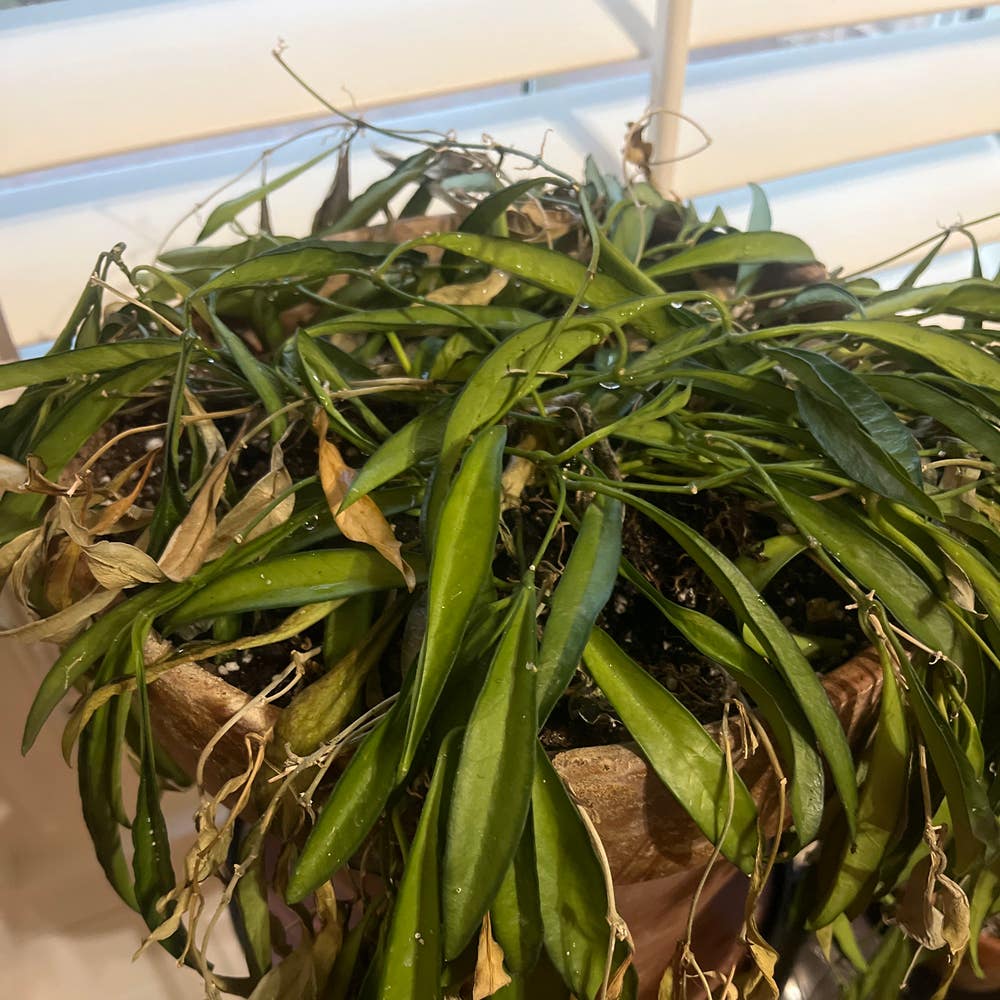
Top 5 Signs Your Hoya Wayetii is Stressed in Winter ❄️
Hoya wayetii
By the Greg Editorial Team
Nov 07, 2024•5 min read
This article was created with the help of AI so we can cover more plants for you. May contain errors. See one? Report it here.
- 🌿 Leaf discoloration and wilting indicate stress; adjust care immediately.
- 💧 Maintain humidity and proper watering to prevent dehydration in winter.
- 🌞 Provide bright, indirect light to support growth during Hoya Wayetii's dormant phase.
Signs of Stress in Winter
🌈 Identifying Leaf Discoloration
Leaf discoloration is one of the first signs that your Hoya Wayetii may be experiencing stress. Yellowing leaves often indicate overwatering or insufficient light, while browning leaf edges can signal low humidity or exposure to cold temperatures.
Monitoring leaf color is crucial for early stress detection. By keeping an eye on these changes, you can take proactive measures to help your plant thrive.
🌿 Recognizing Wilting or Drooping Leaves
Wilting or drooping leaves can be alarming, but understanding the causes can help you address the issue effectively. Common culprits include underwatering or sudden temperature drops, both of which can impact leaf turgor.
To assess wilting issues, check the soil moisture and ensure your plant isn’t exposed to cold drafts. Adjusting your care routine can often revive drooping leaves.
📉 Observing Stunted Growth or Lack of New Growth
Stunted growth is another indicator that your Hoya Wayetii is struggling during winter. If you notice no new leaves or growth points, it’s time to investigate further.
Compare your plant's current growth cycle with previous ones. Factors like insufficient light or nutrients during dormancy can contribute to this stagnation, so consider adjusting your care accordingly.
🍂 Noticing Leaf Drop or Shriveling
Leaf drop or shriveling can be distressing for any plant parent. Stress from cold temperatures or improper watering often leads to these issues, as does any significant environmental change, such as relocating the plant.
Shriveling leaves are particularly concerning, as they can indicate dehydration or extreme cold exposure. Addressing these conditions promptly can help your Hoya Wayetii recover and flourish.
Recognizing these signs of stress is essential for maintaining the health of your Hoya Wayetii during winter. By staying vigilant and adjusting your care routine, you can ensure your plant remains vibrant and thriving.
Winter Care Requirements
Adjusting Watering Schedules for Winter 🌊
During winter, it's crucial to adjust your watering routine for your Hoya Wayetii. Allow the top inch of soil to dry out before watering again, as this helps prevent root rot during the plant's dormant phase.
Watch for signs of overwatering, such as yellowing leaves and mushy roots. These indicators can signal that your plant is not thriving in the colder months.
Importance of Humidity Levels During Winter 💧
Humidity plays a vital role in the health of your Hoya Wayetii during winter. The ideal humidity range is between 40-60%, which helps keep the plant hydrated and happy.
To maintain these levels, consider using a humidifier or placing pebble trays filled with water near your plant. Grouping plants together can also create a microclimate that boosts humidity.
Fertilizing Considerations During Dormancy 🌱
Fertilizing your Hoya Wayetii during winter requires careful consideration. It's best to avoid fertilization while the plant is dormant, as it won't utilize the nutrients effectively.
Once spring arrives and growth resumes, you can resume feeding. Opt for balanced, water-soluble fertilizers to support healthy growth as the temperatures warm up.
As you prepare for the upcoming spring, remember that proper winter care sets the foundation for a thriving Hoya Wayetii. With the right adjustments in watering, humidity, and fertilization, your plant will be ready to flourish when the season changes.
Protection from Frost
🌱 Best Practices for Indoor Winter Care
To keep your Hoya Wayetii thriving indoors during winter, aim for temperatures between 60°F to 75°F (15°C to 24°C). This range helps prevent stress and promotes healthy growth.
Place your plant away from cold drafts and windows. Sudden temperature changes can shock your plant, leading to stress and damage.
💡 Monitoring Light Exposure
Even in winter, your Hoya needs bright, indirect light. Position it near a window where it can soak up the light without being exposed to harsh rays.
❄️ Outdoor Frost Protection Methods
If you have your Hoya Wayetii outdoors, it's crucial to protect it from frost. Bring potted plants indoors before the first frost hits to avoid damage.
For outdoor plants, consider using frost cloths or blankets. These can provide a protective layer against freezing temperatures.
🚨 Recognizing Signs of Frost Damage
After exposure to frost, watch for blackened or mushy leaves. These are clear indicators that your plant has suffered from cold stress.
🌡️ Recognizing Cold Hardiness Limits
Understanding the cold hardiness of your Hoya Wayetii is essential. This plant is sensitive to temperatures below 50°F (10°C), so be cautious during colder months.
Acclimatizing your plants before exposing them to outdoor conditions is vital. Gradually introducing them to lower temperatures can help them adjust and thrive.
With these protective measures, your Hoya Wayetii can weather the winter months with resilience. Next, we’ll explore how to help your plant recover from any winter damage it may have experienced.
Recovery from Winter Damage
Signs of Winter Damage to Look For ❄️
Winter can be tough on your Hoya Wayetii, and recognizing the signs of damage early is crucial. Look for common indicators such as leaf discoloration, wilting, and stunted growth, which signal that your plant is struggling.
Additionally, keep an eye out for mushy or blackened leaves, as these can indicate severe stress. Assessing the extent of damage will help you plan an effective recovery strategy.
Steps to Revive a Stressed Plant 🌱
Reviving a stressed Hoya Wayetii involves a few straightforward steps:
- Trim damaged leaves to promote new growth and improve overall appearance.
- Adjust watering and humidity levels to create optimal conditions for recovery.
- Gradually reintroduce light exposure as temperatures rise, ensuring your plant gets the energy it needs.
- Monitor for signs of new growth as recovery progresses, celebrating each little victory.
Preparing for Spring Growth After Winter 🌸
As winter fades, preparing for spring growth is essential for your Hoya Wayetii's health. Transitioning your care routines as temperatures warm will set the stage for vibrant growth.
To encourage healthy spring growth, resume regular watering and fertilization schedules. Pruning for shape and health as new growth appears will also help your plant thrive in the upcoming season.
With these steps, your Hoya Wayetii can bounce back beautifully, ready to flourish as spring arrives.
⚠️ Safety First
This content is for general information and may contain errors, omissions, or outdated details. It is not medical, veterinary advice, or an endorsement of therapeutic claims.
Always consult a qualified healthcare professional before using any plant as food, medicine, or supplement.
Never eat any plant (or feed one to pets) without confirming its identity with at least two trusted sources.
If you suspect poisoning, call Poison Control (800) 222-1222, the Pet Poison Helpline (800) 213-6680, or your local emergency service immediately.
Spotted an error? Please report it here.
Keep your Hoya Wayetii thriving this winter ❄️ by using Greg's tailored care reminders to spot stress signs early and adjust your plant care routine for success!