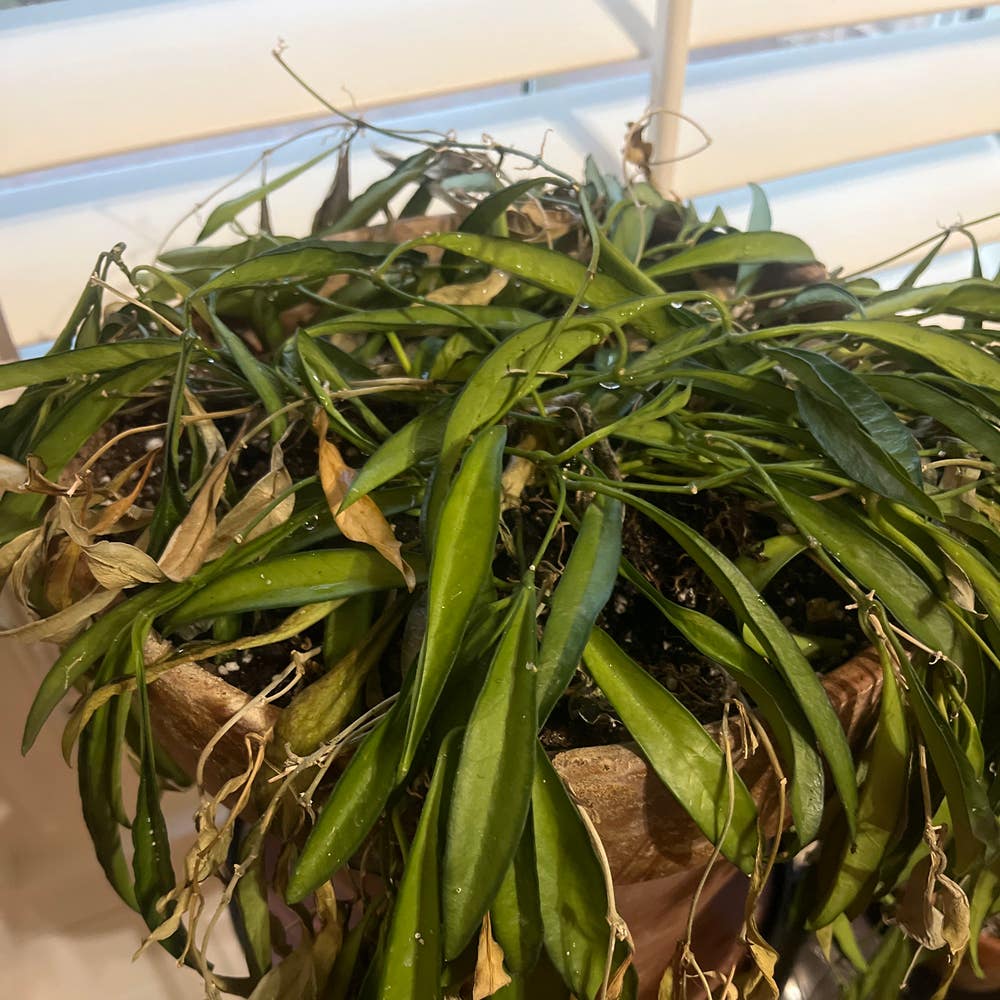
What to Do About Curling Leaves on Your Hoya Wayetii
Hoya wayetii
By the Greg Editorial Team
Nov 07, 2024•6 min read
This article was created with the help of AI so we can cover more plants for you. May contain errors. See one? Report it here.
- 🌡️ Curling leaves indicate environmental stress; check temperature and humidity levels.
- 💧 Overwatering and underwatering both cause curling; monitor soil moisture regularly.
- 🐛 Pests like spider mites can curl leaves; inspect for signs of infestation.
Causes of Curling Leaves
🌪️ Environmental Stress Factors
Curling leaves on your Hoya Wayetii can often be traced back to environmental stress. The ideal temperature range for this plant is between 60°F to 80°F (15°C to 27°C).
Humidity is another critical factor; Hoya Wayetii thrives in humidity levels of 50% or higher. If the air is too dry, you may notice the leaves starting to curl.
Light exposure also plays a significant role. Too much direct sunlight can scorch the leaves, while insufficient light can weaken the plant, leading to curling.
💧 Overwatering and Root Rot
Overwatering is a common culprit behind curling leaves. Symptoms include yellowing leaves, mushy stems, and a foul smell emanating from the soil.
Root rot is a serious condition caused by waterlogged soil, where roots turn brown and slimy. To prevent this, always use well-draining soil and pots equipped with drainage holes.
🌵 Underwatering and Drought Stress
On the flip side, underwatering can also lead to curling leaves. Signs of drought stress include crispy, dry leaves that curl at the edges.
To check soil moisture, insert your finger 1-2 inches below the surface. If it feels dry, it’s time to water. Establishing a consistent watering schedule is essential for maintaining optimal soil moisture.
🕷️ Pest Infestations
🕸️ Spider Mites
Spider mites are tiny pests that can wreak havoc on your Hoya Wayetii. Look for fine webbing on the leaves and a stippled appearance as signs of infestation.
These pests can cause leaves to curl and drop prematurely. To control them, increase humidity, use insecticidal soap, or introduce beneficial insects into your plant care routine.
🐜 Aphids
Aphids are another common pest that can lead to curling leaves. You might notice a sticky residue on the leaves or distorted growth as indicators of an infestation.
These pests weaken the plant, resulting in leaf curl. Effective control methods include applying neem oil or insecticidal soap as directed.
🥦 Nutrient Deficiencies
🌱 Nitrogen Deficiency
A lack of nitrogen can manifest as yellowing leaves, stunted growth, and curling. To remedy this, use a balanced fertilizer that contains adequate nitrogen.
🍌 Potassium Deficiency
Potassium deficiency often presents itself through curling and browning leaf edges. Applying a potassium-rich fertilizer can help restore balance and promote healthy growth.
Understanding these causes is crucial for maintaining the health of your Hoya Wayetii. By addressing environmental stress, watering practices, pest control, and nutrient needs, you can keep your plant thriving. Next, we’ll delve into diagnosing curling leaves to pinpoint the specific issues affecting your plant.
Diagnosing Curling Leaves
🌿 Identifying Symptoms of Leaf Curl
Curling leaves on your Hoya Wayetii can be a telltale sign of underlying issues. Pay attention to the type of curl—upward curling often indicates underwatering, while downward curling may suggest overwatering or stress.
Visual inspection is crucial. Look for discoloration, changes in leaf texture, and the overall health of the plant. These signs can provide valuable clues about what your plant needs.
🔍 Differentiating Between Causes
To pinpoint the cause of curling leaves, start by checking the soil moisture. Overwatering can lead to soggy roots, while underwatering results in dry, crispy leaves.
Observe the environmental conditions and any recent changes in care. Fluctuations in temperature or humidity can also contribute to stress, so keep an eye on your plant's surroundings.
🐛 Recognizing Pest Damage
Inspect the leaves closely for any signs of pests. Look for visible insects, fine webbing, or sticky residue that could indicate an infestation.
It's essential to compare symptoms to differentiate between pest damage and environmental stress. Understanding these differences will help you take the right steps to restore your plant's health.
With these diagnostic tips, you'll be better equipped to tackle the curling leaves on your Hoya Wayetii. Next, let’s explore effective solutions to remedy these issues and promote healthy growth.
Solutions for Curling Leaves
🌊 Adjusting Watering Practices
Establishing a consistent watering schedule is crucial. Water your Hoya Wayetii when the top 1-2 inches of soil feel dry to the touch.
To ensure proper moisture levels, use the finger test. Simply insert your finger into the soil to check for dryness.
Adjust your watering frequency based on the season. During warmer months, your plant may require more frequent watering.
🌱 Improving Drainage and Soil Conditions
Using well-draining soil is essential for preventing issues like root rot. A mix of potting soil, perlite, and orchid bark works wonders for Hoya plants.
If your plant is still struggling, consider repotting. Ensure the new pot has adequate drainage holes to promote healthy root growth.
🐛 Treating Pest Infestations
Identifying pests early can save your plant from significant damage. Use a magnifying glass to inspect leaves closely for any signs of infestation.
Once you've identified the pest, apply treatment promptly. Insecticidal soap or neem oil can be effective solutions when used as directed.
Monitor your plant's progress weekly. Look for signs of recovery to ensure your treatment is working.
🌼 Fertilizing Appropriately
A regular fertilization schedule can boost your plant's health. Feed your Hoya every 4-6 weeks during the growing season for optimal growth.
Choose a balanced, water-soluble fertilizer to provide essential nutrients. This will help your plant thrive and reduce the chances of leaf curling.
By implementing these solutions, you can effectively address curling leaves and promote a healthier Hoya Wayetii. Next, let’s explore preventive measures to keep your plant thriving year-round.
Preventive Measures
Ideal Growing Conditions 🌱
To keep your Hoya Wayetii thriving, maintaining ideal growing conditions is crucial. Aim for a stable temperature range between 60°F to 80°F (15°C to 27°C) to prevent stress on the plant.
Humidity is another key factor. Hoya Wayetii prefers humidity levels of 50% or higher, so consider using a humidifier or a pebble tray filled with water to boost moisture around your plant.
Regular Monitoring and Maintenance 🔍
Regular monitoring can save your plant from potential issues. Conduct weekly inspections to check for signs of stress or pest infestations.
Be proactive in adjusting care based on seasonal changes. As the weather shifts, modify your watering and humidity practices to suit your plant's needs.
Seasonal Care Adjustments 🌦️
Seasonal care adjustments are essential for optimal health. In winter, reduce watering frequency and ensure your Hoya receives adequate light to thrive.
During summer, increase humidity levels and keep a close eye on pests. This vigilance will help you catch any problems early, ensuring your plant remains healthy and vibrant.
With these preventive measures in place, your Hoya Wayetii will be well-equipped to flourish. Next, let's explore how to diagnose curling leaves effectively.
⚠️ Safety First
This content is for general information and may contain errors, omissions, or outdated details. It is not medical, veterinary advice, or an endorsement of therapeutic claims.
Always consult a qualified healthcare professional before using any plant as food, medicine, or supplement.
Never eat any plant (or feed one to pets) without confirming its identity with at least two trusted sources.
If you suspect poisoning, call Poison Control (800) 222-1222, the Pet Poison Helpline (800) 213-6680, or your local emergency service immediately.
Spotted an error? Please report it here.
Keep your Hoya Wayetii thriving 🌿 by using Greg's tailored reminders for humidity and watering, ensuring those curling leaves are a thing of the past!