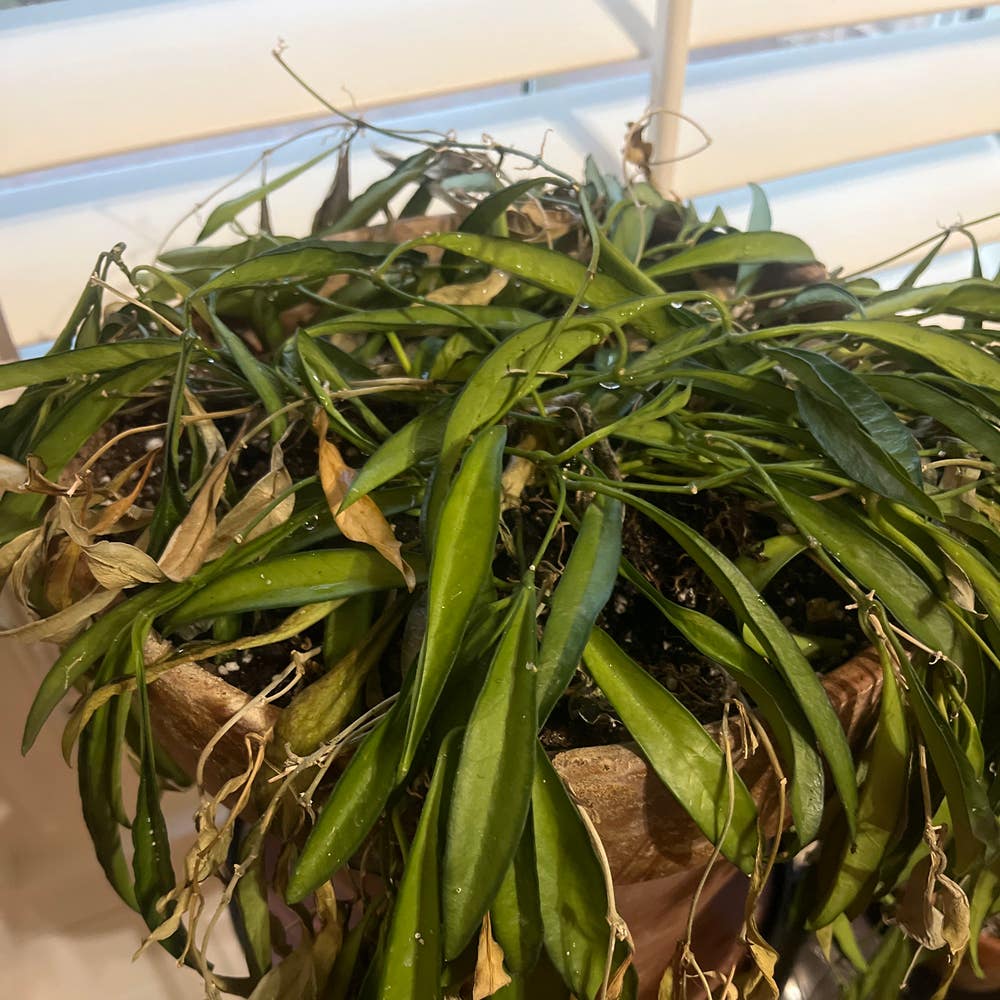
🍂 What to Do About Leaves Falling Over on Your Hoya Wayetii
Hoya wayetii
By the Greg Editorial Team
Nov 07, 2024•6 min read
This article was created with the help of AI so we can cover more plants for you. May contain errors. See one? Report it here.
- 💧 Overwatering and underwatering cause leaves to fall; maintain a consistent watering schedule.
- 🌱 Nutrient deficiencies lead to yellowing; use balanced fertilizers every 4-6 weeks.
- 🐛 Pest infestations harm Hoya Wayetii; inspect regularly and use organic pest control methods.
Causes of Leaves Falling Over
💧 Overwatering and Its Effects
Overwatering is a common issue for Hoya Wayetii, often leading to serious consequences. Symptoms include leaves turning yellow and softening, while root rot can cause mushy roots.
The impact of overwatering disrupts nutrient uptake, making the plant more susceptible to diseases. This can quickly turn a thriving plant into a struggling one.
🚰 Underwatering and Its Effects
On the flip side, underwatering can also wreak havoc on your Hoya Wayetii. Signs of this problem include leaves becoming crispy and curling, along with stunted growth and leaf drop.
Underwatering stresses the plant, weakening its structure and reducing its ability to photosynthesize effectively. Both extremes can lead to a sad-looking plant.
🥦 Nutrient Deficiencies
Nutrient deficiencies can significantly affect the health of your Hoya Wayetii. Common deficiencies include nitrogen, which causes yellowing leaves, and magnesium, leading to leaf curling and drop.
Balanced fertilization is crucial for maintaining Hoya Wayetii health. Regularly supplying the right nutrients ensures your plant remains vibrant and strong.
🐛 Pest Infestations
Pests can be a hidden threat to your Hoya Wayetii. Common culprits include mealybugs, which leave cotton-like masses on leaves, and spider mites, identifiable by fine webbing and stippled leaves.
These pests can severely impact leaf health and overall plant vigor. Keeping an eye out for these signs can save your plant from further damage.
🌡️ Environmental Stress
Environmental conditions play a vital role in the well-being of your Hoya Wayetii. The ideal temperature range is between 18°C to 29°C (65°F to 85°F), while humidity levels should be maintained between 60% to 80%.
Light requirements are equally important; bright, indirect light is best, as too much direct sunlight can scorch leaves. Failing to meet these environmental needs can lead to unstable leaves and overall plant decline.
Understanding these causes is the first step in ensuring your Hoya Wayetii thrives. By addressing these issues, you can create a healthier environment for your plant and prevent future problems.
Diagnosing the Problem
💧 Signs of Overwatering
Overwatering is a common issue for Hoya Wayetii, and its symptoms are often easy to spot. Look for leaves that feel soft and mushy, indicating excess moisture, and check the soil, which should not be consistently wet or compacted.
🌵 Signs of Underwatering
On the flip side, underwatering can also lead to distress in your plant. If the leaves are dry and crispy, and the soil is pulling away from the edges of the pot, it’s a clear sign that your Hoya needs more water.
🐛 Identifying Pests on Hoya Wayetii
Pests can wreak havoc on your plant's health, so regular inspections are crucial. Check the undersides of leaves and leaf axils for any signs of infestation, and consider using a magnifying glass to spot smaller pests that might be hiding.
🌱 Assessing Soil Conditions
The type of soil you use plays a significant role in your Hoya's health. Ensure you have well-draining soil to prevent waterlogging, and regularly check for compaction or drainage issues that could hinder root growth.
🌤️ Evaluating Environmental Factors
Environmental conditions are vital for your Hoya Wayetii's well-being. Measure temperature and humidity levels to ensure they fall within the ideal range, and assess light exposure, adjusting the plant's placement if necessary to avoid stress.
By diagnosing these issues early, you can take proactive steps to restore your Hoya Wayetii to its vibrant self. Next, let’s explore effective solutions and treatments to address these common problems.
Solutions and Treatments
🌊 Adjusting Watering Practices
Establishing a consistent watering schedule is crucial for your Hoya Wayetii's health. Monitor soil moisture levels regularly to determine when to water.
Use the finger test to check moisture: insert your finger into the soil and water only if the top 1-2 inches are dry. This simple method helps prevent both overwatering and underwatering, keeping your plant happy.
🌱 Soil Amendments and Repotting
The right soil mix can make all the difference. A recommended blend is 50% potting soil, 25% perlite, and 25% orchid bark to ensure proper aeration.
Watch for signs that repotting is necessary, such as root-bound conditions or poor drainage. If you notice these issues, it’s time to give your Hoya a new home.
🐞 Pest Control Methods
Pests can wreak havoc on your Hoya Wayetii, but there are effective organic solutions. Neem oil is a great option; apply it every 7-14 days until you see results.
Insecticidal soap is another effective choice, particularly against soft-bodied insects. Regular treatment can keep your plant thriving and pest-free.
🌿 Nutrient Supplementation
To keep your Hoya Wayetii nourished, consider using a balanced liquid fertilizer every 4-6 weeks during the growing season. This will provide essential nutrients for robust growth.
Slow-release granules can also be beneficial for long-term nutrient supply. They help ensure your plant gets what it needs without frequent applications.
🌤️ Environmental Adjustments
Adjusting your plant's environment can significantly improve its health. If your Hoya isn’t thriving, consider moving it to a location with bright, indirect light.
Humidity is also key; using a humidifier or a pebble tray can help maintain optimal humidity levels. These adjustments can make a world of difference in your plant's vitality.
By implementing these solutions and treatments, you can effectively address the issues causing your Hoya Wayetii's leaves to fall over. With proper care, your plant will flourish and bring beauty to your space.
Preventative Measures
Best Practices for Hoya Wayetii Care 🌱
To keep your Hoya Wayetii thriving, regularly check the soil moisture and adjust your watering schedule accordingly. Using well-draining soil is crucial to prevent root issues that can lead to leaves falling over.
Regular Monitoring and Maintenance 🔍
Conduct weekly inspections for pests and signs of stress on your plant. Additionally, perform monthly checks on soil condition and moisture levels to ensure your Hoya is in optimal health.
Ideal Growing Conditions 🌡️
Maintaining the right temperature is essential; keep it between 18°C to 29°C (65°F to 85°F). Ensure humidity levels are consistently between 60% to 80% for the best results.
Seasonal Care Tips 🍂
Adjust your watering frequency according to the seasons, watering less in winter when the plant is dormant. During dry months or heating seasons, consider increasing humidity to support your Hoya's well-being.
By implementing these preventative measures, you can create a nurturing environment for your Hoya Wayetii, reducing the likelihood of leaves falling over and promoting overall plant health. Next, let’s explore solutions and treatments for any issues you might encounter.
⚠️ Safety First
This content is for general information and may contain errors, omissions, or outdated details. It is not medical, veterinary advice, or an endorsement of therapeutic claims.
Always consult a qualified healthcare professional before using any plant as food, medicine, or supplement.
Never eat any plant (or feed one to pets) without confirming its identity with at least two trusted sources.
If you suspect poisoning, call Poison Control (800) 222-1222, the Pet Poison Helpline (800) 213-6680, or your local emergency service immediately.
Spotted an error? Please report it here.
Keep your Hoya Wayetii thriving 🌱 by using Greg's tailored care reminders to master watering, nutrients, and environmental conditions for a vibrant, healthy plant!