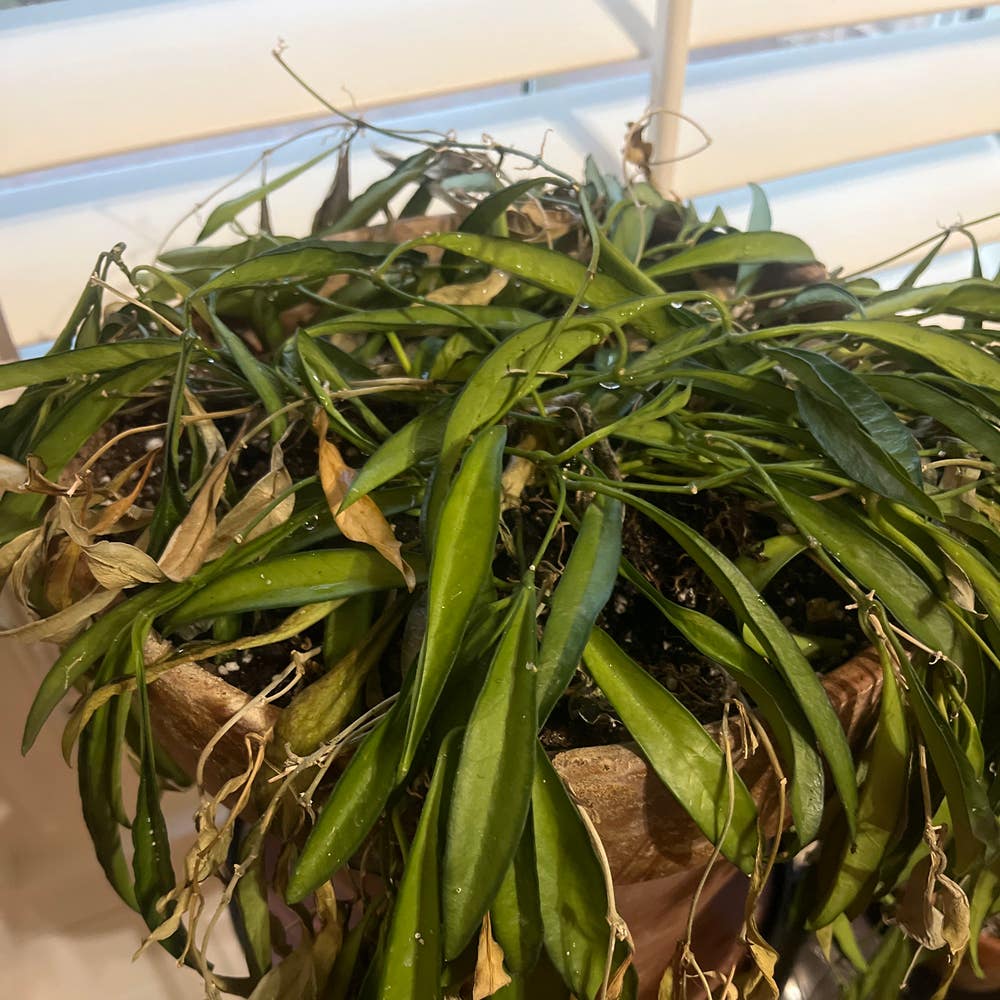
🌼 How to Fix Your Hoya Wayetii Wilting
Hoya wayetii
By the Greg Editorial Team
Nov 07, 2024•6 min read
This article was created with the help of AI so we can cover more plants for you. May contain errors. See one? Report it here.
- 💧 Wilting in Hoya Wayetii stems from water stress, heat, or disease issues.
- 🌡️ Ideal temperature for Hoya Wayetii is 20°C to 30°C (68°F to 86°F).
- 🌿 Consistent moisture and humidity are key to preventing wilting and promoting health.
Common Causes of Wilting Leaves
💧 Water Stress
Water stress is a primary culprit behind wilting leaves in Hoya Wayetii. Overwatering can lead to yellowing leaves and mushy stems, while underwatering results in dry, crispy leaves and drooping stems.
Managing moisture is crucial. Hoya Wayetii thrives on consistent moisture without the risk of waterlogging, making it essential to find that balance.
🔥 Heat Stress
High temperatures can also stress your Hoya Wayetii. When exposed to excessive heat, leaves may curl or develop crispy edges, signaling distress.
Sudden temperature changes can shock the plant, leading to wilting. Ideally, keep your Hoya Wayetii in a temperature range of 20°C to 30°C (68°F to 86°F) for optimal growth.
🦠 Disease-Related Wilting
While disease-related wilting is uncommon in Hoya Wayetii, it can occur. Pathogenic wilt is rare, but if it happens, you might notice dark spots or mold on the leaves.
Early detection is vital. Addressing any signs of disease promptly can prevent further damage and keep your plant healthy.
Understanding these common causes of wilting leaves is the first step toward restoring your Hoya Wayetii to its vibrant self. Next, let’s explore how to diagnose wilting effectively.
Diagnosing Wilting
🕵️♂️ Step-by-Step Guide to Diagnose Wilting
Diagnosing wilting in your Hoya Wayetii is crucial for restoring its health. Start by assessing soil moisture; check the top inch of soil for dryness or excessive moisture.
Next, examine environmental conditions. Evaluate the temperature and humidity levels to ensure they align with your plant's needs.
Inspect the leaves for any signs of pests, discoloration, or disease. Healthy leaves should be firm and vibrant, while wilting leaves may feel limp and lifeless.
Finally, check for root health. Gently remove the plant from its pot to inspect the roots for any signs of rot or damage.
🔍 Signs to Look For
Pay attention to leaf texture. Healthy Hoya Wayetii leaves are firm and waxy, while wilting leaves may feel soft and droopy.
Color changes are another indicator of stress. Yellowing or browning edges can signal that your plant is struggling.
Observe growth patterns as well. Stunted growth or a lack of new leaves often points to underlying issues that need addressing.
By following these steps and recognizing these signs, you can effectively diagnose the cause of wilting in your Hoya Wayetii. This knowledge empowers you to take the necessary actions to revive your plant and ensure its long-term health.
Solutions for Wilting Leaves
🌊 Addressing Water Stress
Water stress is a common culprit behind wilting leaves in Hoya Wayetii.
For overwatering, the first step is to allow the soil to dry out completely before watering again. This helps prevent root rot and encourages healthy growth.
If underwatering is the issue, water thoroughly until excess drains from the bottom. This ensures that the roots receive adequate moisture.
Consider using the bottom watering technique: place the pot in a shallow tray of water for 30 minutes. This method promotes even moisture absorption, helping your plant thrive.
🌡️ Managing Heat Stress
Heat stress can also lead to wilting, so it's essential to keep your plant in a comfortable environment.
Relocate the plant to a cooler area with indirect sunlight to shield it from harsh rays. This simple change can make a significant difference.
Increasing humidity is another effective strategy. Use a humidity tray or mist the leaves to provide the moisture they crave.
Finally, monitor the temperature closely. Keep your Hoya Wayetii in a stable environment, away from drafts or heat sources, to maintain optimal conditions.
🦠 Solutions for Disease-Related Wilting
While disease-related wilting is less common, it’s crucial to act quickly if you suspect an issue.
Start by removing any affected leaves. Pruning diseased or damaged foliage helps prevent the spread of potential infections.
If you notice signs of fungal infections, treat the plant with appropriate fungicides. This can help restore its health and vigor.
Lastly, improve air circulation around your plants. Ensure adequate spacing between them to reduce humidity levels, which can help prevent diseases from taking hold.
With these solutions, you can effectively address wilting leaves and nurture your Hoya Wayetii back to health.
Next, let’s explore preventive measures to minimize the risk of wilting in the future.
Preventive Measures
Best Practices to Minimize Wilting Risk 🌱
To keep your Hoya Wayetii thriving, regularly check the soil moisture. A moisture meter or a simple finger test can help you maintain proper watering levels.
Establishing a consistent watering schedule is crucial. Water your plant when the top inch of soil feels dry to the touch.
Avoid sudden environmental changes that can stress your plant. Gradually acclimate your Hoya Wayetii to new conditions to ensure a smooth transition.
Environmental Considerations 🌧️
Humidity plays a vital role in your plant's health. Aim for 50-70% humidity to mimic its native tropical habitat.
Proper potting is essential for preventing waterlogging. Use well-draining soil and pots with drainage holes to keep your plant's roots healthy.
Light exposure is another key factor. Provide bright, indirect light to support healthy growth without risking overheating.
By following these preventive measures, you can significantly reduce the risk of wilting in your Hoya Wayetii. With a little attention and care, your plant can flourish beautifully.
Next, let’s explore when it might be time to seek professional help for your beloved plant.
When to Seek Help
Signs That Indicate Professional Assistance is Needed 🆘
Sometimes, despite your best efforts, your Hoya Wayetii may still struggle. If you notice persistent wilting even after making adjustments to watering and environmental conditions, it’s time to consider seeking help.
Severe pest infestations can also signal a need for professional intervention. If you spot visible pests that home remedies can’t manage, don’t hesitate to reach out for expert advice.
Additionally, if your plant exhibits symptoms of unidentified diseases that don’t improve with standard treatments, professional assistance is crucial. Early intervention can make a significant difference in your plant's recovery.
Recognizing these signs early can save your Hoya Wayetii from further distress. Remember, seeking help is a proactive step toward ensuring your plant thrives again.
Encouragement and Reassurance
Caring for a Hoya Wayetii can sometimes feel overwhelming, especially when faced with wilting leaves. However, with the right knowledge and care, recovery is not just possible—it's likely!
🌱 Understanding Your Plant's Needs
Understanding your plant's specific needs is crucial. When you take the time to learn about watering, light, and humidity, you create an environment where your Hoya can thrive.
🌼 Nurturing Your Plant
Remember, every plant has its ups and downs. Your efforts in nurturing it will pay off, leading to lush growth and beautiful blooms.
✨ Staying Positive
Stay positive and keep experimenting with care techniques. Each small adjustment can make a significant difference in your plant's health.
With patience and dedication, your Hoya Wayetii can bounce back stronger than ever. Embrace the journey of plant care, and enjoy the rewards that come with it!
⚠️ Safety First
This content is for general information and may contain errors, omissions, or outdated details. It is not medical, veterinary advice, or an endorsement of therapeutic claims.
Always consult a qualified healthcare professional before using any plant as food, medicine, or supplement.
Never eat any plant (or feed one to pets) without confirming its identity with at least two trusted sources.
If you suspect poisoning, call Poison Control (800) 222-1222, the Pet Poison Helpline (800) 213-6680, or your local emergency service immediately.
Spotted an error? Please report it here.
Revive your wilting Hoya Wayetii with consistent care 🌿—let Greg guide you with tailored moisture reminders and tips to keep your plant thriving!