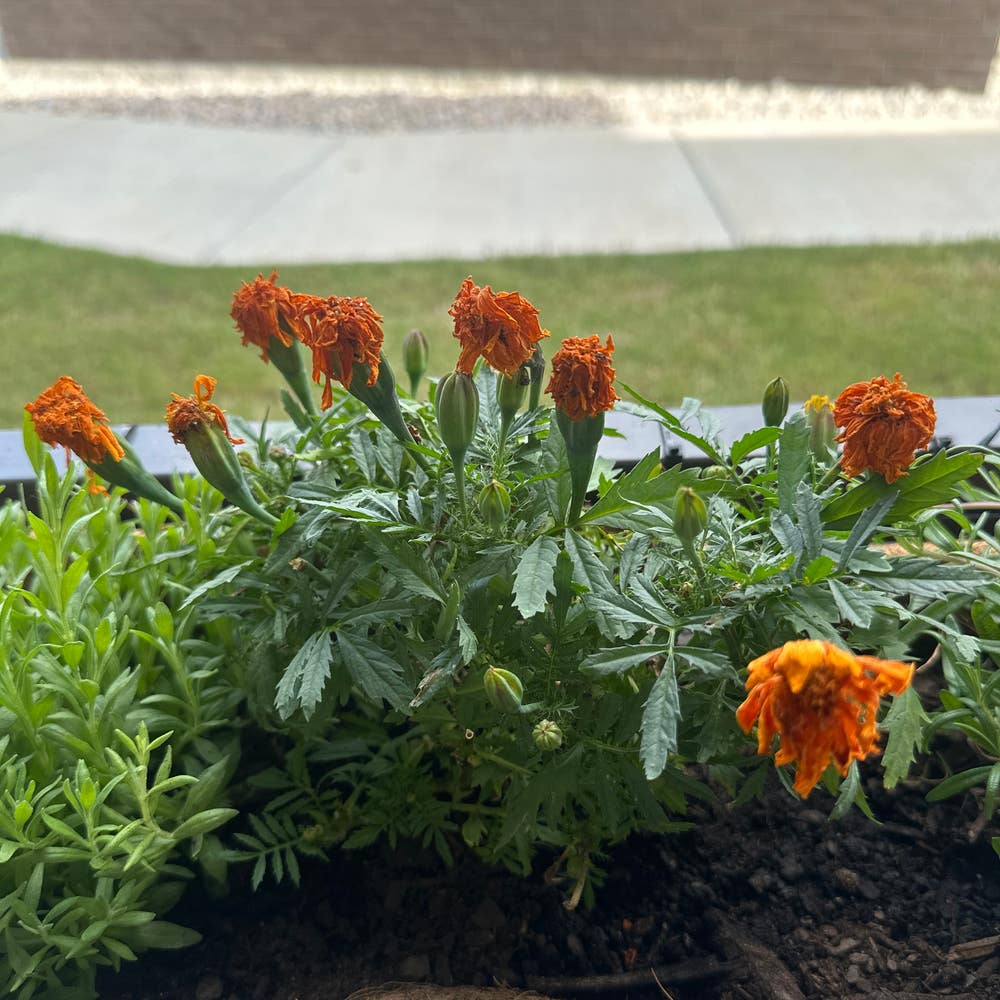
☀️ Why French Marigold Leaves Turn Yellow
Tagetes patula
By the Greg Editorial Team
Aug 24, 2024•4 min read
This article was created with the help of AI so we can cover more plants for you. May contain errors. See one? Report it here.
Transform your marigolds' health 🌼 by learning to prevent yellowing leaves and ensure vibrant blooms all season!
- 🌱 Yellow leaves indicate nutrient deficiencies, especially nitrogen and iron in marigolds.
- 💧 Overwatering causes yellowing; ensure well-draining soil to prevent root rot.
- 🐛 Pests like aphids weaken plants; use insecticidal soap for effective treatment.
Causes of Yellowing Leaves
🌱 Nutrient Deficiencies
Nitrogen Deficiency
Nitrogen deficiency is a common issue that manifests as pale green to yellow leaves, particularly affecting the older foliage. This nutrient is vital for leaf growth and overall plant vigor, making its absence noticeable.
Iron Deficiency
Iron deficiency presents differently, with yellowing occurring between leaf veins while the veins themselves remain green. This nutrient is crucial for chlorophyll production and photosynthesis, so its lack can significantly impact plant health.
💧 Overwatering and Poor Drainage
Signs of Overwatering
Overwatering can lead to wilting and yellowing leaves, often accompanied by root rot. This condition suffocates the roots, leading to nutrient deficiencies that can further stress the plant.
Solutions for Drainage Issues
To combat drainage issues, use well-draining soil and consider amending it with perlite or sand. Always ensure that pots have drainage holes to prevent waterlogging.
🐛 Pest Infestations
Common Pests Affecting Marigolds
Marigolds can fall victim to pests like aphids, which are small green insects that suck sap from leaves, and spider mites, known for causing stippling and webbing. These pests can weaken your plants if not addressed promptly.
Identification and Treatment
For effective control, use insecticidal soap or neem oil. Introducing beneficial insects like ladybugs can also help manage pest populations naturally.
🍄 Fungal Diseases
Common Fungal Issues
Fungal diseases such as powdery mildew, characterized by white, powdery spots on leaves, and root rot, often arise from overwatering and poor drainage. These issues can severely affect plant health if left untreated.
Prevention and Treatment Methods
To prevent fungal diseases, ensure good air circulation around your plants and avoid overhead watering. If necessary, apply fungicides according to label instructions to manage outbreaks effectively.
Understanding these causes of yellowing leaves is crucial for maintaining healthy French marigolds. By addressing nutrient deficiencies, managing water levels, controlling pests, and preventing fungal diseases, you can keep your plants vibrant and thriving. Next, we’ll explore effective treatments for yellowing leaves to restore your marigolds to their full glory.
Treatment for Yellowing Leaves
🌱 Nutrient Management
Recommended Fertilizers
To revive your French marigolds, consider using balanced NPK fertilizers, such as a 10-10-10 mix. Organic options like compost also work wonders, enriching the soil naturally.
Application Methods
You can apply granular fertilizers directly to the soil for a slow release or opt for liquid fertilizers for quicker absorption. Both methods can effectively boost nutrient levels.
💧 Watering Techniques
Proper Watering Schedule
Water your marigolds when the top inch of soil feels dry, typically about once a week. This ensures they receive adequate moisture without becoming waterlogged.
Signs of Healthy Soil Moisture
Healthy soil should feel moist but not soggy. After watering, check for proper drainage to prevent root rot.
🐛 Pest Control Strategies
Organic and Chemical Options
For pest control, consider organic solutions like neem oil, insecticidal soap, and diatomaceous earth. If infestations are severe, targeted chemical pesticides can be effective.
Regular Monitoring Practices
Inspect your plants weekly for signs of pests or disease. Early detection is key to maintaining healthy marigolds.
🦠 Disease Management
Identifying Symptoms Early
Early detection of issues can prevent severe damage to your plants. Watch for yellowing leaves, wilting, and unusual spots as warning signs.
Treatment Options for Fungal Infections
If you notice fungal infections, apply fungicides according to label instructions. Improving air circulation around your plants can also help prevent future outbreaks.
By implementing these treatment strategies, you can help your French marigolds thrive and maintain their vibrant foliage. Next, let’s explore how to prevent yellowing leaves in the first place.
Prevention of Yellowing Leaves
🌱 Best Practices for Soil Health
Soil Testing and Amendments
Regular soil testing is crucial for maintaining healthy marigolds. Check the pH and nutrient levels, aiming for an ideal pH of 6.0 to 7.0 to ensure optimal nutrient availability.
Importance of Good Drainage
Good drainage is essential to prevent waterlogging, which can lead to root rot. Utilize raised beds or containers with drainage holes to promote healthy root systems.
🔧 Regular Maintenance
Pruning and Deadheading
Pruning and deadheading are key to encouraging new growth. Aim to remove dead flowers and leaves every 2-3 weeks during the growing season.
Seasonal Care Tips
Adjust your watering and fertilization routines based on seasonal changes. This ensures your marigolds receive the right care throughout the year.
🌤️ Monitoring Environmental Conditions
Ideal Sunlight Exposure
Position your marigolds in full sun, ideally receiving 6-8 hours of sunlight daily. This exposure is vital for their growth and vibrant color.
Temperature Management
Use mulch to help regulate soil temperature. This protects roots from extreme heat or cold, creating a stable environment for your plants.
By implementing these preventive measures, you can keep your marigolds healthy and vibrant. Next, let’s explore effective treatment options for yellowing leaves.
⚠️ Safety First
This content is for general information and may contain errors, omissions, or outdated details. It is not medical, veterinary advice, or an endorsement of therapeutic claims.
Always consult a qualified healthcare professional before using any plant as food, medicine, or supplement.
Never eat any plant (or feed one to pets) without confirming its identity with at least two trusted sources.
If you suspect poisoning, call Poison Control (800) 222-1222, the Pet Poison Helpline (800) 213-6680, or your local emergency service immediately.
Spotted an error? Please report it here.
Keep your French marigolds vibrant and thriving 🌼 by using Greg's personalized care tips and nutrient tracking to tackle yellowing leaves before they become a problem!