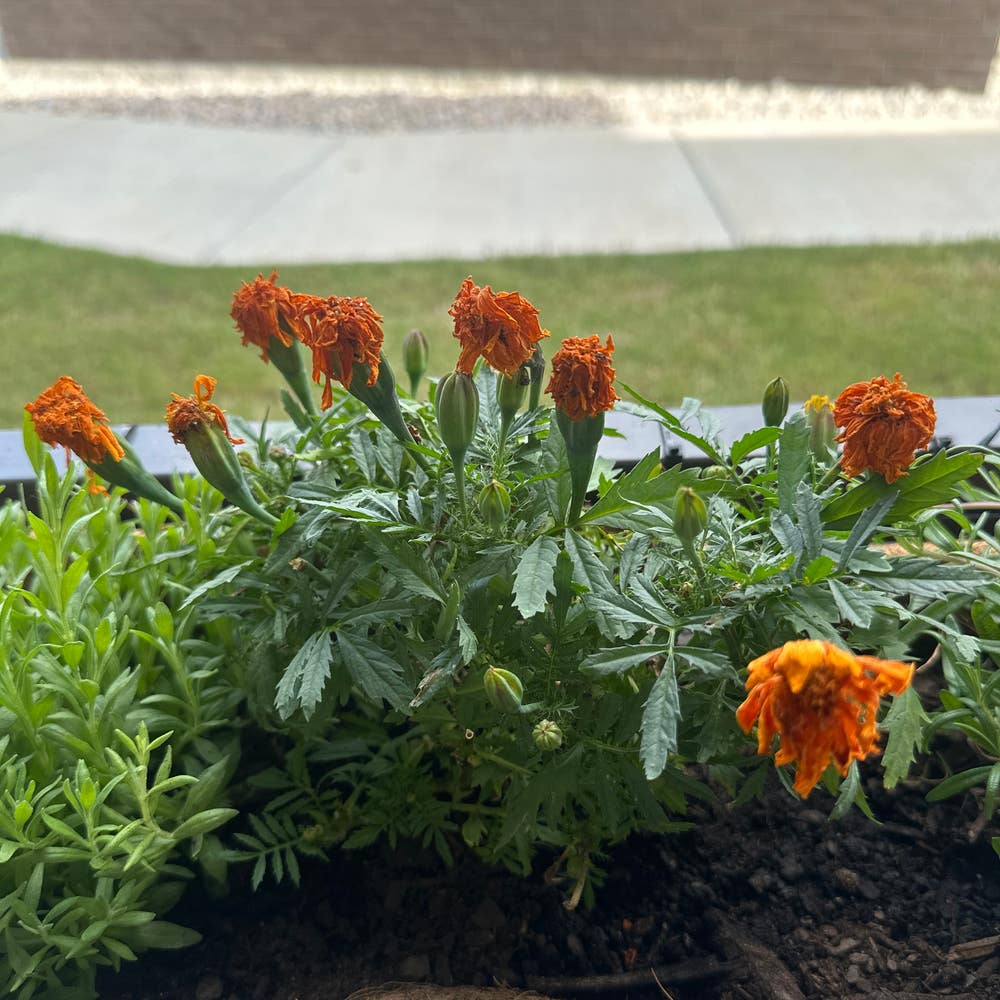
🌼 Dealing with Droopy Leaves on Your French Marigold
Tagetes patula
By the Greg Editorial Team
Aug 24, 2024•6 min read
This article was created with the help of AI so we can cover more plants for you. May contain errors. See one? Report it here.
Restore your droopy French Marigolds 🌼 with essential tips on watering, soil care, and pest control for vibrant blooms!
- 🌧️💧 Droopy leaves indicate overwatering or underwatering; adjust your watering accordingly.
- 🌱 Well-draining soil prevents root rot and promotes healthy French Marigold growth.
- 🐛 Inspect for pests regularly; aphids and spider mites can cause droopy leaves.
Causes of Droopy Leaves
💧 Overwatering and Its Effects
Droopy leaves on your French Marigold can often signal overwatering. Look for symptoms like yellowing leaves, mushy stems, and drooping foliage.
Excess water can lead to root rot, a serious condition that develops in waterlogged soil. Marigolds thrive in well-draining soil, so it's crucial to monitor moisture levels closely.
🚰 Underwatering and Dehydration
On the flip side, underwatering can also cause droopy leaves. Symptoms include crispy, dry leaves and noticeable wilting.
When marigolds lack water, they may respond with leaf curling and drooping. Establishing a consistent watering routine is essential for their health.
🌱 Soil Quality and Drainage Issues
Soil quality plays a significant role in the health of your marigolds. Well-draining soil prevents water accumulation, which is vital for root health.
Consider adding perlite or sand to improve drainage. Regularly testing soil moisture can help ensure your marigolds are not sitting in overly wet conditions.
🐛 Pest Infestations
🦠 Common Pests Affecting Marigolds
Pests can wreak havoc on your marigolds, leading to droopy leaves. Aphids are notorious for their damaging effects, often causing yellowing and stunted growth.
Spider mites are another common culprit, identifiable by fine webbing and leaf damage. Control methods include both organic solutions, like neem oil, and chemical treatments when necessary.
🥦 Nutrient Deficiencies
🌿 Key Nutrients for Healthy Growth
Nutrient deficiencies can also lead to droopy leaves. Nitrogen is crucial for leaf health; a deficiency may manifest as yellowing leaves.
Potassium is equally important, supporting overall plant vigor and helping prevent droopy foliage. Regular fertilization can effectively address these nutrient gaps and promote robust growth.
Understanding these causes will help you diagnose and treat droopy leaves effectively. Next, we’ll explore how to diagnose the specific issues affecting your marigolds.
Diagnosing Droopy Leaves
🌿 Visual Signs to Look For
When diagnosing droopy leaves on your French Marigold, start by observing leaf color changes. Yellowing leaves often indicate overwatering, while browning can signal underwatering.
Next, check the texture of the leaves. Soft, mushy leaves suggest excess moisture, while crispy, dry leaves point to dehydration.
💧 Differentiating Between Overwatering and Underwatering
To accurately assess whether your plant is overwatered or underwatered, perform a soil moisture test. Stick your finger about an inch into the soil; if it feels wet, overwatering is likely.
Compare the condition of the leaves. Overwatered plants may have droopy, soft leaves, while underwatered ones will show curling and a more pronounced droop.
🐛 Identifying Pest Damage
Conduct a visual inspection of your Marigold for any pests. Look closely at both the leaves and stems for signs of aphids or spider mites.
Assess the damage by checking for holes, discoloration, or webbing. Understanding the extent of pest-related issues will help you determine the best course of action.
🥦 Recognizing Nutrient Deficiency Symptoms
Nutrient deficiencies can also lead to droopy leaves. For instance, nitrogen deficiency often results in yellowing leaves, while potassium deficiency can cause browning at the leaf edges.
Pay attention to leaf patterns. Distinct changes in color or texture can help you identify specific nutrient-related drooping, guiding you toward effective solutions.
By diagnosing these issues early, you can take proactive steps to restore your French Marigold's health. Next, let’s explore effective treatments for droopy leaves.
Treatment for Droopy Leaves
🌊 Adjusting Watering Practices
Establishing a consistent watering schedule is crucial for your French Marigold's health. Aim to water deeply but infrequently, allowing the top inch of soil to dry out between waterings.
To know when to water, look for signs like drooping leaves or dry soil. Techniques such as soaking the soil thoroughly can improve water absorption, compared to just surface watering, which may leave the roots thirsty.
🕳️ Improving Soil Drainage
Enhancing soil drainage is vital to prevent droopy leaves. You can amend the soil with materials like perlite or sand, or consider using raised beds to promote better drainage.
Choosing the right pots is also essential. Always select pots with drainage holes to avoid water accumulation, which can lead to root rot.
🌱 Fertilization Techniques for Recovery
Fertilization can help your Marigold bounce back from droopiness. Both organic and synthetic fertilizers can be effective, but organic options are often gentler on the plant.
When applying fertilizers, follow the instructions carefully. Over-fertilizing can cause more harm than good, so it's best to err on the side of caution.
🐞 Pest Control Methods
🌿 Organic Solutions
For organic pest control, neem oil and insecticidal soap are excellent choices. Apply these solutions in the early morning or late evening to avoid harming beneficial insects.
Introducing natural predators, like ladybugs, can also help keep pest populations in check. They thrive on aphids and other common pests, providing a natural balance.
⚗️ Chemical Solutions
If pests persist, chemical treatments may be necessary. Use these sparingly and follow safety guidelines to protect your plants and the environment.
Timing is key when applying chemical solutions. Treating during early morning or late evening minimizes harm to beneficial insects and maximizes effectiveness.
✂️ Pruning Affected Leaves
Pruning is a straightforward way to help your Marigold recover. Use clean, sharp tools to remove any affected leaves, promoting healthier growth.
Timing your pruning is essential for recovery. Aim to prune during the growing season, allowing the plant to heal and thrive afterward.
With these treatment strategies, your French Marigold can regain its vibrancy and health. Next, let’s explore how to prevent droopy leaves from becoming a recurring issue.
Preventing Droopy Leaves
🌊 Best Practices for Watering
Establishing a consistent watering routine is crucial for the health of your French Marigolds. Aim to water deeply but infrequently, allowing the top inch of soil to dry out between waterings.
Using moisture meters can be a game-changer. These handy tools help you gauge soil moisture levels, ensuring your plants receive just the right amount of water.
🌱 Soil Preparation and Amendments
Preparing your soil before planting is essential for vibrant Marigolds. Incorporate organic matter like compost to improve soil structure and nutrient content.
Regular soil testing is key to maintaining optimal soil health. This practice helps you identify nutrient deficiencies and adjust amendments accordingly.
🐛 Regular Pest Monitoring and Control
Inspect your plants regularly for pests to catch any infestations early. A weekly check can save your Marigolds from significant damage.
Consider integrated pest management techniques. Combining natural predators with targeted treatments can effectively control pest populations without harming beneficial insects.
☀️ Seasonal Care Tips to Avoid Stress
Adjust your care routine based on seasonal changes. For instance, increase watering during hot months and reduce it in cooler seasons.
Protect your plants from extreme weather conditions. Use row covers or shade cloths to shield them from harsh sun or frost.
🌞 Choosing the Right Location for Optimal Sunlight
Marigolds thrive in full sun, requiring at least six hours of direct sunlight daily. Position them in a spot that maximizes their exposure to light.
Strategically placing your plants can make a difference. Consider factors like nearby structures or trees that might cast shadows, and adjust their location accordingly.
By following these preventive measures, you can keep your French Marigolds healthy and vibrant, minimizing the risk of droopy leaves. Next, let’s explore effective treatments for when droopy leaves do occur.
⚠️ Safety First
This content is for general information and may contain errors, omissions, or outdated details. It is not medical, veterinary advice, or an endorsement of therapeutic claims.
Always consult a qualified healthcare professional before using any plant as food, medicine, or supplement.
Never eat any plant (or feed one to pets) without confirming its identity with at least two trusted sources.
If you suspect poisoning, call Poison Control (800) 222-1222, the Pet Poison Helpline (800) 213-6680, or your local emergency service immediately.
Spotted an error? Please report it here.
Revive your droopy French Marigolds with Greg's tailored watering reminders and soil moisture tests, ensuring they thrive with vibrant blooms! 🌼