🌻 How to Fix Leaves Falling Over on Your French Marigold
Tagetes patula
By the Greg Editorial Team
Aug 24, 2024•6 min read
This article was created with the help of AI so we can cover more plants for you. May contain errors. See one? Report it here.
Revive your French Marigolds 🌼 with essential tips on watering, pests, and soil health for vibrant blooms!
- 💧 Overwatering and underwatering both cause leaf drop; balance is key for marigolds.
- 🌱 Healthy soil drainage is vital; mix in perlite or sand for best results.
- 🐛 Pest control is crucial; use neem oil to protect marigolds from damage.
Causes of Leaves Falling Over
💧 Overwatering and Its Effects
Overwatering is a common issue that can lead to yellowing leaves, mushy stems, and leaf drop. This excess moisture can cause root rot and oxygen deprivation, severely impacting plant health.
To keep your French Marigolds thriving, aim to water them every 1-2 weeks, adjusting based on soil moisture levels.
🚰 Underwatering and Its Effects
On the flip side, underwatering can also cause leaves to fall. Symptoms include wilting leaves, dry soil, and eventual leaf drop.
If your plants are underwatered, they may experience stunted growth and reduced flowering. Always check the soil moisture 1-2 inches deep before deciding to water.
🌱 Soil Quality and Drainage Issues
Well-drained soil is crucial for the health of French Marigolds. Poor drainage can lead to water pooling, compacted soil, and root suffocation.
To improve drainage, consider adding perlite or sand to your soil mix. This simple amendment can make a significant difference in your plants' health.
🐞 Pest Infestations
🦠 Common Pests Affecting French Marigolds
Aphids and spider mites are two pests that can wreak havoc on your marigolds. Aphids are small, green insects that cause leaf curling and drop, while spider mites create stippled leaves and fine webbing.
🔍 Damage Assessment
Look for visible pests, webbing, and leaf discoloration to identify infestations. These pests weaken plants and increase their susceptibility to diseases, so early detection is key.
🌿 Nutrient Deficiencies
🥦 Key Nutrients for Marigold Health
Nitrogen and potassium are essential for the health of your marigolds. A nitrogen deficiency can lead to yellowing leaves, while a lack of potassium results in wilting and browning edges.
⚠️ Symptoms of Nutrient Deficiency
Watch for yellowing leaves, stunted growth, and poor flowering as signs of nutrient deficiencies. Addressing these issues promptly can help your marigolds flourish.
🌡️ Environmental Stress
🌬️ Temperature and Humidity Effects
French Marigolds thrive in temperatures between 60°F to 75°F (15°C to 24°C). They prefer moderate humidity; extremes can lead to stress and leaf drop.
👀 Signs of Environmental Stress
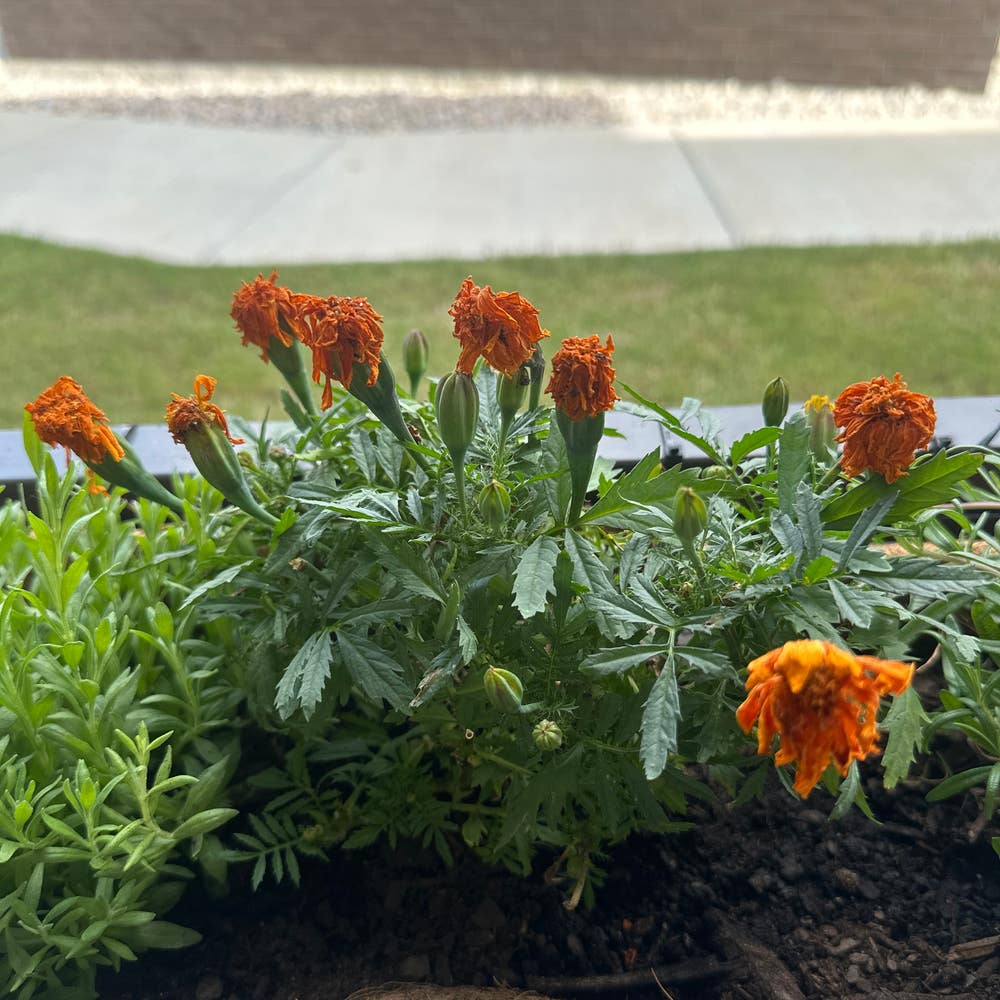
Keep an eye out for leaf curling, wilting, and discoloration. These symptoms can indicate that your marigolds are struggling with their environment.
Understanding these causes will help you diagnose and treat your French Marigolds effectively. Next, we'll explore how to diagnose specific problems in your plants.
Diagnosing the Problem
🌊 Signs of Overwatering vs. Underwatering
Overwatering your French Marigolds can lead to yellow leaves and soggy soil. In contrast, underwatering results in wilting, dry soil, and crispy leaf edges.
🐛 Identifying Pests and Their Damage
To spot pests, check the undersides of leaves and stems. Look for signs like leaf curling, discoloration, and webbing, which indicate damage.
🍂 Recognizing Nutrient Deficiency Symptoms
Nutrient deficiencies manifest through leaf color changes. Yellowing leaves often signal a nitrogen deficiency, while browning edges suggest a lack of potassium.
🌡️ Assessing Environmental Conditions
Keep an eye on temperature and humidity levels to ensure your marigolds thrive. They prefer full sun exposure, ideally receiving 6-8 hours of sunlight daily.
Understanding these diagnostic signs is crucial for maintaining healthy French Marigolds. With this knowledge, you can effectively address any issues and ensure your plants flourish.
Solutions and Treatments
🌊 Adjusting Watering Practices
Establishing a consistent watering schedule is crucial for your French Marigolds. Check the soil moisture regularly and water based on its needs.
Using the Greg plant care app can help you set AI-powered reminders for watering. Aim to water deeply but infrequently to encourage robust root growth.
🏞️ Improving Soil Drainage
Testing your soil drainage is the first step to ensuring healthy marigolds. Check how well water retains in your soil to identify any issues.
Amending the soil with perlite or sand can significantly enhance drainage. If problems persist, consider using raised beds for better water management.
🌱 Fertilizing for Nutrient Balance
Choosing a balanced fertilizer with an NPK ratio of 10-10-10 is essential for nutrient balance. Apply it during the growing season every 4-6 weeks for optimal results.
Keep an eye on your plants' response to the fertilizer and adjust your approach as necessary. This ensures they receive the nutrients they need to thrive.
🐞 Pest Control Methods
Organic Options
For pest control, neem oil is highly effective against common pests like aphids and spider mites. Insecticidal soap can also target soft-bodied insects without harming your plants.
Chemical Options
In cases of severe infestations, systemic insecticides may be necessary. Always follow label instructions for safe application to protect your marigolds.
🌤️ Environmental Adjustments
Providing shade during extreme heat can help your marigolds thrive. Additionally, increasing humidity through misting or using pebble trays can create a more favorable environment.
By implementing these solutions and treatments, you can ensure your French Marigolds stay healthy and vibrant. Next, let’s explore preventive measures to keep your plants thriving year-round.
Preventive Measures
🌊 Best Practices for Watering French Marigolds
Watering your French Marigolds at the right time can make a significant difference. Aim to water early in the morning; this minimizes evaporation and ensures your plants get the moisture they need.
Using mulch is another effective strategy. It helps retain soil moisture and regulates temperature, creating a more stable environment for your marigolds.
🧪 Soil Preparation and Amendments
Before planting, testing your soil pH is crucial. The ideal range for French Marigolds is between 6.0 and 7.0, which promotes healthy growth.
Amending your soil with compost can also enhance fertility and drainage. This simple step can lead to more robust plants and vibrant blooms.
🐛 Regular Pest Monitoring and Control
Keeping an eye on your plants is essential for early pest detection. Inspect your marigolds weekly to catch any issues before they escalate.
Consider implementing companion planting strategies. These can naturally deter pests, creating a healthier garden ecosystem.
🍂 Seasonal Care Tips for Marigolds
Adjust your care practices with the changing seasons. For instance, reduce watering during cooler months to prevent overwatering.
As winter approaches, prepare your marigolds by cutting them back and applying mulch. This will help protect them from harsh conditions and promote a healthy start in spring.
By following these preventive measures, you can ensure your French Marigolds thrive throughout the growing season. Next, let’s explore how to diagnose specific problems affecting your plants.
⚠️ Safety First
This content is for general information and may contain errors, omissions, or outdated details. It is not medical, veterinary advice, or an endorsement of therapeutic claims.
Always consult a qualified healthcare professional before using any plant as food, medicine, or supplement.
Never eat any plant (or feed one to pets) without confirming its identity with at least two trusted sources.
If you suspect poisoning, call Poison Control (800) 222-1222, the Pet Poison Helpline (800) 213-6680, or your local emergency service immediately.
Spotted an error? Please report it here.
Keep your French Marigolds thriving 🌼 by using Greg's tailored watering alerts and pest control tips to ensure they flourish all season long!