🌵 9 Ways to Boost Your Indoor Euphorbia obesa
Euphorbia obesa
By the Greg Editorial Team
Jan 06, 2025•6 min read
This article was created with the help of AI so we can cover more plants for you. May contain errors. See one? Report it here.
Transform your Euphorbia obesa into a thriving beauty with essential care tips for light and water! 🌱
- 🌞 Euphorbia obesa needs 6-8 hours of bright, indirect sunlight for optimal growth.
- 💧 Water every 2-4 weeks, ensuring soil dries completely to prevent root rot.
- 🌡️ Maintain 20°C to 30°C temperature and 30-50% humidity for healthy Euphorbia obesa.
Light Requirements
Optimal Light Conditions for Indoor Growth 🌞
To thrive indoors, your Euphorbia obesa needs bright, indirect sunlight for about 6-8 hours daily. If you notice stretching or elongated growth along with pale coloration, it’s a sign your plant isn’t getting enough light.
Role of Grow Lights and How to Choose the Best One 💡
Grow lights play a crucial role in supplementing natural light, especially during those gloomy, low-light seasons. For the best results, opt for full-spectrum LED or fluorescent lights.
Choosing the Best Grow Light 🛠️
When selecting a grow light, consider the following factors:
- Light Spectrum: Ensure it covers both blue and red wavelengths for optimal growth.
- Wattage: Aim for 20-40 watts, which is suitable for small to medium-sized plants.
- Height Adjustment: Look for lights that can be adjusted in height as your plant grows.
With the right light conditions, your Euphorbia obesa will flourish, setting the stage for its overall health and vibrancy. Next, let’s explore how to meet its watering needs effectively.
Watering Needs
Frequency and Method of Watering 🌊
To keep your Euphorbia obesa thriving, it's crucial to establish a proper watering schedule. Allow the soil to dry completely between waterings, which typically means watering every 2-4 weeks.
When you do water, make sure to do it thoroughly. Water until it drains from the bottom of the pot, ensuring even moisture distribution throughout the soil.
Signs of Overwatering and Underwatering 🚨
Recognizing the signs of overwatering is essential for your plant's health. Look for yellowing leaves, mushy stems, or even root rot, which can signal that you're giving it too much water.
On the flip side, underwatering can also be detrimental. If you notice a wrinkled, shriveled appearance or slow growth, it may be time to reassess your watering habits.
By keeping an eye on these signs, you can ensure your Euphorbia obesa remains healthy and vibrant. Now that you understand its watering needs, let’s explore how humidity and temperature play a role in its overall care.
Humidity and Temperature
Ideal Humidity Levels 🌬️
Euphorbia obesa thrives in low to moderate humidity, ideally between 30-50% relative humidity. To maintain these levels, consider using a dehumidifier or placing your plant in a well-ventilated area.
Temperature Preferences and Seasonal Adjustments 🌡️
This succulent prefers a cozy temperature range of 20°C to 30°C (68°F to 86°F). During colder months, ensure your plant is protected from drafts and extreme cold to keep it healthy and happy.
Adjusting your care routine according to the seasons will help your Euphorbia obesa flourish. As you navigate the changing conditions, remember that a little attention to humidity and temperature can go a long way in promoting robust growth.
Soil Type and Fertilization
🌱 Best Soil Mix
For your Euphorbia obesa, the right soil is crucial. A well-draining cactus or succulent mix is highly recommended to prevent root rot.
If you're feeling adventurous, you can create your own DIY soil mix. Simply combine equal parts of potting soil, sand, and perlite for optimal drainage and aeration.
🗓️ Fertilization Schedule and Types
Fertilizing your Euphorbia obesa is essential for healthy growth. Aim to fertilize every 4-6 weeks during the growing season, which spans spring and summer.
When it comes to fertilizers, a balanced, diluted liquid option works best. Look for something like a 10-10-10 NPK formula to provide your plant with the nutrients it needs without overwhelming it.
With the right soil and fertilization routine, your Euphorbia obesa will thrive beautifully. Next, let’s explore how to tackle common issues and keep your plant in top shape.
Common Issues and Solutions
🐛 Pests and Diseases
Indoor Euphorbia obesa can face a few common pests that may threaten their health.
Common Pests
- Mealybugs: Look for cotton-like masses on stems and leaves; these pests suck the sap, weakening your plant.
- Spider mites: Fine webbing and stippled leaves are telltale signs of these tiny invaders, which thrive in dry conditions.
🛡️ Prevention and Treatment Methods
Regular inspections are key to keeping your Euphorbia healthy.
- Check for pests weekly: This simple habit can prevent infestations from getting out of hand.
- Treatment options: Use neem oil, insecticidal soap, or rubbing alcohol to tackle mealybugs effectively.
✂️ Appearance Maintenance
Maintaining the shape and health of your Euphorbia obesa is essential for its overall vitality.
Tips for Maintaining Shape and Health
- Rotate the plant: Rotate it every few weeks to ensure even growth and prevent leaning.
- Monitor for signs of stress: Address any issues promptly to keep your plant looking its best.
Pruning and Grooming Techniques
Regular grooming helps your Euphorbia thrive and look appealing.
- Pruning: Use sterilized scissors to remove dead or damaged leaves, promoting new growth.
- Grooming: Wipe leaves with a damp cloth to remove dust, allowing your plant to breathe and absorb light efficiently.
With these tips, you can keep your Euphorbia obesa healthy and vibrant. Next, let’s explore how to optimize its placement and environment for maximum growth.
Placement and Environment
Best Locations in the Home 🌞
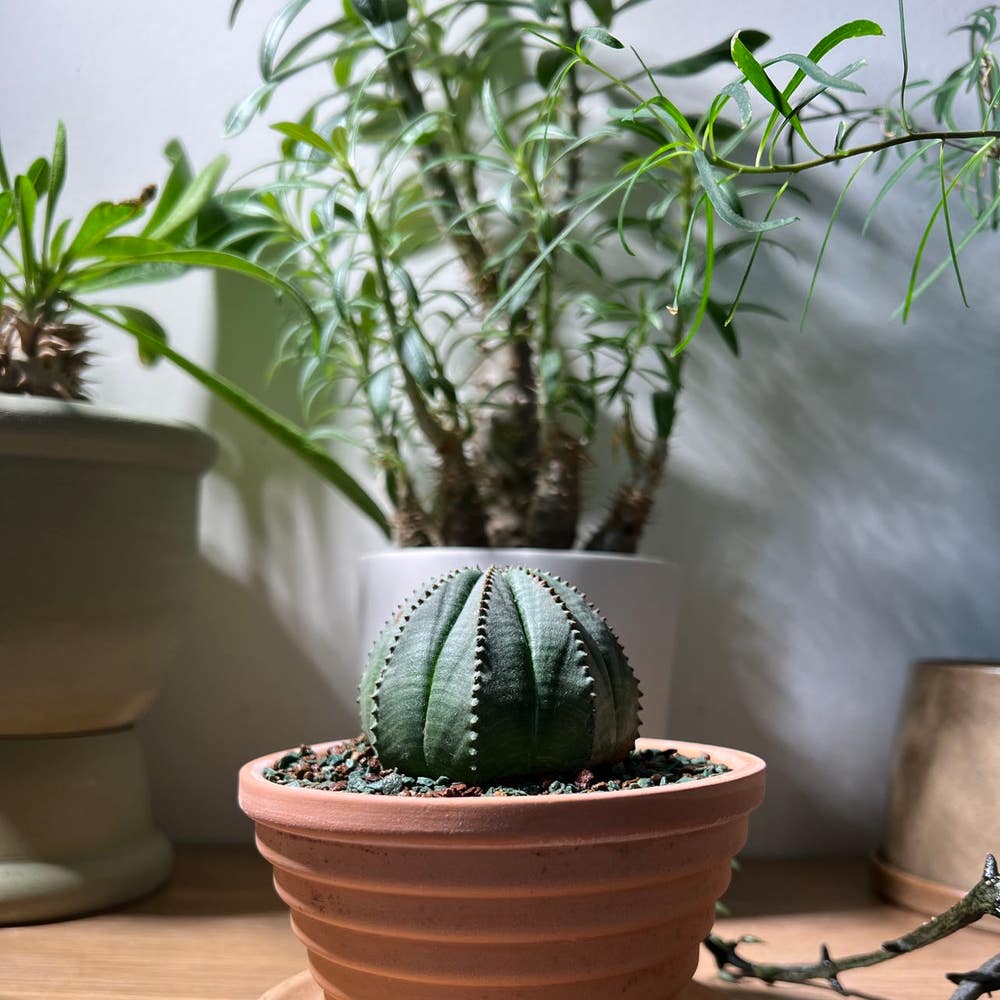
To ensure your Euphorbia obesa thrives, place it near south or west-facing windows. These spots provide the bright, indirect light it craves, creating an ideal environment for growth.
Avoid placing your plant in areas with direct, harsh sunlight. This can scorch its delicate leaves, leading to unsightly damage.
Considerations for Light Levels and Temperature 🌡️
In the living room, aim for bright, indirect light while maintaining stable temperatures. This balance helps your Euphorbia obesa flourish without stress.
The bathroom may seem like a cozy spot, but be cautious. High humidity can be detrimental, so ensure good air circulation to keep your plant healthy.
By carefully selecting the right placement and environment, you set the stage for your Euphorbia obesa to thrive. Next, let’s explore how to adjust your care routines throughout the seasons to keep your plant in top shape.
Seasonal Care
Adjusting Care Routines 🌱
As the seasons change, so should your care routine for your Euphorbia obesa. During spring and summer, ramp up your watering frequency and fertilization to support the plant's active growth phase.
In contrast, as fall and winter approach, it's time to dial back. Reduce your watering and stop fertilizing altogether, while keeping an eye on temperature drops that could affect your plant's health.
Preparing for Winter Conditions ❄️
When winter arrives, consider relocating your Euphorbia obesa to a warmer spot in your home. This will help protect it from cold drafts that can hinder its growth.
Additionally, adjust your watering schedule. With the plant's growth slowing down, you'll want to water less frequently, ensuring it remains healthy throughout the colder months.
By adapting your care routine to the seasons, you can keep your Euphorbia obesa thriving year-round. Next, let’s explore how to maintain its soil and fertilization needs for optimal growth.
⚠️ Safety First
This content is for general information and may contain errors, omissions, or outdated details. It is not medical, veterinary advice, or an endorsement of therapeutic claims.
Always consult a qualified healthcare professional before using any plant as food, medicine, or supplement.
Never eat any plant (or feed one to pets) without confirming its identity with at least two trusted sources.
If you suspect poisoning, call Poison Control (800) 222-1222, the Pet Poison Helpline (800) 213-6680, or your local emergency service immediately.
Spotted an error? Please report it here.
Boost your Euphorbia obesa's health with custom care reminders 📅 from Greg, ensuring it thrives in the perfect environment all year long!