Best Tips for Blooming Euphorbia obesa 🌵
Euphorbia obesa
By the Greg Editorial Team
Jan 06, 2025•3 min read
This article was created with the help of AI so we can cover more plants for you. May contain errors. See one? Report it here.
Unlock the rare beauty of Euphorbia obesa's blooms 🌼 and master the art of encouraging this unique succulent to flower!
- 🌼 Euphorbia obesa rarely blooms, typically flowering only in mature plants during late spring.
- ☀️ Encourage blooming by providing at least 6 hours of direct sunlight daily.
- 🌱 Proper care with watering and fertilizing promotes flowering and offsets for longevity.
Flowering Characteristics of Euphorbia obesa
🌼 Clarification on Flowering Status
Euphorbia obesa is primarily celebrated for its striking appearance rather than its flowers. This unique succulent rarely blooms due to specific environmental conditions, such as light, temperature, and humidity, along with the age of the plant, as flowering typically occurs only in mature specimens.
🌸 If Euphorbia obesa Does Flower
🌿 Flower Characteristics
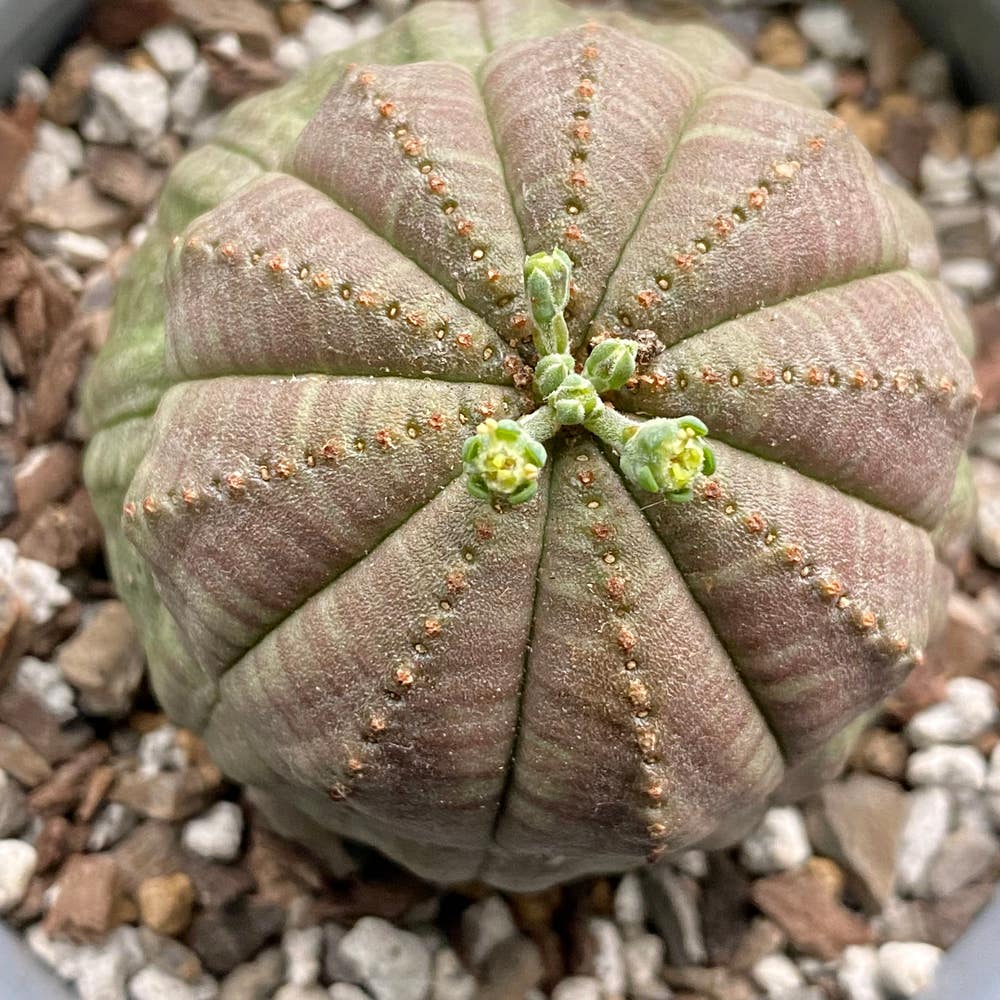
When Euphorbia obesa does flower, it produces small, inconspicuous yellow-green flowers. These flowers emerge as spikes from the top of the plant, adding a subtle charm to its overall aesthetic.
Self-pollination is common in Euphorbia obesa, but external pollination can enhance seed production, making it an interesting option for those looking to propagate their plants.
🌱 Blooming Process
The blooming process involves several stages:
- Bud formation: This is the initial development of flower spikes.
- Opening of flowers: This marks the transition from bud to bloom.
Typically, the bloom season occurs from late spring to early summer, with a duration of about 2-3 weeks from bud formation to full bloom. Once flowers open, they usually last for 1-2 weeks before wilting.
🌻 Encouraging Blooms
To promote flowering in Euphorbia obesa, consider these tips:
- Ensure at least 6 hours of direct sunlight daily.
- Maintain a proper watering schedule, allowing the soil to dry out between waterings.
- Fertilize with a balanced succulent fertilizer during the growing season.
Factors such as temperature fluctuations—warm days followed by cool nights—can stimulate blooming. Additionally, controlled stress, like slight drought, may encourage the plant to flower.
🌼 Post-Flowering
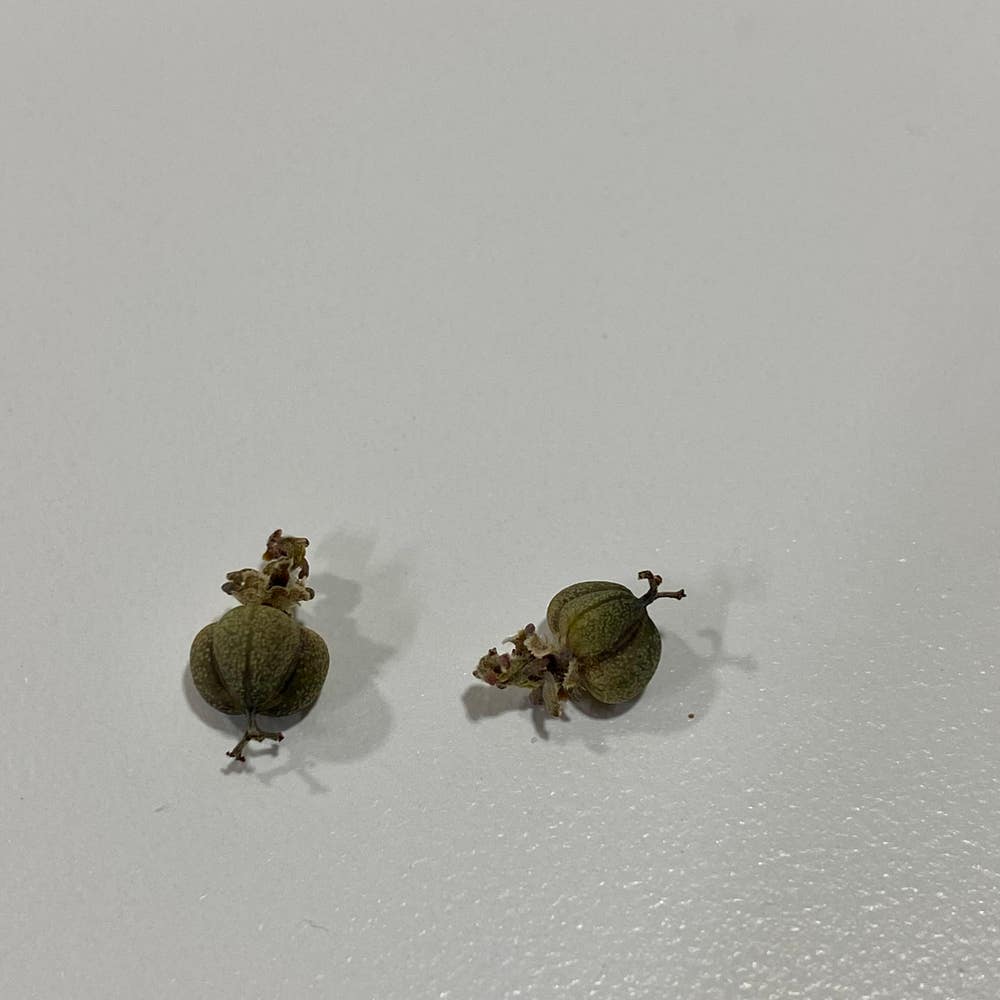
After flowering, the blooms will wilt and drop, potentially leaving behind seed pods. It's important to note that Euphorbia obesa does not die after flowering; it continues to thrive and can produce offsets, ensuring its longevity in your garden.
🐝 Pollination Methods
Pollination can occur naturally through insects or wind. For those interested in increasing seed production, manual pollination techniques can be employed, providing an engaging activity for succulent enthusiasts.
🌺 If Euphorbia obesa Doesn't Flower
🌟 Primary Ornamental or Functional Features
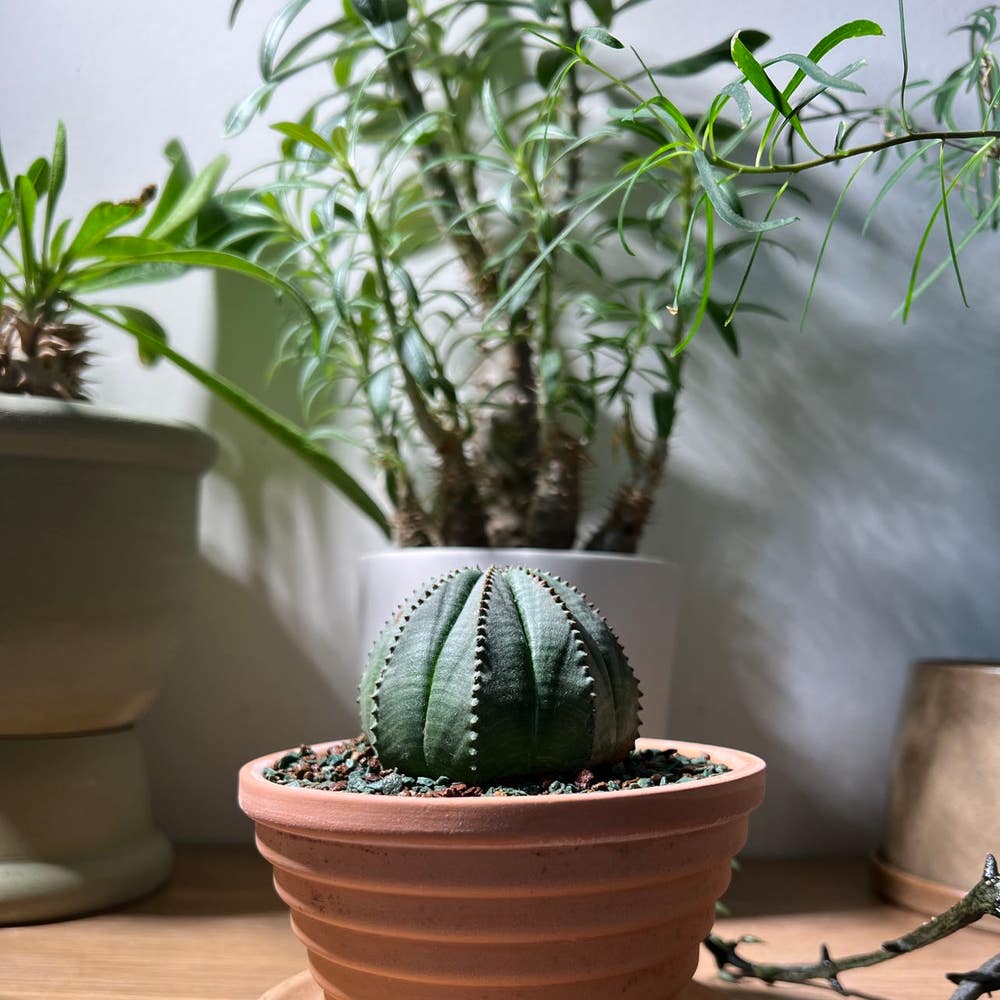
Even without flowers, Euphorbia obesa remains an attractive ornamental plant due to its unique spherical shape and ribbed texture. Its low maintenance requirements and drought tolerance make it a favorite among collectors and gardeners alike.
🌿 Reproductive Strategies Without Flowers
Euphorbia obesa primarily reproduces through offsets, which are small plants that develop at the base of the parent plant. These offsets can be separated and planted to propagate new plants, ensuring the continuation of this fascinating species.
🌈 Unique Aspects of Euphorbia obesa
🔍 Unusual Characteristics Related to Flowering or Non-Flowering
Rare flowering events under specific environmental conditions make Euphorbia obesa a unique specimen in succulent collections. Its ability to thrive in arid conditions while reproducing asexually through offsets is a fascinating aspect of its biology.
📚 Interesting Facts or Trivia About Euphorbia obesa's Reproductive Strategy
The rarity of Euphorbia obesa's flowering makes it a sought-after event for succulent enthusiasts. Its unique morphology and reproductive strategies contribute to its status as a prized collector's item in the succulent community.
⚠️ Safety First
This content is for general information and may contain errors, omissions, or outdated details. It is not medical, veterinary advice, or an endorsement of therapeutic claims.
Always consult a qualified healthcare professional before using any plant as food, medicine, or supplement.
Never eat any plant (or feed one to pets) without confirming its identity with at least two trusted sources.
If you suspect poisoning, call Poison Control (800) 222-1222, the Pet Poison Helpline (800) 213-6680, or your local emergency service immediately.
Spotted an error? Please report it here.
Encourage your Euphorbia obesa to bloom beautifully 🌼 with Greg's personalized care reminders and tailored watering schedules, ensuring it thrives on sunlight and proper care!