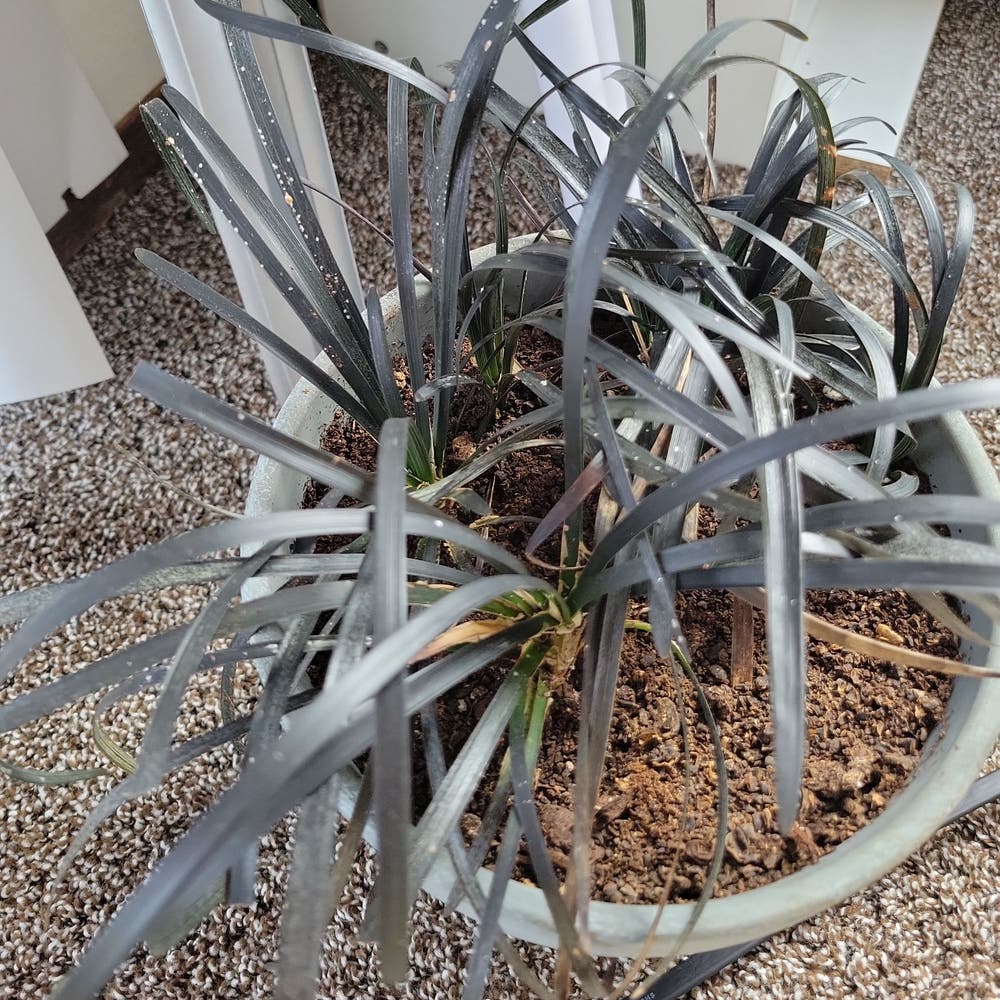
🔍 Understanding Black Spots on Your Dwarf Mondo Grass Leaves
Ophiopogon japonicus 'Nana'
By the Greg Editorial Team
Oct 16, 2024•6 min read
This article was created with the help of AI so we can cover more plants for you. May contain errors. See one? Report it here.
- 🌱 Black spots on dwarf mondo grass are mainly due to fungal infections and overwatering.
- 💧 Poor drainage and nutrient deficiencies worsen black spots; assess soil moisture regularly.
- 🌞 Excessive sunlight and pests stress grass, making it vulnerable to diseases.
Causes of Black Spots
🦠 Fungal Infections
Fungal infections are a primary culprit behind black spots on your dwarf mondo grass. One common disease, leaf spot disease, manifests as dark, irregular spots on leaves, often thriving in conditions of high humidity and poor air circulation.
🌧️ Environmental Stressors
💧 Overwatering
Overwatering is a frequent issue that can lead to black spots. Symptoms include waterlogged soil and yellowing leaves, which create a perfect environment for fungal infections to flourish.
🚫 Poor Drainage
Poor drainage can exacerbate the problem. Signs like puddles after rain and compacted soil indicate that water isn't moving away from the roots, leading to root rot and increased vulnerability to diseases.
🥦 Nutrient Deficiencies
Nutrient deficiencies can also contribute to black spots. Key nutrients include nitrogen, essential for leaf growth; a deficiency can lead to noticeable discoloration. Potassium is equally important, as its lack weakens the plant's ability to resist diseases.
Understanding these causes is crucial for effective treatment and prevention. Next, we’ll explore how to diagnose the problem effectively.
Diagnosing the Problem
🌍 Assessing Environmental Conditions
Soil Moisture Levels
To keep your dwarf mondo grass thriving, aim for well-drained soil. A moisture meter can help you gauge the moisture levels accurately.
Overwatering can lead to soggy soil, which often results in black spots on leaves. Recognizing these signs early can save your grass from further damage.
Sunlight Exposure
Dwarf mondo grass prefers partial to full shade. Too much direct sunlight can stress the plant, leading to various issues.
Watch for symptoms like leaf curling and discoloration, which often accompany black spots. Adjusting sunlight exposure can make a significant difference in your grass's health.
🐛 Identifying Potential Pests
Common Pests
Aphids are small, sap-sucking insects that can weaken your grass significantly. They often go unnoticed until the damage is done.
Spider mites are another concern; these tiny pests cause stippling and discoloration on leaves. Keeping an eye out for these pests is crucial for maintaining healthy grass.
Signs of Pest Damage
Look for visual indicators such as yellowing leaves and webbing, which signal pest activity. If you spot visible insects, it's time to take action.
Pest damage increases your grass's vulnerability to diseases. Addressing these issues promptly can help keep your lawn in top shape.
As you diagnose the problem, remember that both environmental conditions and pests play a critical role in the health of your dwarf mondo grass. Next, we’ll explore effective treatment options to tackle these issues head-on.
Treatment Options
🧪 Chemical Treatments
Recommended Fungicides
When dealing with black spots on your dwarf mondo grass, fungicides can be a game changer. You’ll typically choose between systemic and contact fungicides; systemic ones penetrate the plant, while contact fungicides act on the surface.
Look for products specifically labeled for grass use. This ensures they’re safe and effective for your lawn.
Application Methods
Timing is crucial for fungicide application. Aim to apply during dry conditions to maximize effectiveness.
Always follow the label instructions for dilution and coverage. This ensures you’re using the right amount and applying it correctly for the best results.
🌱 Organic Solutions
Natural Fungicides
If you prefer a more eco-friendly approach, natural fungicides are a great option. Neem oil and baking soda solutions are popular choices that can help combat fungal issues.
Apply these solutions every 7-14 days until you notice improvement. Consistency is key for effective treatment.
Home Remedies
For a DIY approach, consider mixing water with a few drops of dish soap. Spray this mixture on the affected areas to help alleviate the black spots.
Monitor the grass over the following weeks to see if there’s improvement. Sometimes, simple home remedies can yield surprisingly effective results.
As you explore these treatment options, remember that prevention is just as important. Next, we’ll discuss how to implement preventive measures to keep your dwarf mondo grass healthy and vibrant.
Preventive Measures
🌊 Best Practices for Watering
Proper Irrigation Techniques
Deep watering is essential for healthy dwarf mondo grass. Instead of frequent shallow watering, aim for a thorough soak that encourages deep root growth.
Using tools like a soaker hose or drip irrigation can help deliver moisture directly to the roots. This method minimizes evaporation and ensures your grass gets the hydration it needs.
Timing and Frequency
Watering early in the morning is ideal. This timing reduces evaporation and allows the grass to absorb moisture before the heat of the day sets in.
Adjust your watering frequency based on rainfall and soil moisture levels. Keeping an eye on these factors helps prevent overwatering, which can lead to black spots.
🌱 Soil Health Management
Importance of Soil Aeration
Soil aeration plays a crucial role in maintaining healthy dwarf mondo grass. It improves drainage and promotes root health while reducing soil compaction.
To aerate your soil, use a garden fork or a specialized aerator to create holes. This simple technique allows air, water, and nutrients to penetrate deeper into the soil.
Fertilization Tips
Using balanced NPK fertilizers can significantly benefit your grass. These fertilizers provide essential nutrients that support robust growth and disease resistance.
Timing is key for fertilization; apply in early spring and late summer. This schedule ensures your dwarf mondo grass has the nutrients it needs during critical growth periods.
By implementing these preventive measures, you can maintain a vibrant and healthy lawn. This proactive approach not only enhances the appearance of your dwarf mondo grass but also reduces the risk of black spots and other issues.
Next, let’s explore ongoing care to keep your grass thriving throughout the seasons.
Ongoing Care
Regular Maintenance Routines 🌱
Mowing Practices
To keep your dwarf mondo grass thriving, maintain its height at 2-3 inches. This height promotes robust growth and helps prevent excessive leaf buildup.
Regular mowing is essential. It not only keeps your lawn looking neat but also reduces the risk of diseases that thrive in dense foliage.
Seasonal Care Adjustments
In spring, focus on fertilizing and aerating your grass. This boosts nutrient availability and improves soil health.
As fall approaches, clean up any debris. Preparing your lawn for winter ensures it stays healthy and resilient against cold weather.
Monitoring for Recurrence 🔍
Signs to Watch for After Treatment
After treatment, keep an eye out for new black spots or changes in leaf color. Regular visual checks can help catch issues early.
Also, assess soil moisture frequently. This proactive approach prevents overwatering, which can lead to further problems.
When to Seek Professional Help
If black spots persist despite your best efforts, it might be time to consult a professional. Persistent issues can signal underlying problems that require expert attention.
A lawn care professional can provide tailored solutions to help restore your grass to its former glory.
⚠️ Safety First
This content is for general information and may contain errors, omissions, or outdated details. It is not medical, veterinary advice, or an endorsement of therapeutic claims.
Always consult a qualified healthcare professional before using any plant as food, medicine, or supplement.
Never eat any plant (or feed one to pets) without confirming its identity with at least two trusted sources.
If you suspect poisoning, call Poison Control (800) 222-1222, the Pet Poison Helpline (800) 213-6680, or your local emergency service immediately.
Spotted an error? Please report it here.
Keep your dwarf mondo grass spot-free 🌱 by using Greg's tailored watering and care reminders to prevent fungal infections and nutrient deficiencies!