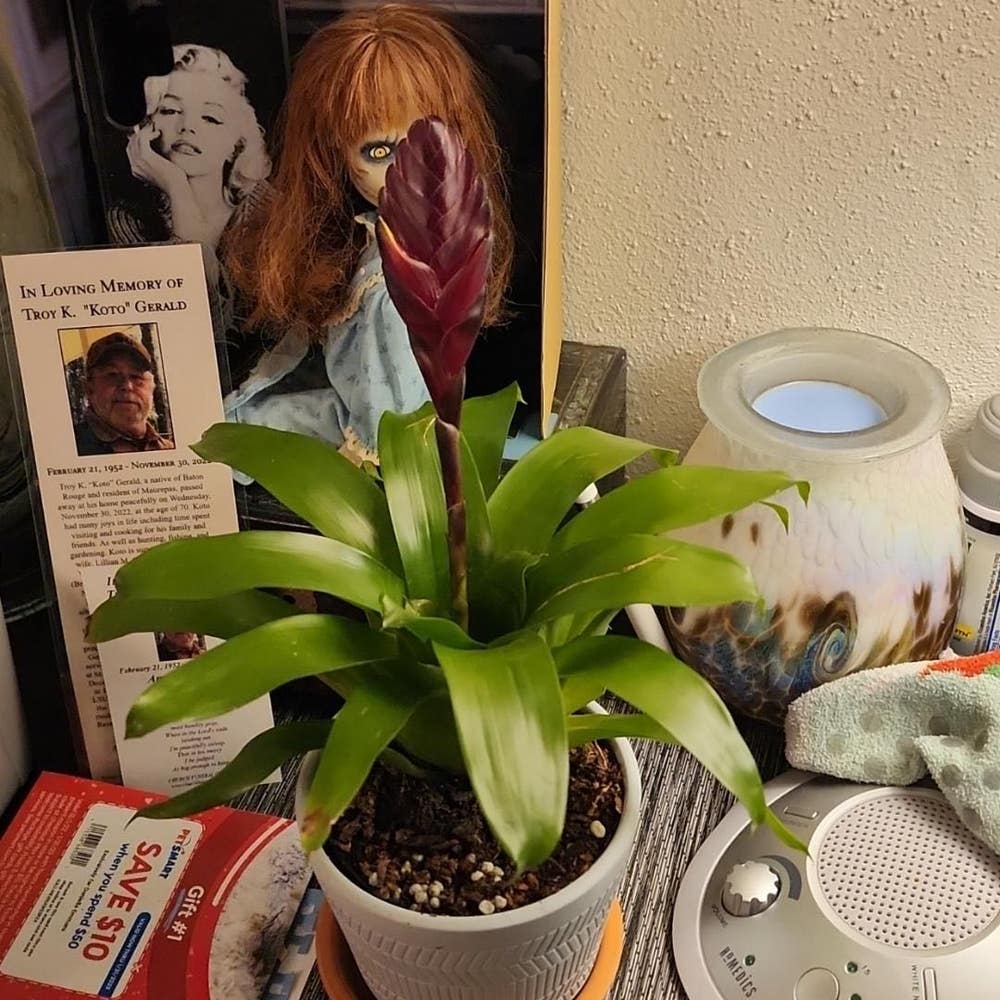
🌸 Best Spots to Plant Your Vriesea
Vriesea maxoniana
By the Greg Editorial Team
Sep 30, 2024•2 min read
This article was created with the help of AI so we can cover more plants for you. May contain errors. See one? Report it here.
- 🌞 Vriesea thrives in bright, indirect sunlight; avoid excessive shade for best growth.
- 🌱 Well-draining, organic-rich soil is essential; aim for pH 5.5 to 7.0.
- 🌬️ Protect from strong winds by planting near windbreaks like fences or shrubs.
Ideal Locations for Vriesea
🌞 Sunlight Exposure
Vriesea thrives in bright, indirect sunlight. While they can tolerate partial shade, inadequate light can lead to yellowing leaves and stunted growth.
For indoor plants, position them near east or north-facing windows. Outdoors, place them under the canopy of taller plants to filter harsh sunlight.
🌱 Soil Type
The ideal soil for Vriesea is well-draining and rich in organic matter. Aim for a pH range of 5.5 to 7.0, which is slightly acidic to neutral.
Consider using a potting mix that includes perlite or orchid bark for better aeration. Avoid heavy clay or compacted soils, as they retain too much water, risking root rot.
🏢 Proximity to Structures
Buildings can significantly impact the light and temperature around your Vriesea. They may create shade or reflect heat, altering the microclimate.
For optimal growth, place Vriesea near south-facing walls to benefit from warmth and light. Steer clear of areas with excessive shadow from overhangs or eaves, and ensure that water doesn’t pool near the plants.
🌬️ Wind Protection
Vriesea can be sensitive to strong winds, which may damage their leaves and overall health. To protect them, consider planting near windbreaks like fences or shrubs.
Using garden structures, such as trellises, can also provide a shield against harsh winds. Always assess the wind patterns in your planting area to ensure your Vriesea remain safe.
🚰 Drainage Considerations
Proper drainage is crucial for the health of Vriesea, as it prevents root rot and fungal diseases.
To improve drainage, use raised beds or pots with drainage holes. Incorporating gravel or sand into your soil mix can also enhance drainage capabilities. Lastly, evaluate the natural drainage in your planting area to ensure optimal conditions for your plants.
By carefully considering these factors, you can create the perfect environment for your Vriesea to flourish. Next, let’s explore the best care practices to keep your plants healthy and vibrant.
⚠️ Safety First
This content is for general information and may contain errors, omissions, or outdated details. It is not medical, veterinary advice, or an endorsement of therapeutic claims.
Always consult a qualified healthcare professional before using any plant as food, medicine, or supplement.
Never eat any plant (or feed one to pets) without confirming its identity with at least two trusted sources.
If you suspect poisoning, call Poison Control (800) 222-1222, the Pet Poison Helpline (800) 213-6680, or your local emergency service immediately.
Spotted an error? Please report it here.
Create the perfect home for your Vriesea 🌞 with Greg's tailored tips on light, soil, and placement to ensure vibrant growth and prevent common issues!