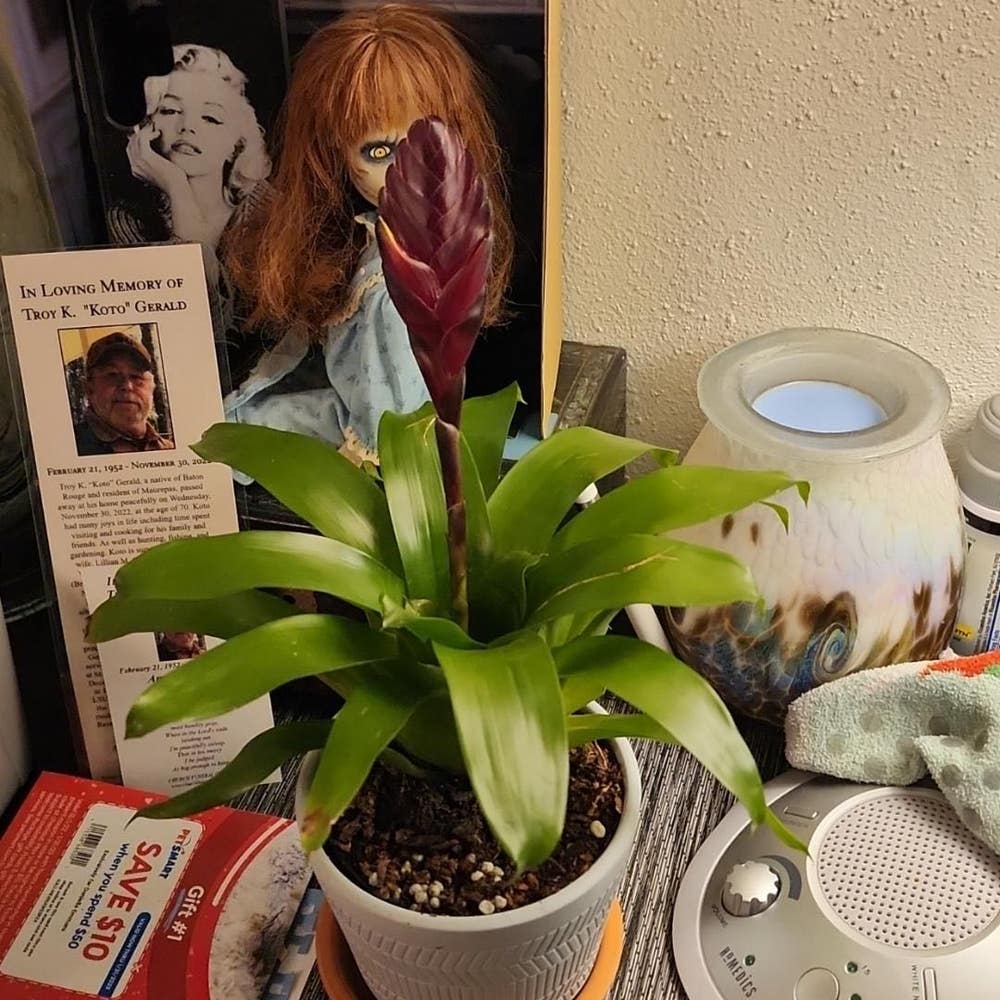
Propagating Your Vriesea maxoniana: Step-by-Step Guide
Vriesea maxoniana
By the Greg Editorial Team
Apr 16, 2024•4 min read
This article was created with the help of AI so we can cover more plants for you. May contain errors. See one? Report it here.
- Look for mature offsets with developed roots for successful propagation.
- Sterilize tools, let offsets dry to prevent rot before potting.
- Patience is key in the propagation journey, from seeds to plantlets.
Getting Started with Offsets
🌱 Identifying Ready-to-Separate Offsets
To kickstart propagation, spot offsets that are mature enough to stand on their own. Look for a substantial size and a developed root system, indicating they're ready for a solo journey.
🪒 The Separation Tango
Sterilize your tools—this isn't a job for the rusty and the reckless. Gently twist or slice the offset from the mother plant, ensuring a clean break. It's a delicate operation, so patience and precision are your best allies.
🏺 Potting and Pampering Your New Plant Babies
Once separated, let the offset dry for a day to prevent rot. Then, pot it in well-draining soil, mimicking the mother plant's conditions. Water sparingly, and place your new plant baby in indirect sunlight to encourage healthy growth.
Sowing the Seeds of Success
🌱 Harvesting Vriesea maxoniana Seeds
Harvesting seeds from your Vriesea maxoniana is a timing game. You'll want to catch them just as they mature but before they make their great escape. Gently brush the seeds into a labeled container, ensuring they're clean and free from debris.
🌱 Germination Station Setup
Creating a germination station is like setting up a nursery for your plant's offspring. Consistent warmth and moisture are crucial. Use a mix of peat and coarse sand, and keep the soil barely moist. A plastic cover can help maintain humidity, but watch out for mold.
🌱 From Tiny Seeds to Sprouting Greens
As your Vriesea maxoniana seeds begin to sprout, they'll need tender care. Keep the soil moist but not soggy, and provide bright, indirect light. Patience is key; these tiny green babies take time to grow. Remember, overwatering is the enemy of progress here.
Advanced Propagation: Tissue Culture Techniques
🧫 The Science of Tissue Culture
Tissue culture, or micropropagation, is the process of growing new plants from a few cells in a sterile environment. It's like the plant version of a test-tube baby. Sterility is crucial; your workspace should be as clean as a surgeon's operating table. This method allows for the production of numerous genetically identical plants, which is great for preserving desirable traits.
🏡 DIY Tissue Culture at Home
Yes, you can try tissue culture in the comfort of your home, though it's not a walk in the park. You'll need a scalpel, petri dishes, and a culture medium—think of it as a nutrient spa for plant cells. The explant, or the tissue you'll be growing, should be young and healthy to increase success rates. Avoid older tissues as they're like grumpy old men—set in their ways and less adaptable.
Cleanliness is next to godliness here; any contamination can ruin the whole process. Once you've placed your tiny plant piece in the culture medium, patience becomes your new best friend. It's a waiting game that can last several weeks, but the payoff is a batch of new plantlets. Transitioning them to the real world requires a gradual introduction to less controlled conditions. It's a bit like sending kids off to college—nerve-wracking but necessary.
Remember, tissue culture is the Olympics of plant propagation. It's demanding but can be incredibly satisfying, especially when you see your plantlets thriving.
Ensuring Propagation Success
🌟 The Ideal Propagation Environment
Creating the perfect environment for your Vriesea maxoniana is like setting up a backstage pass for a rockstar plant. Bright indirect light is the spotlight it craves, avoiding the harsh glare of direct sun. Humidity should be your plant's groupie, present but not overwhelming, while temperature is the steady rhythm section, consistent and draft-free to keep the groove going.
🚫 Common Pitfalls and How to Dodge Them
Rot and pests are the uninvited guests to your propagation party. To keep them out, water with precision, targeting the soil and not the plant. Think of it as a VIP list; only the right amount of moisture gets in. Good air circulation is your bouncer, keeping the fungal paparazzi at bay and ensuring your plant's health isn't compromised by unwanted guests.
Growth Milestones and Patience
The propagation journey is a series of small victories. First, you'll see roots taking hold, a sign your plant is settling into its new digs. Then, new growth, the equivalent of a plant's first words. It's a slow burn, not a fireworks show. Adjust care as needed, and remember, patience is not just a virtue; it's the secret ingredient to your Vriesea maxoniana's success story.
⚠️ Safety First
This content is for general information and may contain errors, omissions, or outdated details. It is not medical, veterinary advice, or an endorsement of therapeutic claims.
Always consult a qualified healthcare professional before using any plant as food, medicine, or supplement.
Never eat any plant (or feed one to pets) without confirming its identity with at least two trusted sources.
If you suspect poisoning, call Poison Control (800) 222-1222, the Pet Poison Helpline (800) 213-6680, or your local emergency service immediately.
Spotted an error? Please report it here.
Embrace the art of propagation 🌿 with Greg's tailored reminders and care tips, ensuring your Vriesea maxoniana offsets and seeds flourish every step of the way.