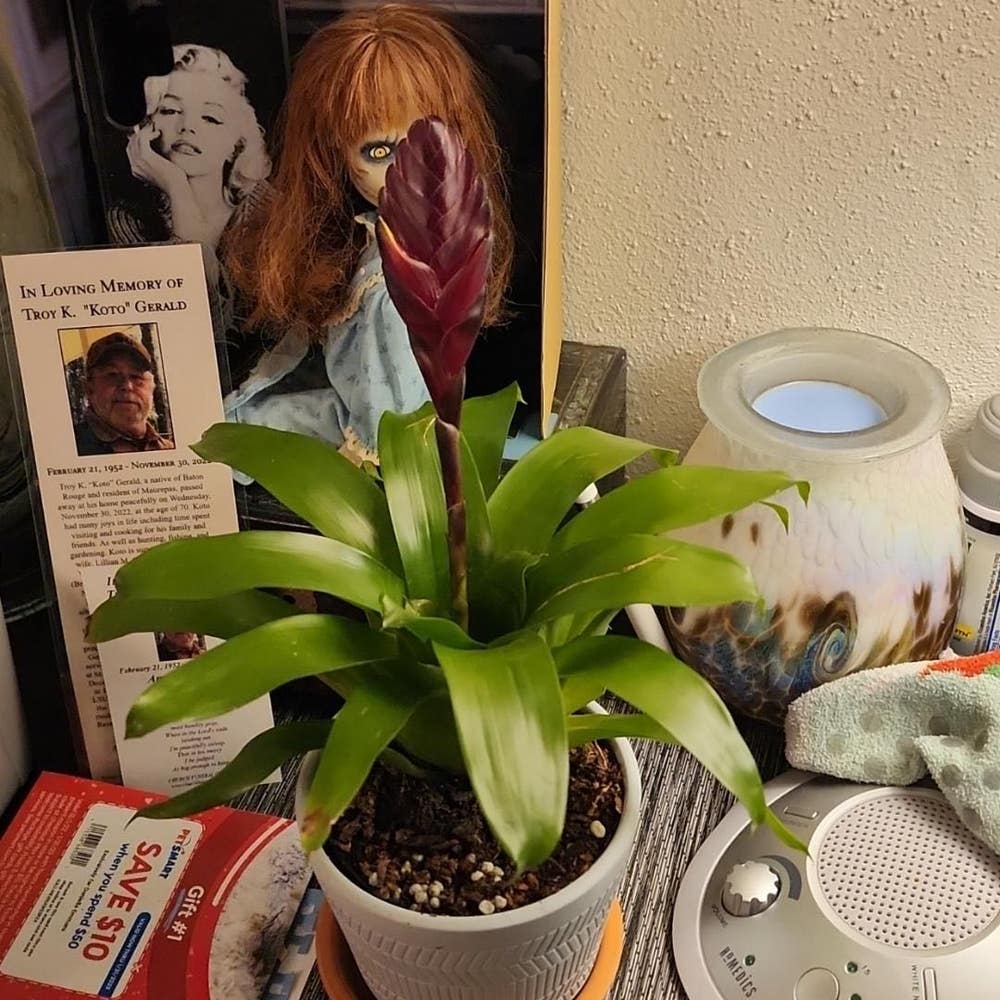
How Often Should I Water My Vriesea maxoniana?
Vriesea maxoniana
By the Greg Editorial Team
Apr 16, 2024•3 min read
This article was created with the help of AI so we can cover more plants for you. May contain errors. See one? Report it here.
- 🍂 Drooping leaves signal thirst; crispy tips mean water your Vriesea maxoniana.
- 💧 Avoid root rot by not overwatering and keeping the central cup clear.
- 🔄 Adjust watering with seasons and room humidity for a happy plant.
Spotting Thirsty vs. Drowned Roots
🚰 Signs Your Vriesea maxoniana Needs a Drink
Leaves drooping like they've just heard bad news? That's your Vriesea maxoniana craving hydration. Check the soil; if it crumbles like a stale cookie, it's time to water. Crispy leaf tips are a telltale sign of thirst.
🏊♂️ The Perils of Overwatering
Overzealous watering can turn your plant's home into a soggy mess. If the leaves feel softer than your favorite pillow, you've gone too far. Root rot sneaks in when you're drowning your plant in kindness—look out for a base that's mushier than week-old bananas.
Nailing the Watering Technique
💧 How to Water Properly
When it comes to watering your Vriesea maxoniana, precision is key. Forget about drenching the soil; think targeted hydration. Aim for the base of the plant, circling the edges like a pro. This method encourages roots to stretch and grow, seeking moisture and creating a stable foundation.
Filtered water is your friend here, especially if your tap water is hard or chemically treated. It's like giving your plant a clean drink, free from the harsh elements that can build up in the soil over time.
🚱 Avoiding the Dreaded Central Cup Swamp
Beware of the central cup, a trap for the overzealous waterer. This part of your Vriesea maxoniana is not a swimming pool; it's more like a delicate measuring cup. Fill it with care, and flush it weekly to prevent stagnation and bacterial growth.
If you're unsure, err on the side of underfilling. A thirsty Vriesea is a quick fix, but a drowned one is a horticultural headache you don't need. Remember, the goal is to mimic the natural humidity of its native habitat, not recreate a tropical storm.
Timing is Everything: When to Water
📅 Seasonal Watering Wisdom
Forget the calendar; your Vriesea maxoniana's thirst is governed by the seasons. Summer's heat demands more frequent watering, while winter's chill suggests a more restrained approach. The top inch of soil is your truth-teller—if it's dry, it's time for your plant to sip.
The Role of Humidity in Watering Frequency
Humidity is the invisible hand that guides your watering can. In a humid room, evaporation takes a vacation, and you can space out watering sessions. On the flip side, dry air is like a thirsty guest at a party—it'll have you reaching for the watering can more often. Keep a moisture meter handy or trust the age-old finger test to gauge the soil's dampness.
Tailoring Watering to Your Plant's Lifestyle
🕵️ Assessing Your Plant's Unique Needs
Observing your Vriesea maxoniana is like being a detective; you're on the lookout for clues. If the leaves are drooping or the color seems off, it's time to play plant doctor. Check the soil—if it's dry and your plant looks sad, it's begging for a drink.
🎛️ Fine-Tuning Watering Frequency
Your plant's environment is as unique as a fingerprint, and so are its watering needs. Adjust your watering schedule based on the light, temperature, and humidity it experiences daily. If your Vriesea maxoniana is basking in a sunny spot, it'll need more frequent watering. In a cooler, dim area, it's more of a low-maintenance buddy. Keep a close eye on the weather and your indoor climate; they're the silent DJs influencing your plant's thirst levels.
⚠️ Safety First
This content is for general information and may contain errors, omissions, or outdated details. It is not medical, veterinary advice, or an endorsement of therapeutic claims.
Always consult a qualified healthcare professional before using any plant as food, medicine, or supplement.
Never eat any plant (or feed one to pets) without confirming its identity with at least two trusted sources.
If you suspect poisoning, call Poison Control (800) 222-1222, the Pet Poison Helpline (800) 213-6680, or your local emergency service immediately.
Spotted an error? Please report it here.
Ensure your Vriesea maxoniana stays perfectly hydrated 💧 with Greg's custom reminders, adapting to every season and room condition for peak plant health.