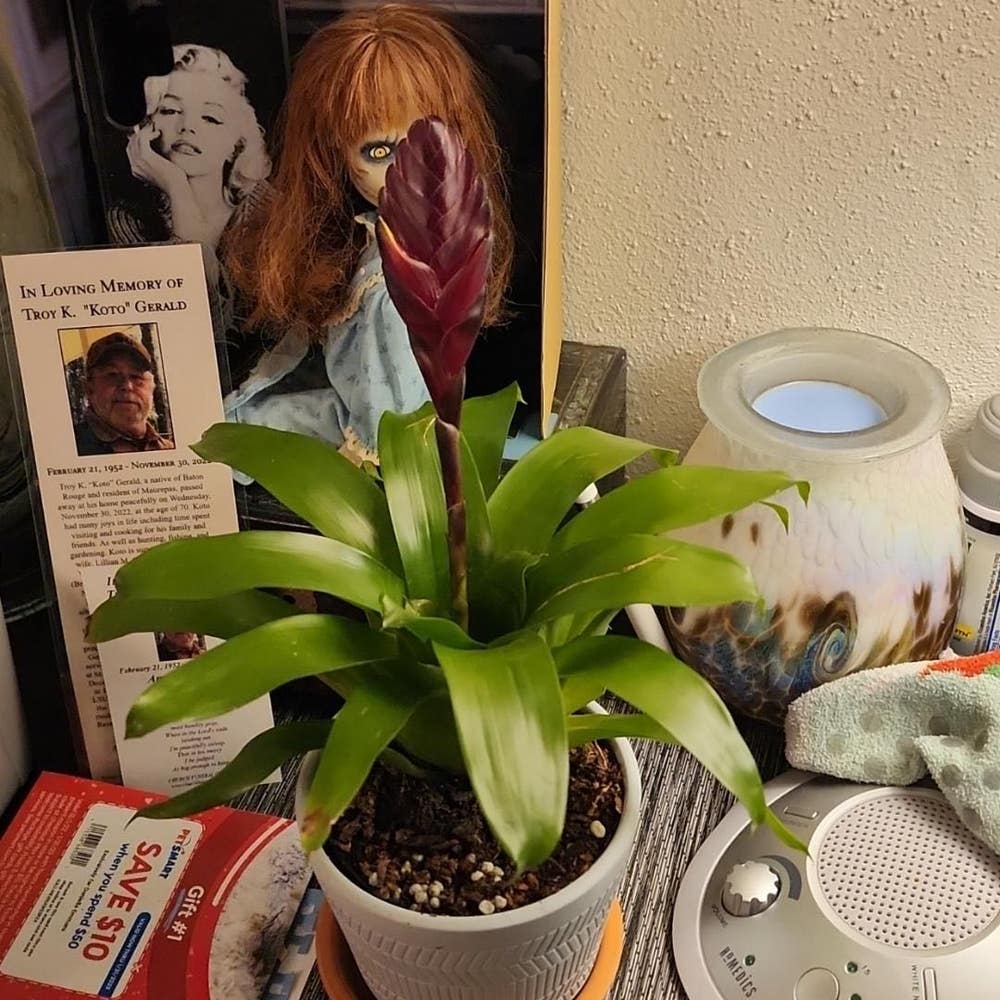
Why Is My Vriesea maxoniana Not Doing Well?
Vriesea maxoniana
By the Greg Editorial Team
Apr 16, 2024•5 min read
This article was created with the help of AI so we can cover more plants for you. May contain errors. See one? Report it here.
- 🌱 Yellow leaves mean over-watering, crispy edges mean under-watering.
- ☀️🌡️ Bright, indirect light and 15-27ºC are ideal for Vriesea maxoniana.
- 🐛 Combat pests and fungus with natural remedies and proper air circulation.
Water Woes: Too Much or Too Little
🚰 Over-watering and Under-watering
Yellowing leaves are the plant's cry for help, signaling you might be loving it a bit too much with water. On the flip side, if the tips of the leaves are as crispy as overcooked bacon, it's a clear sign your Vriesea maxoniana is parched.
Striking the balance in watering is key. Check the top inch of soil; if it's dry, it's time for a drink. Water until it drains out the bottom, then wait for the soil to dry before the next watering session. Remember, your plant's thirst changes with the seasons—more in summer, less in winter.
🦠 Root Rot
When the roots start to feel like a mushy banana, it's a red flag for root rot. If the soil smells like a forgotten gym locker, it's time to take action.
From soggy to safe: Stop watering immediately and let the soil dry out. If root rot has set in, it's surgery time—remove the plant, trim the blackened roots, and repot in fresh, well-draining soil. Then, adjust your watering habits like you're fine-tuning a vintage watch—carefully and with precision.
Light and Leaf Health
🌞 Irregular Light Exposure
Leaf clues are your go-to for gauging your Vriesea maxoniana's happiness with its light situation. Pale, elongated leaves scream for more sun, while a brown, crispy fringe is a telltale sign of too much.
Finding the sweet spot for your plant's light needs isn't rocket science. It's about avoiding the extremes. Ensure a consistent, bright, but indirect light source to keep your Vriesea maxoniana's leaves vibrant and healthy.
🏜️ Leaf Scorching
Burn notice: Your plant's edges can crisp up like toast if it's getting too much direct sunlight. This isn't a suntan; it's a cry for help.
To prevent a leafy burnout, shield your plant from the harshest rays. Use sheer curtains or relocate to a spot that's bright yet gentle. Remember, your Vriesea maxoniana isn't trying to get a beach tan.
Temperature Tantrums
🌡️ Understanding Your Vriesea maxoniana's Temperature Preferences
Vriesea maxoniana is a tropical delight, preferring a cozy range of 15-27ºC. It's not asking for a vacation in the Bahamas, just a stable spot where it can bask without breaking a sweat.
🥶 Avoiding the Chills and Fever
Drafts are the enemy. They're like that one friend who can't decide on a restaurant—annoying and unsettling. Keep your plant away from vents and exterior doors to avoid the leafy equivalent of a cold shoulder or a fever.
🌡️ Keeping It Consistent
A thermometer is your new best bud, and a hygrometer can tag along to monitor humidity. Think of them as your plant's personal weather station, giving you the deets to prevent temperature-induced tantrums.
🌡️ Recognizing Temperature Stress
When leaves start looking like they've been through a desert trek—wilting or getting crispy—it's your plant waving a white flag. Yellowing or blackened leaves are its way of saying, "I'm not okay with this hot-cold drama."
🏠 Practical Tips for Temperature Control
Insulate like you're preparing for the apocalypse. Thermal curtains can shield your Vriesea maxoniana from the elements. And remember, ventilation is crucial—no one likes a stuffy room, not even your plant. Keep the air moving gently to avoid stagnant heat zones.
🍂 Seasonal Adjustments
As seasons change, so should your plant care routine. Adjust your plant's location and the room temperature like you're fine-tuning a playlist—smooth transitions keep the vibe right.
Pests: Uninvited Guests
🐜 Identifying Common Culprits
Vriesea maxoniana, like any other houseplant, can fall victim to pest infestations. Tiny invaders such as aphids, spider mites, and mealybugs are the usual suspects. These pests are small but mighty in their ability to wreak havoc on your plant's health. Check the undersides of leaves and stems for any signs of these critters or their telltale webbing.
🚪 Eviction Notice
Once you've identified the pests, it's time for action. Start with natural remedies such as introducing predatory insects like ladybugs or lacewings, which can help control the pest population. For a hands-on approach, physically remove the pests or rinse your plant with water to dislodge them. If these methods don't cut it, consider using insecticidal soaps or neem oil treatments. They're like a polite but firm request for the pests to leave. In severe cases, you might need to resort to chemical pesticides—the equivalent of calling in the cavalry. Remember, regular plant check-ups are crucial; think of them as your neighborhood watch program.
Fungal Fiascos and Soil Sickness
🍄 Mold and Fungus Among Us
Spotted leaves and a musty smell are telltale signs that your Vriesea maxoniana is throwing a fungal fiesta. These uninvited guests love to crash the party in stagnant air and excess moisture.
To clear the air, increase circulation—think of it as your plant's personal space needing respect. If you catch these party poopers, remove affected foliage immediately. When it's time to bring out the big guns, a fungicide can be your plant's knight in shining armor. Follow the instructions like your plant's life depends on it, because it does.
🌱 Soil and Root Care
The foundation of health for your Vriesea maxoniana starts with the soil. If you're greeted by a fuzzy or slimy layer on the soil, it's a red flag that your plant is in a soggy crisis.
To turn things around, ensure your soil is the right mix—think chunky orchid mix or perlite to transform a swamp into a breathable paradise. Regular maintenance isn't just pampering; it's a necessity. Remember, happy roots mean a happy Vriesea maxoniana. Keep those roots snug but not suffocated, and your plant will thank you with vibrant growth.
⚠️ Safety First
This content is for general information and may contain errors, omissions, or outdated details. It is not medical, veterinary advice, or an endorsement of therapeutic claims.
Always consult a qualified healthcare professional before using any plant as food, medicine, or supplement.
Never eat any plant (or feed one to pets) without confirming its identity with at least two trusted sources.
If you suspect poisoning, call Poison Control (800) 222-1222, the Pet Poison Helpline (800) 213-6680, or your local emergency service immediately.
Spotted an error? Please report it here.
Ensure your Vriesea maxoniana flourishes by using Greg's custom reminders 🌿 for watering and light, making plant care foolproof and fun!