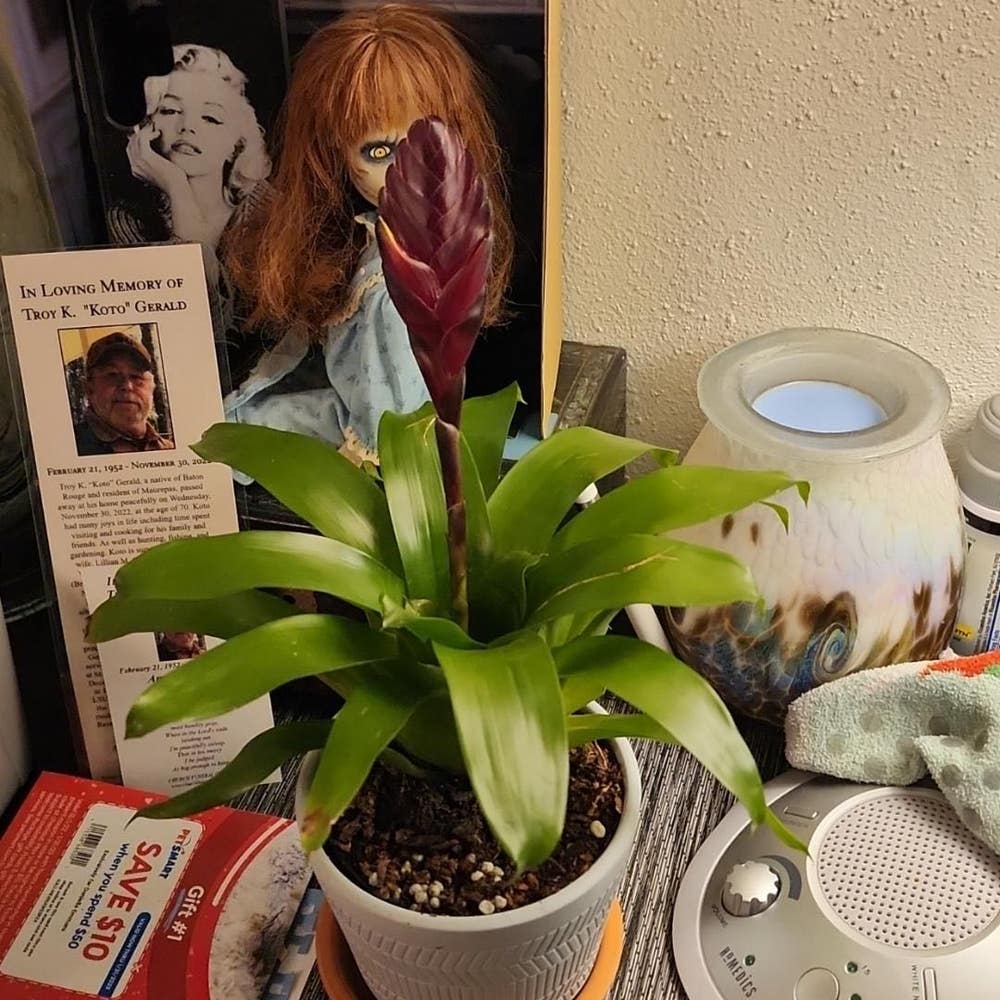
Your Vriesea maxoniana's Light Needs
Vriesea maxoniana
By the Greg Editorial Team
Apr 16, 2024•3 min read
This article was created with the help of AI so we can cover more plants for you. May contain errors. See one? Report it here.
- 🌅 East-facing windows provide ideal morning light for Vriesea maxoniana.
- 💡 LED/fluorescent grow lights supplement light indoors; mimic natural spectrum.
- 🌺 Adjust light for flowering: Intensity and exposure are key to bloom triggers.
Shedding Light on Vriesea maxoniana Indoors
🌅 Finding the Sweet Spot: East or West-facing Windows
Your Vriesea maxoniana is a bit of a Goldilocks when it comes to light; it likes it just right. East-facing windows are the jackpot, offering a gentle morning glow that will keep your plant's leaves vibrant without the risk of sunburn. If you're dealing with west-facing windows, you're in afternoon territory, where the light can get a bit too intense. Here's where curtains and blinds come in handy, acting like sunglasses for your plant, protecting it from those harsh rays.
💡 Boosting Growth with Grow Lights
Sometimes, the sun just doesn't cut it, especially in the darker months. That's when grow lights can step in to save the day. If your Vriesea maxoniana starts to look a bit leggy or its colors fade, it's signaling an SOS for more light. Opt for LED or fluorescent grow lights, which mimic the sun's spectrum without turning your living room into a sauna. Remember, it's about giving your plant a consistent light source, not interrogating it under a harsh spotlight.
Basking in the Great Outdoors
🌞 Picking the Perfect Outdoor Spot
Finding the ideal location for your Vriesea maxoniana outdoors is a bit like a strategic game of chess. You want to place your plant in a position where it will thrive, not just survive. Morning sunlight with afternoon shade is the sweet spot, ensuring your plant gets the light it needs without the risk of a sunburn.
Transitioning your Vriesea maxoniana to outdoor light should be as gentle as a spring breeze. Start by placing it in a shaded area and gradually move it to a spot with more light. This is the plant equivalent of dipping your toes before diving into the pool, preventing the shock that can lead to leaf burn.
🌳 The Canopy Effect: Mimicking Natural Habitat
In the wild, Vriesea maxoniana enjoys the dappled sunlight that filters through the forest canopy. To recreate this at home, use other plants to form a living sunshade. Taller plants or even a strategically placed pergola can provide the perfect amount of filtered light.
By mimicking the natural habitat, you're not just creating an environment for your plant to live in; you're crafting a slice of the tropical rainforest right in your backyard. It's about as close to a plant spa as you can get, and your Vriesea maxoniana will thank you with vibrant growth.
Light's Role in Vriesea maxoniana's Showtime: Flowering
💡 Encouraging Blooms with Proper Light
To trigger Vriesea maxoniana's flowering, think of light as the on-switch. Intensity is key; too dim and the plant won't get the memo to bloom. Aim for bright, indirect light that mimics the dappled sunlight of its natural habitat.
Rotate your plant periodically to ensure even light exposure, which encourages uniform growth and blooming. If you're using grow lights, set timers to replicate natural day and night cycles, giving your plant the rhythmic light cues it craves.
Full spectrum bulbs can be game-changers, offering the variety of light colors your plant needs to transition from foliage to flowers. And don't forget about nutrients – a dash of potassium can be the difference between a plant that's just surviving and one that's ready to put on a blooming spectacle.
To encourage flowering, adjusting light exposure is key. As the blooming season nears, gradually increase the sunlight your plant receives. This mimics the natural increase in daylight hours that signals the plant to start its floral show.
⚠️ Safety First
This content is for general information and may contain errors, omissions, or outdated details. It is not medical, veterinary advice, or an endorsement of therapeutic claims.
Always consult a qualified healthcare professional before using any plant as food, medicine, or supplement.
Never eat any plant (or feed one to pets) without confirming its identity with at least two trusted sources.
If you suspect poisoning, call Poison Control (800) 222-1222, the Pet Poison Helpline (800) 213-6680, or your local emergency service immediately.
Spotted an error? Please report it here.
Nurture your Vriesea maxoniana to flourishing blooms 🌞 with Greg's tailored reminders for optimal light exposure and plant rotation.