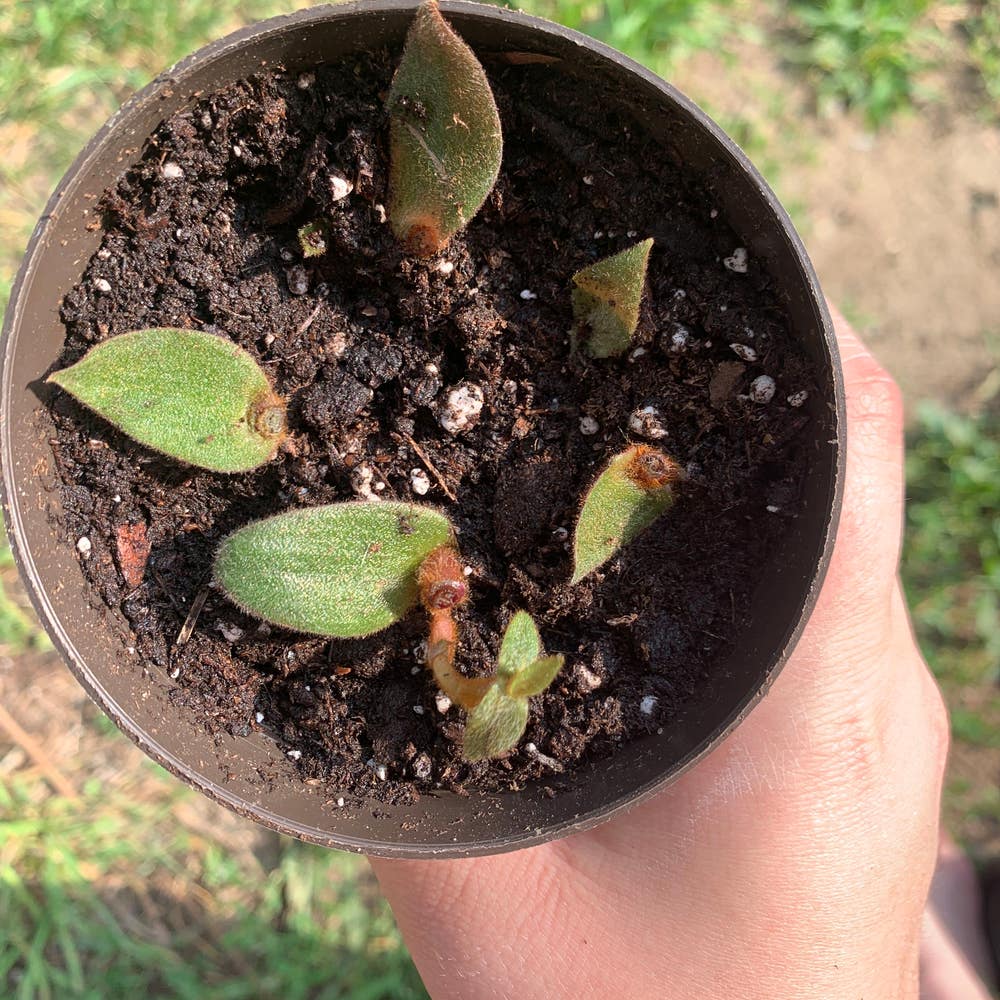
🧸 Why Are My Teddy Bear Vine Leaves Falling Over?
Cyanotis beddomei
By the Greg Editorial Team
Jun 18, 2024•4 min read
This article was created with the help of AI so we can cover more plants for you. May contain errors. See one? Report it here.
Prevent the dreaded leaf-droop 🍂 in your Teddy Bear Vine with these proven plant care lifesavers! 🌟
- Overwatering and underwatering cause limp or crispy leaves, respectively.
- Light and temperature stress can lead to stretching or sunburnt leaves.
- Nutrient balance is key; use diluted fertilizer every 4-6 weeks in growing season.
Spotting the Signs: When Your Teddy Bear Vine is Unhappy
💧 Overwatering Symptoms
If your Teddy Bear Vine's soil feels more like a swamp than soil, you've likely overdone the hydration. Limp leaves and a general look of despair are your plant's white flag, signaling surrender to excessive moisture.
🏜️ Underwatering Symptoms
Conversely, soil that crumbles like stale bread is a distress signal of underwatering. Leaves that are as crispy as autumn leaves and a wilting demeanor are your vine's way of saying, "I'm parched!"
🌞 Stress from Light and Temperature
A Teddy Bear Vine that's stretching out like it's trying to escape its pot could be reaching for more light, while leaves with a sunburnt look have had too much. Temperature swings can make your vine's leaves flop over like they've given up.
🍽️ Telltale Signs of Nutrient Deficiencies
Yellowing leaves and stunted growth are your vine's SOS for nutrients. It's not just being dramatic; it's genuinely struggling to maintain its leaf health without the right diet.

The Watering Balancing Act
💦 Rescuing Overwatered Vines
Overwatered Teddy Bear Vines can feel like a soggy mess. Immediate action is required to prevent root rot. First, stop watering and let the soil dry out. If the pot feels like a swamp, consider repotting with fresh, well-draining soil. Ensure the pot has drainage holes to let excess water escape.
Adjust your watering habits by waiting until the top inch of soil is dry before giving your plant a drink. Use room temperature water to avoid shocking the roots. Remember, it's a balancing act—moist, not drenched.
💧 Saving the Thirsty Vines
Underwatering turns your vine into a crispy critter. To hydrate properly, soak the soil until water runs through the drainage holes, then let it drain completely. Consistency is key; establish a routine that suits your plant's needs, factoring in the environment and season.
Monitor the soil moisture regularly. If it's dry a couple of inches down, it's time to water. Don't wait for your plant to look like it's been through a drought; by then, it's already stressed. Aim for a steady supply of moisture without turning your plant's home into a mini-lake.

Creating the Perfect Environment
💡 Lighting Up Your Vine's Life
Teddy Bear Vine, with its plush leaves, demands bright, filtered light. Too much direct sunlight is a recipe for crispy foliage, while too little leaves your plant languishing in the shadows. East or west-facing windows are your best bet, providing a Goldilocks zone of illumination. If your vine's quarters are more dungeon than sunroom, consider a grow light to fake it 'til you make it. Just remember, gradual changes are the name of the game; move your plant slowly towards more light to avoid a full-blown leaf tantrum.
🌡 Keeping the Temperature Just Right
When it comes to temperature, think of your Teddy Bear Vine as a bit of a homebody—it likes it cozy. Aim for a steady 60-80°F (16-27°C) to keep it from throwing a fit. Anything below 50°F (10°C) and your vine might start shedding leaves faster than a dog in summer. As for humidity, you're aiming for a comfortable middle ground—40-60% should do the trick. Steer clear of drafts and vents; they're the nemesis of your vine's comfort zone. Remember, consistency is key; sudden temperature swings are about as welcome as a snowstorm in July.

Feeding Your Foliage: Nutrients Matter
💉 Diagnosing Nutrient Shortfalls
Yellow leaves, stunted growth, or odd leaf shapes can signal a nutrient crisis. A soil test is like a plant's blood work, revealing what's missing in the nutrient department. Magnesium and calcium are common culprits, but each plant has its own dietary needs.
🌿 Fertilizing for Strong Leaves
Choose a balanced liquid fertilizer; think of it as a multivitamin for your Teddy Bear Vine. During spring and summer, apply it diluted to half-strength every 4-6 weeks. It's a fine line—too much and you'll get the botanical equivalent of weak stems and no flowers. In the cooler months, give the fertilizer a rest; your plant's not hungry for extra nutrients then.
⚠️ Safety First
This content is for general information and may contain errors, omissions, or outdated details. It is not medical, veterinary advice, or an endorsement of therapeutic claims.
Always consult a qualified healthcare professional before using any plant as food, medicine, or supplement.
Never eat any plant (or feed one to pets) without confirming its identity with at least two trusted sources.
If you suspect poisoning, call Poison Control (800) 222-1222, the Pet Poison Helpline (800) 213-6680, or your local emergency service immediately.
Spotted an error? Please report it here.
Revive your Teddy Bear Vine from a droopy fate 🍃 with Greg's custom watering reminders and environmental tips for just the right amount of TLC.