Why Are My Sweet William Leaves Curling?
Dianthus caryophyllus
By the Greg Editorial Team
Jun 14, 2024•4 min read
This article was created with the help of AI so we can cover more plants for you. May contain errors. See one? Report it here.
- Environmental stress and watering are key factors in leaf curling.
- Soil health and nutrients crucial; test soil and use correct fertilizer.
- Manage pests and diseases with regular monitoring and sustainable practices.
Diagnosing Leaf Curling in Sweet William
💨 Environmental Stress and Adjustments
Temperature swings are a no-go for Sweet William. Keep your plants away from drafts and direct heat sources. They're not looking for a sauna or an ice bath, just a steady climate.
🚰 Improper Watering and Optimal Irrigation
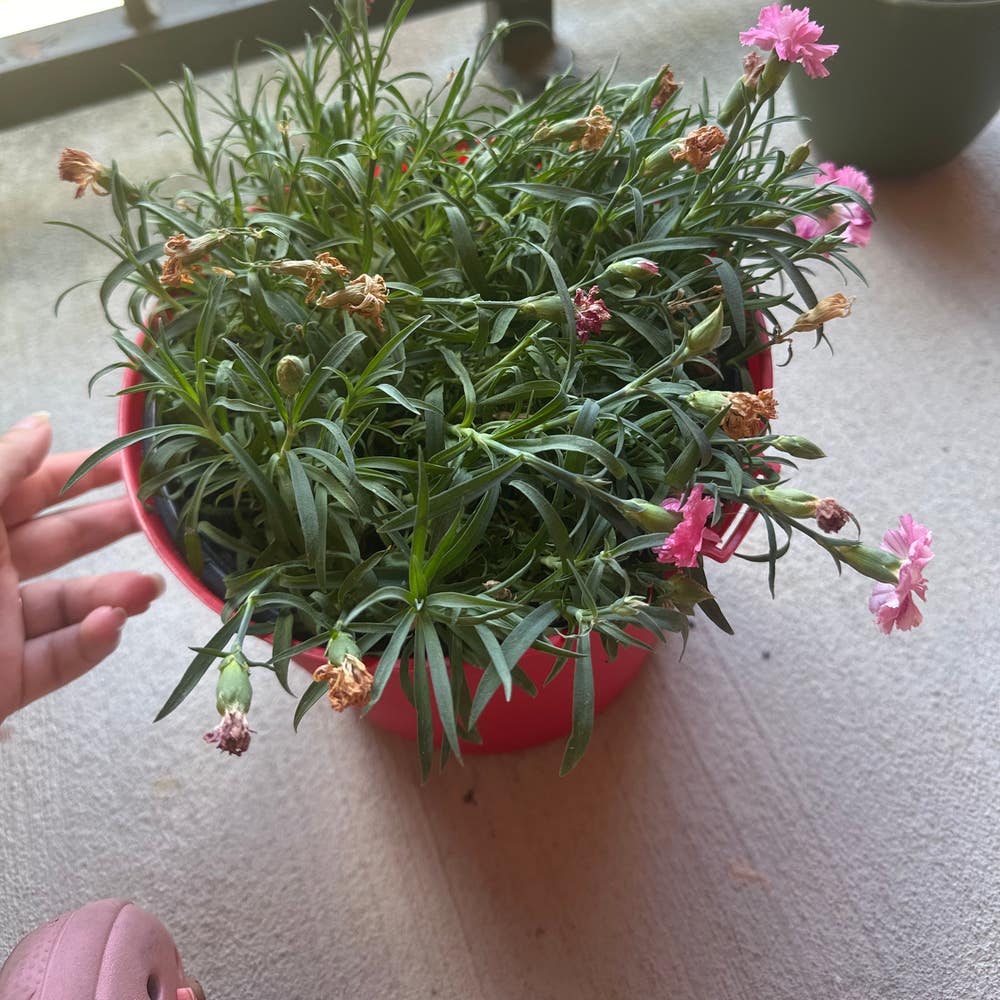
Underwatering is like sending your Sweet William on a desert trek without a canteen. If the leaves are as crispy as autumn leaves and the soil's bone dry, it's time to up your watering game. On the flip side, overwatering can drown your plant's roots faster than a sinking ship. Ensure the soil is moist, but not a swamp.
Recognizing Symptoms
- Crispy leaves? Too dry.
- Brown tips? Thirsty for sure.
- Soggy soil? Dial back on the H2O.
Tips for Watering Right
- Use a moisture meter or the good ol' finger test to check soil moisture.
- Water deeply but infrequently to encourage strong root growth.
- Consider a drip irrigation system to keep those roots quenched without overdoing it.
Remember, Sweet William likes its drinks but doesn't want to swim in them. Keep the soil like that wrung-out sponge – moist but not drenched – and you'll have happier plants.

Addressing Nutrient Deficiencies and Soil Health
💡 Understanding Nutrient Deficiencies
Sweet William plants communicate through their leaves. Yellowing, slow growth, or leaf curling could be a distress signal for nutrient deficiencies. To correct this, first, observe the affected areas. New growth issues often point to micronutrient shortages, while problems in older growth suggest a lack of macronutrients.
💡 Soil Testing: The First Step
Before you play the guessing game with fertilizers, get a soil test. This will reveal not just the pH, but also the levels of essential nutrients. Remember, the ideal soil is a balanced mix of sand, silt, clay, and organic matter.
💡 Choosing the Right Fertilizer
Once you've got your soil test results, it's time to pick a fertilizer. Balanced fertilizers are great, but sometimes you need to target specific deficiencies. If nitrogen is low, your Sweet William will thank you for a nitrogen-rich feed. But don't overdo it – more isn't always better.
💡 The Role of Composting
Composting is like a superfood for your soil. It improves structure, moisture retention, and adds a buffet of nutrients. Start small, and remember, moderation is key. Too much compost can overwhelm your plants.
💡 Adjusting Soil pH
If your soil test shows pH imbalance, it's time to adjust. Use lime to raise the pH, or sulfur to lower it. The right pH ensures nutrients are available to your Sweet William, so don't skip this step.
💡 Macronutrients and Micronutrients
Understand the big players: nitrogen (N), phosphorus (P), and potassium (K). These macronutrients are vital for overall plant health. But don't forget the supporting cast of micronutrients like iron (Fe) and manganese (Mn), crucial for specific plant functions.
💡 Regular Monitoring
Finally, keep an eye on your Sweet William. Regular checks can catch issues before they become serious. Consistency in care will keep nutrient deficiencies at bay and your Sweet William thriving.

Managing Pests and Diseases
🐛 Identifying Common Pests and Diseases
Pests like aphids, spider mites, and thrips are notorious for causing leaf curling in Sweet William. They suck on plant juices, leading to the leaves curling as a distress signal. Diseases such as powdery mildew and rust can also manifest through leaf distortion. Look for telltale signs like sticky residue, webbing, or powdery spots.
🛠 Treatment Options
Act fast upon spotting pests. A natural approach is neem oil or insecticidal soap, which can be effective if the infestation is mild. For diseases, remove infected leaves and apply a fungicide. Copper fungicides work well for fungal issues like leaf spot. Always follow label instructions for proper application and safety.
🚫 Preventative Practices
Prevention is your first line of defense. Regularly inspect your plants for early signs of trouble. Ensure good air circulation and avoid overhead watering to reduce disease risk. Introduce beneficial insects like ladybugs to keep pest populations in check. Quarantine new plants to prevent the spread of pests and diseases to your garden.
🌱 Integrated Pest Management (IPM)
IPM is a sustainable approach to managing pests by combining biological, cultural, mechanical, and chemical tools in a way that minimizes economic, health, and environmental risks. Use disease-resistant cultivars and rotate crops to prevent disease buildup in the soil. Monitor pest populations and apply controls only when necessary.

⚠️ Safety First
This content is for general information and may contain errors, omissions, or outdated details. It is not medical, veterinary advice, or an endorsement of therapeutic claims.
Always consult a qualified healthcare professional before using any plant as food, medicine, or supplement.
Never eat any plant (or feed one to pets) without confirming its identity with at least two trusted sources.
If you suspect poisoning, call Poison Control (800) 222-1222, the Pet Poison Helpline (800) 213-6680, or your local emergency service immediately.
Spotted an error? Please report it here.
Keep your Sweet William's leaves unfurled and thriving 🌿 with Greg's tailored watering schedules and pest management tips, ensuring your plant care is on point every time.