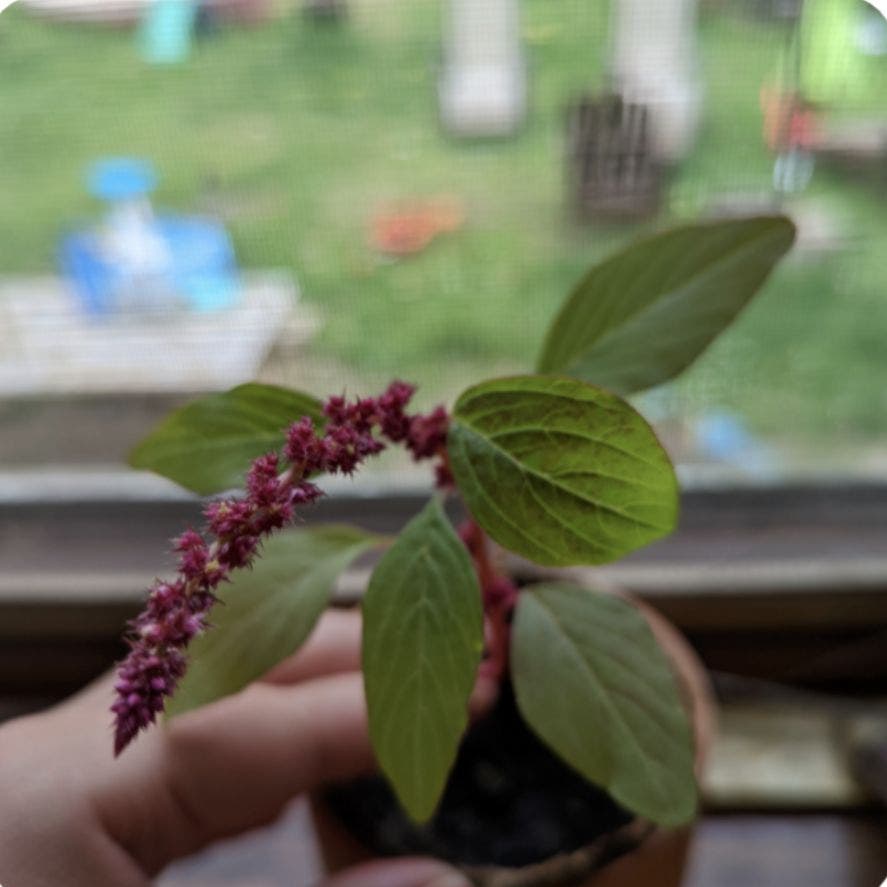
🍂 Why Are My Purple Amaranth Leaves Dropping?
Amaranthus blitum
By the Greg Editorial Team
Jun 18, 2024•4 min read
This article was created with the help of AI so we can cover more plants for you. May contain errors. See one? Report it here.
Halt the leaf fall 🍂 and revive your Purple Amaranth with these essential plant-saving tips!
- Overwatering? Stop, let soil dry, and use well-draining pots.
- Underwatered? Water thoroughly, then wait until top inch of soil dries out.
- Nutrient-poor? Use balanced fertilizer and maintain stable temperature and light.
When Too Much Love Drowns Your Plant
💦 Overwatering Woes
Soggy soil is the kiss of death for Purple Amaranth. If your plant's leaves are drooping like they've given up on life, it's time to rethink your watering routine. Yellow halos on brown spots and a soil scent that screams "swamp" are your plant crying out for help.
Root rot is the silent assassin here, often lurking unseen until it's too late. If the base of your plant feels like a wet sponge, you've got a code red situation.
🌵 Drying Out the Drama
To rescue your waterlogged wonder, cease all watering immediately. Let the soil dry to the touch. A pot that feels like a heavyweight is a sure sign of water excess. Inspect the roots; if they're mushier than a rotten fruit, it's time for some surgery—snip the bad parts away.
Consider repotting with fresh, well-draining soil. And remember, terracotta pots are your ally, wicking away excess moisture like a charm. Going forward, test the soil before watering—if the top inch is dry, it's time for a drink, not a deluge.

Thirsty Plants Tell Tales
🏜️ The Underwatering Undertaking
Underwatering your Purple Amaranth can send it into a state of silent suffering. Crispy leaves and soil as dry as a stand-up comedian's wit are clear distress signals.
Decoding the Distress Signals
Wilting leaves don't just need a pep talk; they need water. If the soil's as parched as a desert, your plant's telling you it's time to hydrate.
Quenching the Thirst: Steps to Rehydrate Responsibly
To rehydrate, think of water as your plant's favorite beverage—serve it room temperature. Water thoroughly, allowing the excess to drain, and wait until the top inch of soil dries out before the next round.
From Wilted to Revitalized
Reviving your plant requires a balance between neglect and overzealous watering. Consistency is key to a happy, hydrated Amaranth.
Monitoring and Maintaining Moisture
Keep tabs on the soil moisture like it's your social media feed—regularly and with intent. Consider using a moisture meter for precision, or trust your instincts and the feel of the soil.
Without the Mess
To avoid waterlogged messes, ensure your plant's pot has proper drainage. This way, your Amaranth won't sit in soggy soil, which is just as bad as a drought.

Feeding Frenzy: Nutrients Needed
🌱 Spotting Starvation Symptoms
Yellowing leaves might be your Purple Amaranth waving a distress flag; it's starving for nutrients. Nitrogen deficiency typically manifests as pale green foliage, while a lack of potassium can make leaf edges appear burnt. Small leaves? Could be a phosphorus shortage.
💪 The Essential Elements
Your Purple Amaranth craves a balanced diet. Nitrogen for vibrant leaves, phosphorus for strong roots, and potassium for overall health. Don't forget the micronutrients like magnesium and iron – they're the unsung heroes in your plant's growth story.
🌿 Fertilizer to the Rescue
To whip up the perfect nutrient cocktail, start with a balanced fertilizer. A half-strength liquid option during the growing season can do wonders. Off-season? Ease up. Your plant's appetite wanes when it's not in growth mode.
🌈 Crafting the Mix
When mixing fertilizer, think of it as a multivitamin for your plant. Ensure it includes a full spectrum of micronutrients. Over-fertilization is a no-go – it's the equivalent of a sugar rush followed by a nasty crash.
💦 Application Tips
For a quick fix, consider foliar feeding with a water-soluble fertilizer. But remember, moderation is key – too much can lead to nutrient burn, too little leaves your plant hangry. Keep an eye on the leaves; they'll tell you if you've struck the right balance.

Battling the Elements: Environmental Equilibrium
🌡️ Temperature and Light: Striking the Right Balance
Purple Amaranth thrives when its environment mimics its natural habitat. Temperature consistency is key; aim for a stable range between 18-24ºC (64-75ºF). Sudden fluctuations are a no-go. As for light, bright but indirect is the sweet spot. Direct sunlight is a recipe for leaf loss, so position your plant thoughtfully to avoid the harsh midday rays.
Acclimation Without Agitation
When introducing your Purple Amaranth to a new spot, think slow and steady. A gradual transition helps prevent shock, which can manifest in dropped leaves. If you're moving your plant to a brighter location, do it incrementally over several days. Similarly, with temperature changes, avoid placing your plant near heat sources or drafty areas that could cause rapid temperature swings. Your plant's comfort zone is not unlike your own; keep it stress-free for optimal health.
⚠️ Safety First
This content is for general information and may contain errors, omissions, or outdated details. It is not medical, veterinary advice, or an endorsement of therapeutic claims.
Always consult a qualified healthcare professional before using any plant as food, medicine, or supplement.
Never eat any plant (or feed one to pets) without confirming its identity with at least two trusted sources.
If you suspect poisoning, call Poison Control (800) 222-1222, the Pet Poison Helpline (800) 213-6680, or your local emergency service immediately.
Spotted an error? Please report it here.
Avoid the droop in your Purple Amaranth by using Greg to monitor moisture 🌱 and get watering reminders, ensuring your plant's leaves stay perky and healthy.