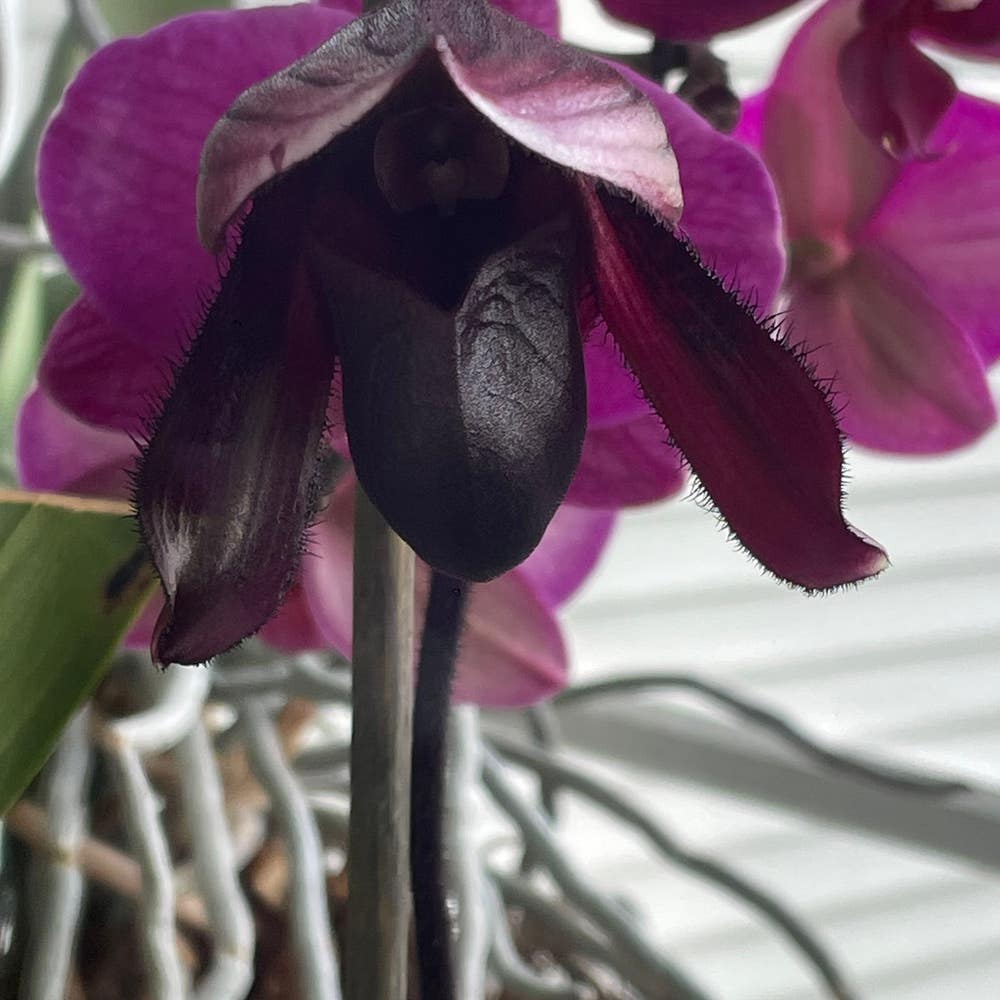
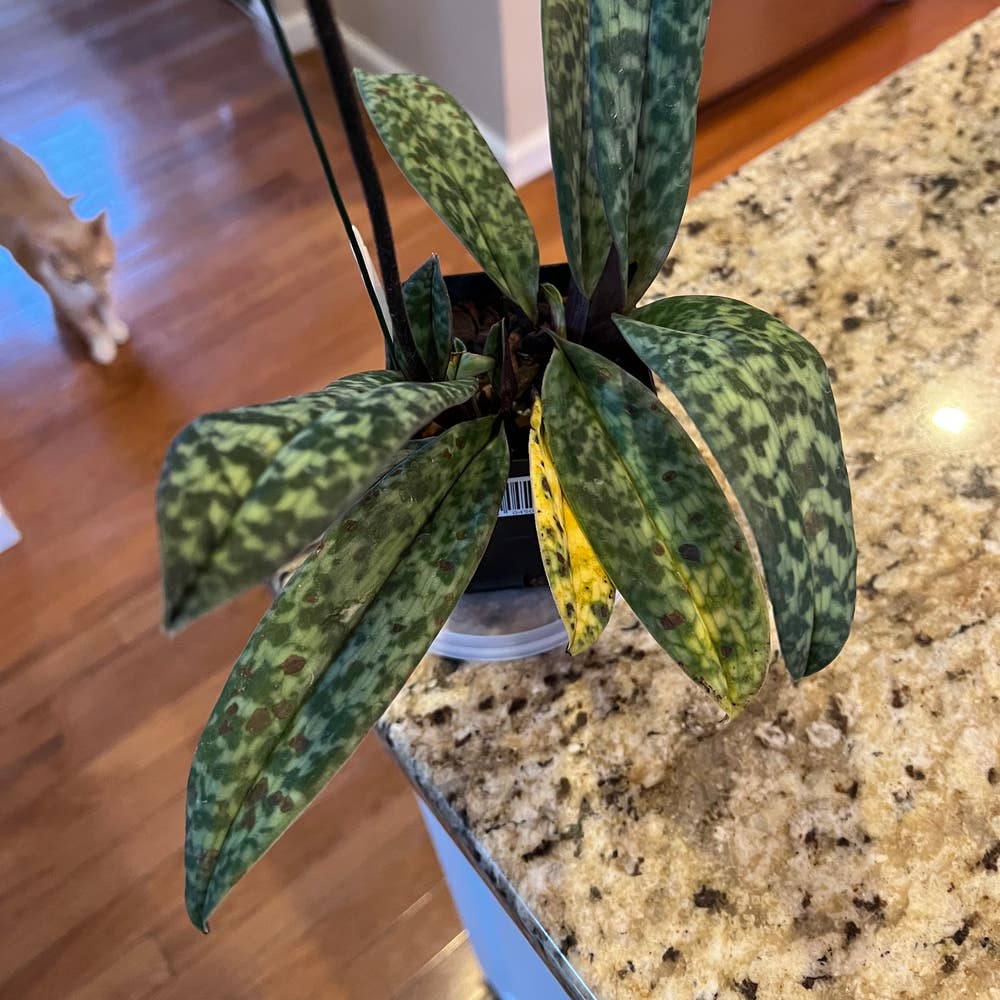
Why Does My Paphiopedilum 'Magic Cherry' Have Yellow Leaves?
Paphiopedilum 'Magic Cherry'
By the Greg Editorial Team
Mar 31, 2024•6 min read
This article was created with the help of AI so we can cover more plants for you. May contain errors. See one? Report it here.
Solve the yellow leaf puzzle 🍂 of your 'Magic Cherry' orchid and keep its elegance evergreen. 🌿
- 🌱 Rapid yellowing in new growth signals care strategy issues.
- ☀️💧 Balance light and water to prevent yellow leaves.
- 🛡️ Regular inspections for pests and diseases keep leaves vibrant.
Spotting Trouble: Identifying Yellow Leaves
🍂 Normal Aging vs. Warning Signs
Yellowing leaves can be the silent bell of a plant's natural life cycle or a blaring alarm for attention. Older leaves will often take on a golden hue as they prepare for their final curtain call. However, when the new growth starts to pale, it's time to perk up and take notice. Rapid yellowing, particularly in these youthful leaves, is your cue to reassess your plant care strategy.
🎨 Visual Clues and Patterns
Patterns in leaf discoloration are like breadcrumbs leading to the heart of the issue. Uniform yellowing across the plant often points to a systemic problem, possibly related to watering or lighting. On the other hand, spotty yellowing suggests a more localized concern, potentially indicating pests or disease. If the yellowing is paired with brown spots or weak stems, you're looking at a nutritional deficiency or structural concern. Keep a vigilant eye on these visual cues; they're the key to unlocking the mystery behind your Paphiopedilum 'Magic Cherry's' distress signals.
Water Woes: Finding the Balance
💧 The Perils of Overwatering
Yellow leaves can scream 'too much water' louder than a teapot's whistle. If your Paphiopedilum 'Magic Cherry' has leaves that feel as limp as overcooked spaghetti, you've likely been overzealous with the watering can. The soil should be your moisture meter; it needs to feel like a wrung-out sponge, not a soaked one. Root rot is the silent assassin here, and it's time to act fast. Cut back on watering, ensure proper drainage, and consider repotting with fresh, well-draining mix if the damage isn't too far gone.
🏜️ The Risks of Underwatering
Conversely, leaves that look as lifeless as last year's party balloons might be crying out for water. When the soil is as dry as a stand-up comedian's humor, it's a red flag. Your orchid's roots are probably as thirsty as a marathon runner in the Sahara. The fix? Water deeply, but only when the top inch of soil feels dry. This isn't a green light to drown your plant in a deluge; think of it as a satisfying sip, not a gulp. Keep the hydration consistent, and your 'Magic Cherry' will thank you with leaves that stay as green as a shamrock.
Light and Leaves: Striking the Right Amount
🌞 Too Much Sun
Direct sunlight is a notorious culprit for yellowing leaves in Paphiopedilum 'Magic Cherry'. The plant's delicate complexion can't handle the harsh glare, leading to a condition akin to sunburn. Scorched leaves and stunted growth are distress signals that your orchid is getting more UV than it signed up for.
To prevent this, think of creating a sunscreen for your plant. Use shade cloths or place it in a spot with bright, yet indirect light. Observe the foliage; if you spot leaves with a bleached appearance or crispy texture, it's time to intervene. A sheer curtain can be an excellent tool to diffuse those intense rays.
🌥️ Not Enough Light
Conversely, insufficient light can leave your 'Magic Cherry' looking like it's longing for a sunny day. Leaves may become pale and the plant might stretch awkwardly towards any light source, a condition known as etiolation. This is your orchid's way of saying it's stuck in a perpetual state of twilight and it's not thrilled about it.
To remedy this, find that cozy middle ground where the light is just enough to keep your plant content without the risk of a sunburn. Bright, indirect light is the sweet spot. If your plant starts to look like it's reaching for the stars, it might be time to move it closer to a light source, ensuring it's not direct. Remember, your Paphiopedilum 'Magic Cherry' is not trying to get a tan; it just wants to photosynthesize without the threat of a crispy leaf apocalypse.
Feeding Your 'Magic Cherry': Nutrients and Fertilization
💪 The Role of Nutrients in Leaf Health
Yellow leaves on your Paphiopedilum 'Magic Cherry' could be shouting for nutrients. Nitrogen is essential for lush, green leaves, but it's not the only player. A lack of magnesium leaves behind yellow patches, while iron deficiency can cause overall paleness. It's like your orchid is presenting a checklist of what it's missing.
🌱 Fertilizer Fixes
Balanced fertilization is the secret sauce for vibrant leaves. Opt for a fertilizer that's a jack-of-all-trades, offering nitrogen, phosphorus, potassium, and essential micronutrients. Moderation is your mantra here—too much and you risk glossy, dark leaves or worse, root burn. Always water before you fertilize; think of it as prepping the stomach for a meal. Stick to a regular schedule, and if you notice yellowing, consider a soil test to pinpoint the deficiency. Sometimes, a foliar feed acts like a quick-fix energy shot, delivering nutrients straight to where they're needed most.
Pests and Pathogens: Keeping the Enemies at Bay
🐛 Common Culprits
Orchids are like magnets for certain pests and diseases that can cause yellowing leaves. Spider mites suck the life out of leaf cells, leaving a telltale pattern of tiny dots or a fine webbing. Scale insects and mealybugs are the clingy types, setting up shop and stubbornly refusing to leave without a fight, their feeding frenzy turning leaves yellow. Fungal infections, such as root rot or leaf spot, are stealthy invaders, often going unnoticed until the damage is visible.
🛡️ Battle Strategies
🐜 Pest Control Tactics
Regular inspections are your first line of defense. Catch these critters early, and you'll save yourself a world of trouble. If you find any, isolate the affected orchid pronto to prevent a full-blown infestation. Insecticidal soap or neem oil are your go-to remedies; they're like bouncers at a club, showing pests the door without trashing the place.
🦠 Disease Defense
For fungal foes, a fungicide might be necessary. Apply with care, targeting only the affected areas to avoid stressing the plant further. Remember, prevention is better than cure, so keep the air around your orchids moving and avoid leaving them in soggy soil.
🧼 Proactive Practices
Hygiene is crucial. Keep your tools clean and your growing area tidy to reduce the risk of disease. Quarantine new plants to ensure they're not carrying unwanted guests. And don't forget, a balanced environment with the right humidity and airflow makes for a less hospitable breeding ground for pests and pathogens.
🐞 Encouraging Beneficial Insects
Embrace the good bugs. Beneficial insects are your allies in the fight against pests. Encouraging a diverse ecosystem can help keep the bad guys in check without you having to lift a finger.
Implement these strategies, and you'll be the orchid guardian angel, keeping those pesky pests and diseases at bay.
⚠️ Safety First
This content is for general information and may contain errors, omissions, or outdated details. It is not medical, veterinary advice, or an endorsement of therapeutic claims.
Always consult a qualified healthcare professional before using any plant as food, medicine, or supplement.
Never eat any plant (or feed one to pets) without confirming its identity with at least two trusted sources.
If you suspect poisoning, call Poison Control (800) 222-1222, the Pet Poison Helpline (800) 213-6680, or your local emergency service immediately.
Spotted an error? Please report it here.
Keep your Paphiopedilum 'Magic Cherry' leaves radiantly green 🍃 with Greg's custom care reminders, ensuring just the right balance of water, light, and nutrients for your orchid's success.