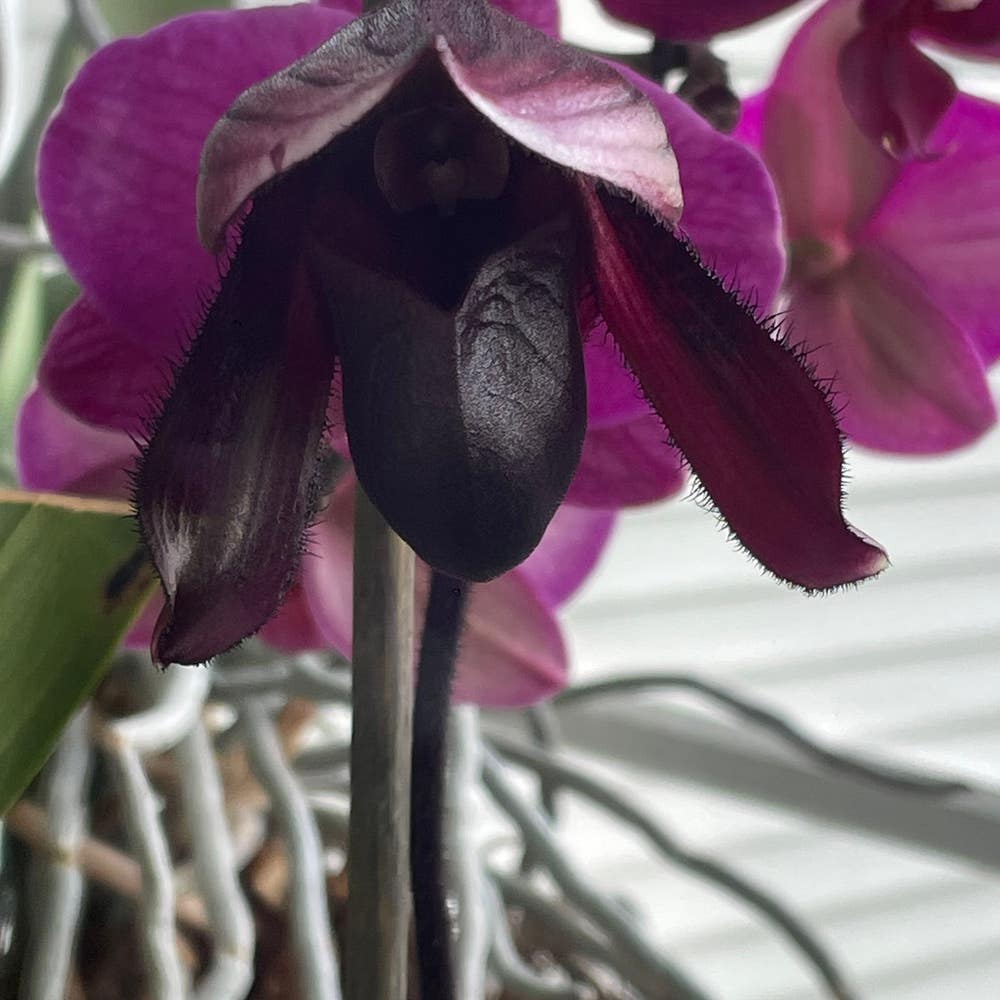
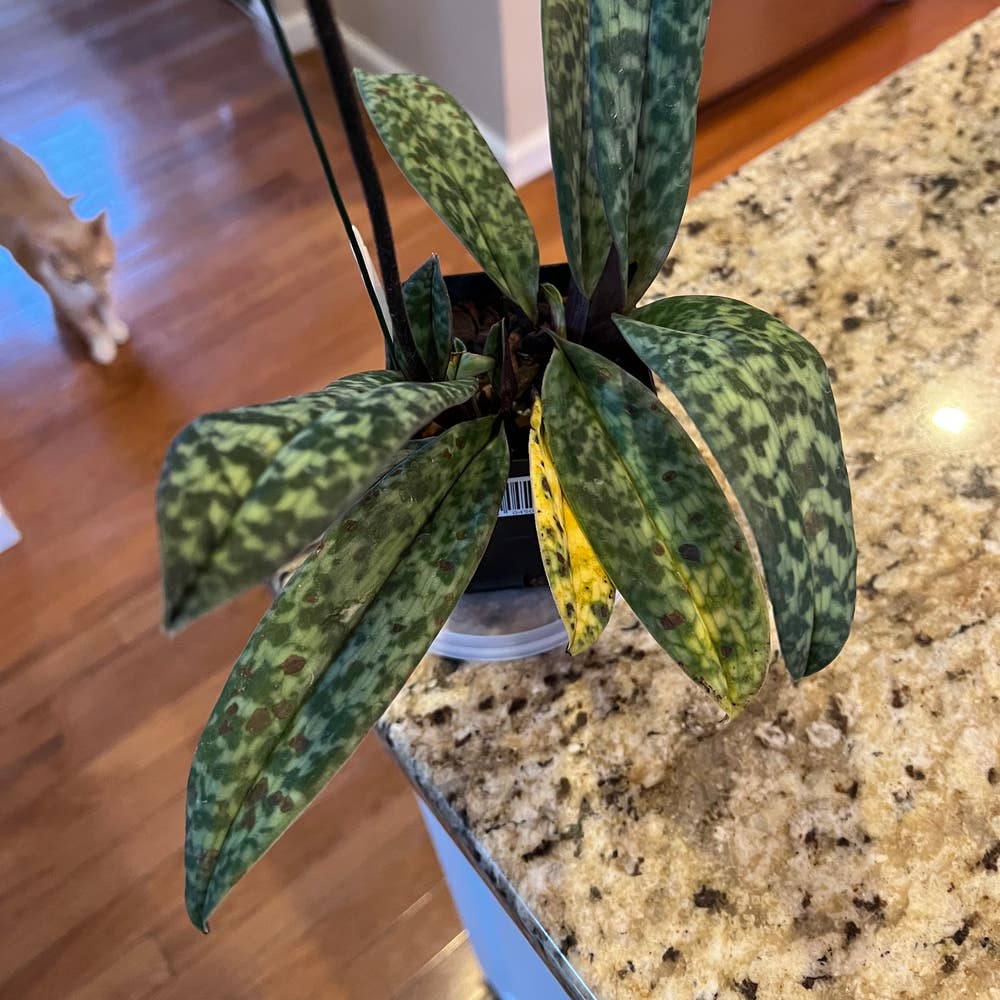
Why Are My Paphiopedilum 'Magic Cherry' Leaves Falling Over?
Paphiopedilum 'Magic Cherry'
By the Greg Editorial Team
Mar 31, 2024•3 min read
This article was created with the help of AI so we can cover more plants for you. May contain errors. See one? Report it here.
Learn to stop your Paphiopedilum 'Magic Cherry' leaves from drooping 🍂 and keep them perky with expert tips! 🌡️
- Over/underwatering? Yellow mushy or wrinkled leaves signal the issue.
- Balance light and temperature for healthy Paphiopedilum 'Magic Cherry'.
- Customize watering schedule, adapting to your orchid's unique needs.
Pinpointing the Culprits Behind Droopy Leaves
💧 Overwatering and Root Health
Yellow, mushy leaves are your first clue that overwatering is at play with your Paphiopedilum 'Magic Cherry'. When roots resemble a brown, soggy mess, they're crying out for help. It's a delicate balance—too much water, and you're drowning the life out of them.
🏜️ Underwatering and Leaf Turgor
On the flip side, if your orchid's leaves are wrinkled and lifeless, underwatering could be the issue. Leaf turgor, or the rigidity of the leaves, relies heavily on adequate water intake. When your plant is thirsty, its leaves droop in protest.
🚰 The Role of Potting Medium
A potting mix that doesn't drain well is like a wet blanket for roots—it's suffocating. For Paphiopedilum 'Magic Cherry', the ideal medium is airy and drains quickly, preventing the dreaded droop caused by waterlogged roots.
🌞 Light and Temperature: Getting It Just Right
Leaves that lean towards the light or look bleached are signaling distress. Your orchid craves a sweet spot of light and temperature—enough to thrive, but not so much that it wilts. It's all about finding that perfect balance to keep your Paphiopedilum 'Magic Cherry' standing tall.
Turning the Tide: Remedial Steps for Upright Leaves
💧 Fine-Tuning Watering Habits
Watering is more art than science. Check the soil; if the top inch is dry, it's time to water. Use room-temperature water to avoid shocking the plant's roots. Remember, less is often more, especially during the winter months.
🌱 The Repotting Process
Choose the Right Pot
A snug pot can be a root's best friend, reducing the risk of overwatering. Terracotta pots are ideal, wicking away extra moisture.
Step-by-Step Repotting
- Water your plant lightly before repotting to make roots pliable.
- Gently remove the plant from its current pot.
- Trim any dead or rotting roots.
- Place the plant in a new pot with a well-draining medium.
- Water sparingly and keep an eye on the plant as it adjusts.
🌿 Creating the Ideal Environment
Light and Temperature
Adjust light and temperature to prevent leaf droop. Aim for bright, indirect light and keep temperatures consistent. Avoid placing your Paphiopedilum 'Magic Cherry' near drafts or heat sources.
Humidity
If your home is a desert, consider a humidifier. Your plant will thank you for the moisture boost.
Proactive Measures: Keeping Leaves Perky
💧 Watering Schedule Mastery
Crafting a watering schedule that adapts to your Paphiopedilum 'Magic Cherry' is crucial. Recognize that these orchids don't thrive on a one-size-fits-all approach. Instead, they demand a customized hydration plan. During the scorching summer, your orchid might be thirstier, while in winter, it's more about sips than gulps. Use tools like moisture meters or the trusty finger test to gauge when it's time for a drink. And remember, consistency is key, but rigidity is not. Be ready to tweak the schedule as the seasons shift.
🌡️ Monitoring and Adjusting Environmental Factors
Your orchid's leaves are your best informants, subtly hinting at their needs. Keep a thermometer handy to check the temperature and ensure it's just right. A gentle fan can promote good air circulation, but don't turn your space into a wind tunnel. Gentle breezes are what you're aiming for. Regularly check for signs of stress, like browning tips or limp leaves, and adjust accordingly. It's a bit like being a plant detective, always on the lookout for clues. Keep temperatures and light exposure consistent to avoid stress-induced leaf curling. Think of your orchid's environment as a cozy, well-regulated habitat. Remember, sudden changes are the enemy of those elegant leaves.
⚠️ Safety First
This content is for general information and may contain errors, omissions, or outdated details. It is not medical, veterinary advice, or an endorsement of therapeutic claims.
Always consult a qualified healthcare professional before using any plant as food, medicine, or supplement.
Never eat any plant (or feed one to pets) without confirming its identity with at least two trusted sources.
If you suspect poisoning, call Poison Control (800) 222-1222, the Pet Poison Helpline (800) 213-6680, or your local emergency service immediately.
Spotted an error? Please report it here.
Keep your Paphiopedilum 'Magic Cherry' leaves upright 🌿 with Greg's custom care plan, tailoring watering and environment monitoring to your orchid's unique needs!