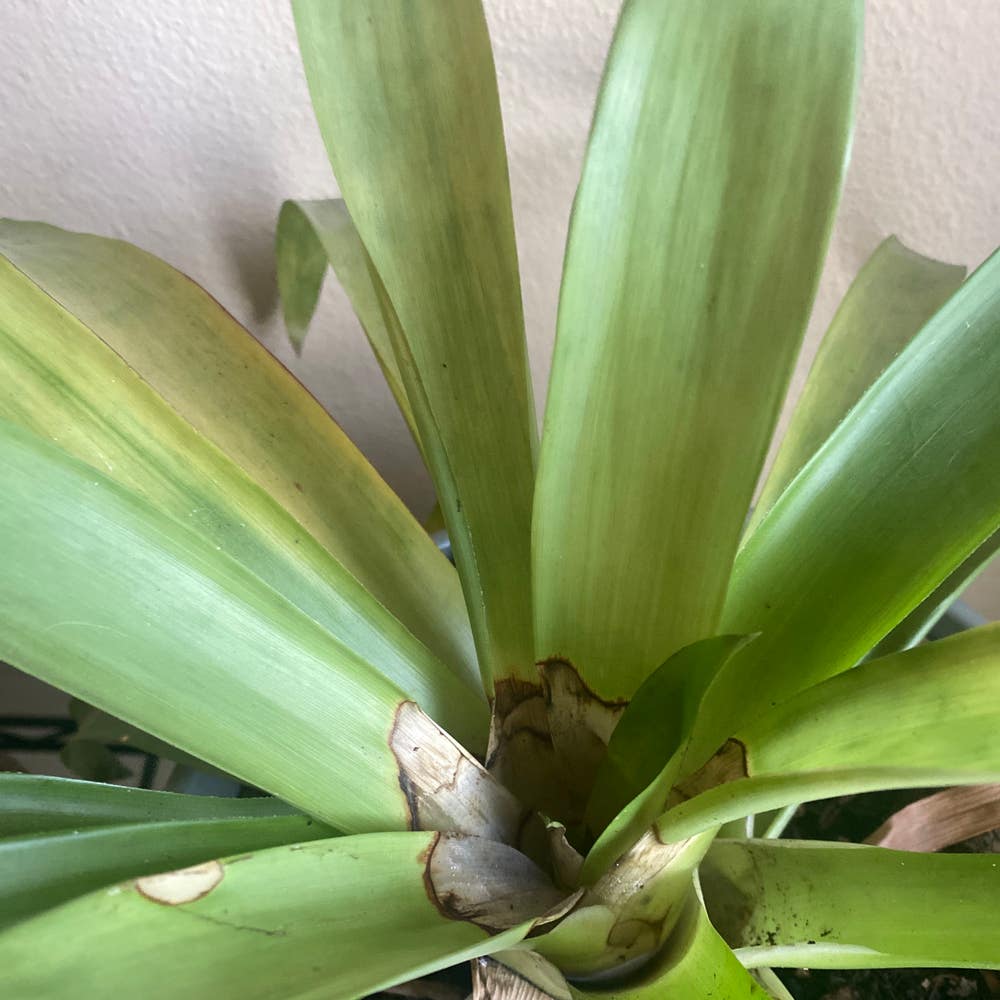
Why Are My Neoregelia 'Passion' Leaves Curling?
Neoregelia 'Passion'
By the Greg Editorial Team
Apr 15, 2024•5 min read
This article was created with the help of AI so we can cover more plants for you. May contain errors. See one? Report it here.
Unravel the mystery behind your Neoregelia 'Passion's curling leaves and revive their splendor 🌿✨!
- Curling leaves signal stress; address promptly to keep Neoregelia 'Passion' healthy.
- 🌞💧 Balance water, light, and temperature to prevent leaf curling.
- Nutrient balance is key; avoid over or underfeeding to prevent curling.
Spotting the Curl: Identifying the Problem
🍃 Visual Cues: Leaf Curling in Neoregelia 'Passion'
Neoregelia 'Passion' leaves should lay flat and proud; curling is a cry for help. The leaves may roll inward, forming tight spirals or subtle waves. Discoloration often accompanies the curl, with greens turning to less vibrant yellows or browns. If the leaves feel thin or brittle, it's a clear signal that your plant is not in its happy place.
🕒 Early Detection: The Importance of Timeliness
Early detection is crucial. Like catching a typo before sending an important email, spotting leaf curl early can save your Neoregelia 'Passion' from further stress. It's not just about a single leaf; if multiple leaves or the entire plant is affected, it's time to act. Watch for progression—consistent curling is a sign of a persistent issue, not just a one-off plant mood swing.
Thirsty or Drowning? Watering Woes
🌊 Too Much Love: The Signs of Overwatering
Overwatering is like helicopter parenting; it smothers with good intentions. Your Neoregelia 'Passion' will show its distress with leaves that feel too soft and stems that might seem swollen. If the soil sticks to your fingers, it's a red flag. Drainage holes are your best friends here—make sure they're clear. If the soil is more swamp than land, cut back on the water and let the soil breathe.
🏜️ Neglecting the Sips: Recognizing Underwatering
Conversely, underwatering turns your vibrant Neoregelia 'Passion' into a sad, droopy mess. Leaves curling and crisping up are your plant's way of crying out for help. If the pot feels as light as your spirits on a Monday morning, it's time to water deeply. Ensure the moisture reaches the roots, where it's desperately needed. Remember, your plant's roots should sip, not swim.
Light and Heat: Finding the Sweet Spot
🌞 Sunburnt or in the Dark: How Improper Lighting Leads to Leaf Curl
Bright, indirect light is the mantra for Neoregelia 'Passion'. Too much sun and your plant's leaves curl up tighter than a rolled yoga mat, trying to escape the burn. Too little light, and they stretch out more than a lazy cat, reaching for any photon they can get. It's all about balance—like finding the perfect spot under a tree, where the light is just enough to read a book without squinting.
🔥 Feeling the Heat or the Chill: Temperature Stress and Its Role in Leaf Curling
Temperature swings are the nemesis of stable plant growth. Your Neoregelia 'Passion' doesn't appreciate the drama of a drafty window or the sizzle of a nearby radiator. Keep it steady; think of a climate that's as predictable as your favorite coffee order. Too hot, and the leaves might as well be in a tanning bed, curling up to protect themselves. Too cold, and they droop like they're trying to wrap themselves in a blanket. Aim for that sweet spot where your plant feels like it's living in eternal spring.
Feeding Frenzy: Nutrient Know-How
🍽️ Starving for Attention: Identifying Nutrient Deficiencies
Yellowing leaves or growth that's more stunted than a bonsai can signal your Neoregelia 'Passion' is nutrient-starved. It's like the plant's trying to tell you it's running on empty. A soil test can be a real eye-opener, revealing which essential nutrients are MIA. If nitrogen is low, expect pale, wimpy leaves. Potassium deficiency? Look for curling leaves with yellow edges, as if they've been sun-kissed a bit too much.
🤢 Overindulgence: The Effects of Too Much Fertilizer
On the flip side, overfeeding your Neoregelia 'Passion' is like giving it a nutrient-rich triple cheeseburger daily—tempting but a recipe for disaster. Signs of nutrient burn include crispy, brown tips, and leaves that curl as if recoiling from the buffet of excess. Stick to the recommended dosage and schedule of a balanced fertilizer. If you've gone overboard, flush the soil with water to help your plant detox from that nutrient overdose. Keep an eye on new growth; it's the canary in the coal mine for over-fertilization fallout.
Curl Correction: Remedies and Prevention
💧 Watering Wisdom
Consistency is your plant's best friend when it comes to watering. Before you water, check that the top inch of soil is dry. If it's not, hold off on the H2O. Remember, your plant's roots need to breathe, not swim. Use a moisture meter or the trusty finger test to avoid guesswork.
🌡️ Climate Control
Your Neoregelia 'Passion' isn't a fan of extremes. Keep it in a spot where it gets bright, indirect light—direct sunlight is a no-no. Temperature should be just right; think steady, not a rollercoaster of highs and lows. Use a shade cloth or move your plant away from heat sources to avoid leaf curl.
🍽️ Nutrient Management
Overfeeding is as bad as starving. Use a balanced, water-soluble fertilizer and follow the instructions like it's a sacred text. Too much and you risk nutrient burn, too little and your plant might start to show those telltale curling signs of deficiency.
✂️ Pruning Pointers
Sometimes, you gotta be cruel to be kind. Prune away any yellow or brown leaves to redirect energy to the healthy parts of your plant. This isn't just about looks; it's about preventing disease and promoting air circulation. Do it during the dormant season for the best results.
Remember, your plant won't send an SOS text. Keep a close eye on it, adjust your care routine with the seasons, and your Neoregelia 'Passion' will stay as flat and fabulous as you want it to be.
⚠️ Safety First
This content is for general information and may contain errors, omissions, or outdated details. It is not medical, veterinary advice, or an endorsement of therapeutic claims.
Always consult a qualified healthcare professional before using any plant as food, medicine, or supplement.
Never eat any plant (or feed one to pets) without confirming its identity with at least two trusted sources.
If you suspect poisoning, call Poison Control (800) 222-1222, the Pet Poison Helpline (800) 213-6680, or your local emergency service immediately.
Spotted an error? Please report it here.
Prevent leaf curling 🍃 in your Neoregelia 'Passion' with Greg's personalized care plans that ensure perfect watering and ideal environmental conditions.