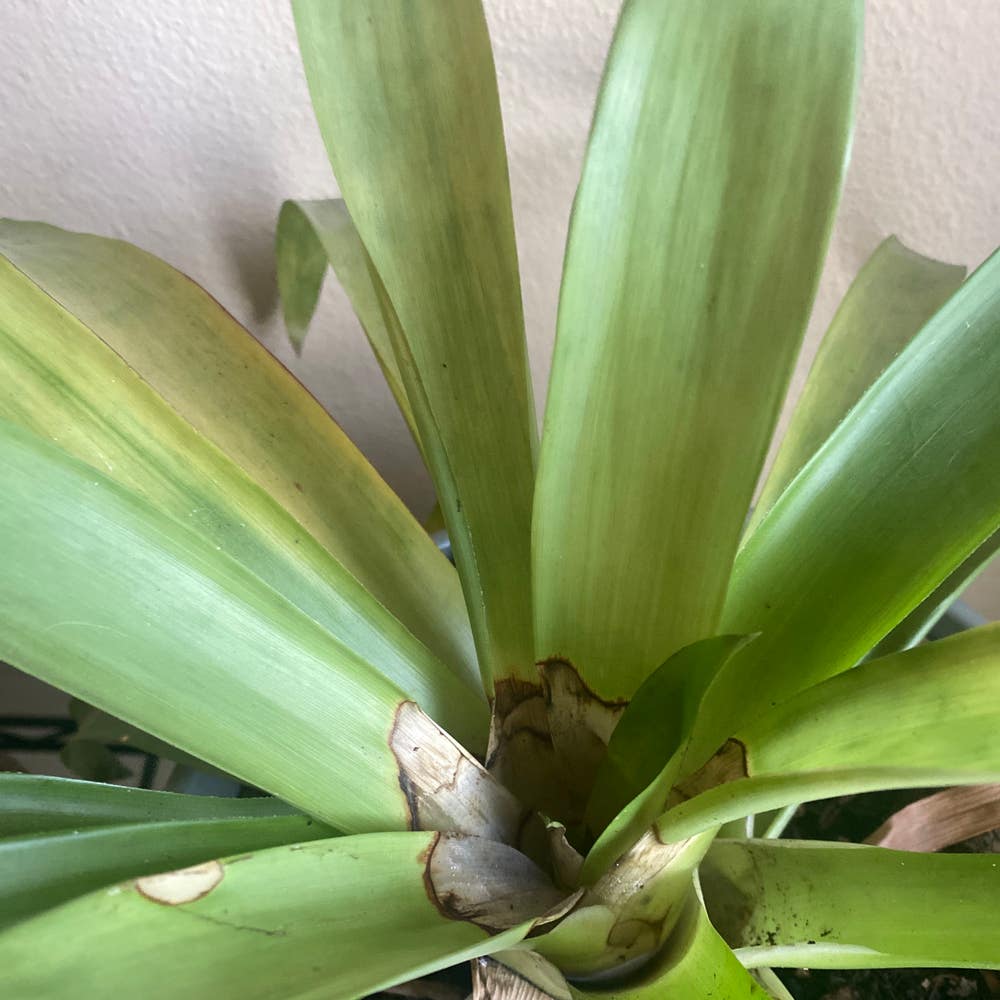
Black Spots on My Neoregelia 'Passion' Leaves
Neoregelia 'Passion'
By the Greg Editorial Team
Apr 15, 2024•3 min read
This article was created with the help of AI so we can cover more plants for you. May contain errors. See one? Report it here.
Banish black spots 🕵️♂️ and keep your Neoregelia 'Passion' pristine with our proven prevention and cure tips!
- Fungi and bacteria: Main causes of black spots on Neoregelia 'Passion'.
- Combat with care: Use fungicides and bactericides precisely and regularly.
- Prevent with practices: Water at base, ensure light and air, inspect often.
Spotting the Culprits: Causes of Black Spots
🍄 Fungal Foes
Fungi are the prime suspects in the case of black spots on Neoregelia 'Passion'. The usual fungal culprits include Cercospora and Anthracnose, notorious for their circular or angular lesions. Watch for purple-red borders or concentric rings; these are the calling cards of a fungal invasion.
🦠 Bacterial Bullies
Bacterial infections are the tough guys, leaving behind uniform, dark spots. These may appear water-soaked or emit a foul odor. If your plant's leaves have these symptoms, bacteria might be the black spot bandits.
🌿 Environmental Stressors
Overwatering, poor air circulation, and inadequate light are the accomplices to black spots. They create the perfect storm for plant stress, which in turn increases susceptibility to both fungal and bacterial attacks. Keep an eye out for environmental stress signs like crispy leaf tips or yellow halos around spots.
Battling Black Spots: Treatment Strategies
🍄 Fungicide to the Rescue
When black spots plague your Neoregelia 'Passion', it's time for a fungicide face-off. Chlorothalonil and mancozeb are your heavy hitters, forming a no-entry zone against fungal invaders. Coat each leaf like you're painting a masterpiece, ensuring not a single spore gets a backstage pass. Remember, variety is the spice of life; rotate your fungicides to keep the fungi guessing and resistance at bay.
🌿 Application Tips for Effective Fungal Combat
Timing is critical—strike at the first blush of black spots. Apply fungicides with the precision of a master chef seasoning a dish; too much and you spoil the broth, too little and it's bland. Stick to a regular treatment schedule, and always read the label like it's the final exam. Overuse is a no-go; it's the fast track to creating superbugs in your garden.
🦠 Bacterial Infection Interventions
Bacterial spots? Time to turn detective and cut out the infected bits with the care of a brain surgeon. Sterilize your tools like you're prepping for the OR to prevent spreading the blight. For the bacterial bad guys, copper-based bactericides are your shields. Apply with certainty, covering every inch like you're sealing a leak in a submarine.
🛡️ Best Practices for Applying Bacterial Treatments
Keep a vigilant eye and reapply treatments as needed—this is a marathon, not a sprint. Coat every leaf, front and back, as if you're armoring them for battle. Miss a spot, and you might as well roll out the red carpet for a bacterial bonanza. Remember, the goal is to protect, not to drown your plant in chemicals.
Keeping Spots at Bay: Prevention Tactics
🌧️ Cultural Practices for Plant Health
Watering wisdom is non-negotiable. Your Neoregelia 'Passion' is not a fan of wet leaves. Water at the base to keep the foliage thirsting for dryness, dodging the fungal funhouse. Light and air are the dynamic duo of plant care. Bright, indirect light paired with moderate humidity sets the stage for a healthy, spot-resistant plant. Overdo it, and you're scripting a drama of black spots.
🕵️ Routine Checks and Balances
Regular inspections are like the secret service for your plant's health. Make it a ritual; spot a speck, and you're on deck. Act swiftly—remove affected leaves with the precision of a surgeon using sterilized tools. It's not paranoia; it's proactive plant parenting. Keep the area around your Neoregelia 'Passion' as clean as a whistle, and you'll be warding off more than just black spots.
⚠️ Safety First
This content is for general information and may contain errors, omissions, or outdated details. It is not medical, veterinary advice, or an endorsement of therapeutic claims.
Always consult a qualified healthcare professional before using any plant as food, medicine, or supplement.
Never eat any plant (or feed one to pets) without confirming its identity with at least two trusted sources.
If you suspect poisoning, call Poison Control (800) 222-1222, the Pet Poison Helpline (800) 213-6680, or your local emergency service immediately.
Spotted an error? Please report it here.
Banish black spots 🍄 on your Neoregelia 'Passion' with Greg's custom care reminders, ensuring your plant thrives in the perfect environment!