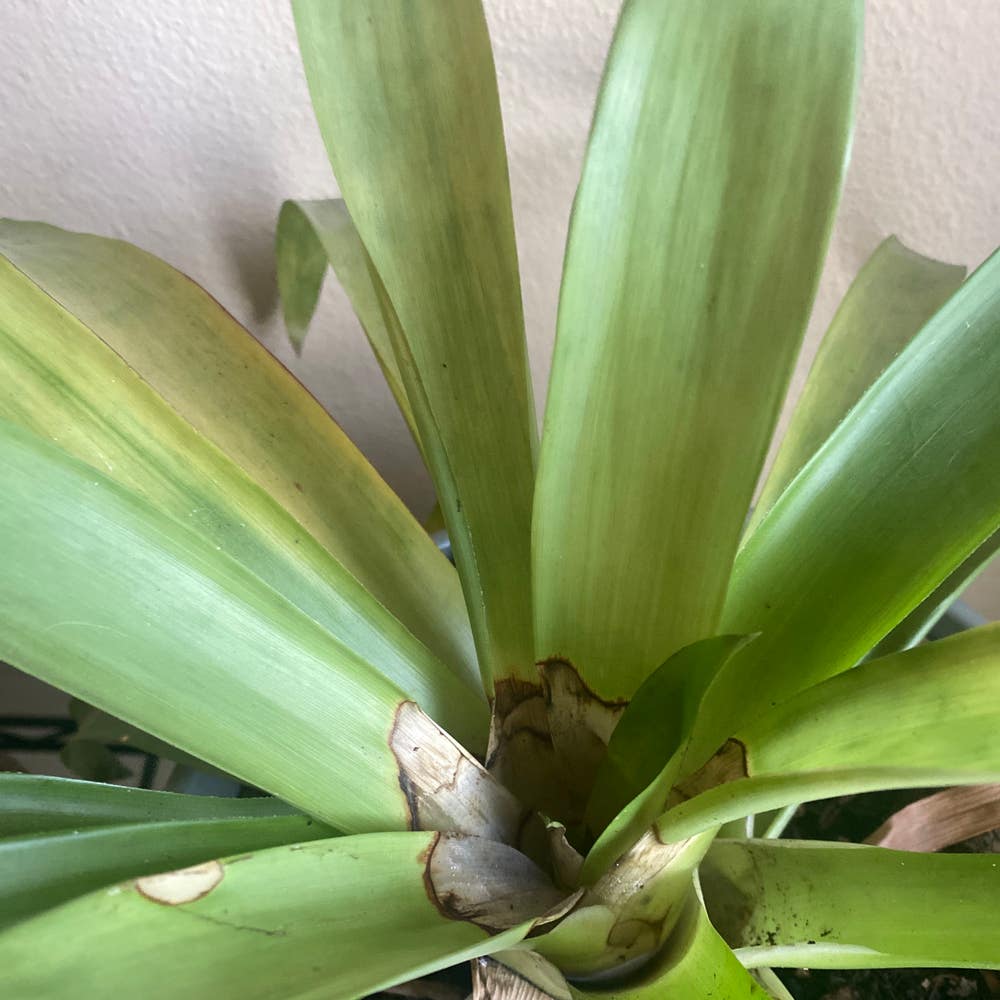
Why Are There Brown Spots on My Neoregelia 'Passion'?
Neoregelia 'Passion'
By the Greg Editorial Team
Apr 15, 2024•4 min read
This article was created with the help of AI so we can cover more plants for you. May contain errors. See one? Report it here.
Banish brown spots on your Neoregelia 'Passion' 🍂 and restore its radiant beauty with expert tips!
- Sunburn, infections, water, and nutrients can all cause brown spots.
- Visual inspection and environment check-up help diagnose the issue.
- Consistent care and monitoring prevent future brown spots.
Spotting the Culprits: Causes of Brown Spots
☀️ Too Much Sun, Too Little Fun
Sunburn is a common perpetrator when it comes to brown spots on Neoregelia 'Passion'. If your plant's leaves are sporting crispy brown patches, especially in areas that soak up a lot of rays, it's likely crying out for some shade.
🦠 Unwanted Guests: Fungal and Bacterial Invasions
Fungal and bacterial infections can be sneaky, but they leave behind distinct signs. Look for brown spots with yellow halos or a water-soaked appearance. These are red flags that your plant is under microbial attack.
💧 Water Woes: Quality and Quantity Issues
Improper watering can wreak havoc on your plant. Brown spots that are soft and dark, often found on the underside of leaves, can indicate overwatering. On the flip side, dry and brittle spots may suggest your plant is thirsty.
🌱 Hungry for Nutrients: Deficiencies and Imbalances
Nutritional deficiencies or excesses can also lead to brown spots. If you notice spots forming alongside signs of stunted growth or discoloration, it's time to reassess your fertilization game.
Playing Detective: How to Diagnose Brown Spots
🔍 Visual Inspection: What to Look For
Key indicators of brown spots can be as diverse as the plant world itself. Check every leaf, both sides, for patterns and texture changes. Crispy, slimy, or discolored spots each tell a different story. Are they uniform or scattered? Concentric rings suggest fungal foes, while yellow halos scream bacteria.
🌿 Environmental Check-Up
Light, humidity, and airflow are the silent players in this botanical drama. Too much sun can scorch, while too little invites weakness. High humidity might as well be a welcome mat for fungi, and poor airflow is like a closed-door meeting for pests. Assess the conditions like a pro—your plant's health depends on it.
🧪 Soil and Water Analysis
When visual clues and environmental factors don't add up, it's time to get scientific. Test the soil for moisture content—soggy soil is a no-go. Check for chemical imbalances or contaminants that could be silently assaulting your plant. If you're stumped, don't play hero—seek professional advice.
The Treatment Plan: Remedies for Each Cause
🌞 Adjusting the Sunbathing Schedule
Finding the sweet spot for light exposure is crucial. If your Neoregelia 'Passion' is looking more like a crispy leaf chip than a vibrant plant, it's time to dial back on the sun worship. Move it to a location with bright, indirect light. Watch for signs of improvement or, if necessary, make further adjustments. Remember, these plants enjoy light, but they don't want to live on the surface of the sun.
🛡️ Battling the Bugs and Fungus Among Us
When it comes to infections, think of fungicides and insecticides as your plant's personal bodyguards. Select a treatment that's specific to the problem at hand, whether it's fungal freeloaders or bug bandits. Apply with the precision of a plant ninja, and stick to a treatment schedule as if your plant's life depends on it—because it does.
🚰 Fine-Tuning Water and Nutrients
Water quality can be a silent killer. If you're pouring liquid from the River Styx into your plant's pot, stop. Use filtered or rainwater to avoid chemical buildup. As for nutrients, think of fertilizer as a vitamin, not a meal. Use a balanced, water-soluble fertilizer sparingly to prevent nutrient burn. Keep the soil moist but not soggy, like a perfectly baked cake—moist enough to stick to your fork but not so wet it falls apart.
Keeping Spots at Bay: Prevention Strategies
🌱 Consistent Care Routine
Regular care is the backbone of keeping your Neoregelia 'Passion' healthy. Like setting a workout routine, establish a watering and feeding schedule that's just right—not too lax, not too intense. Water when the top inch of soil feels dry, avoiding the extremes of over and under-watering.
👀 Vigilant Monitoring
Stay sharp with regular check-ups. Catching early signs of stress or disease in your plant is like spotting a typo before sending an important email. Adjust care with the seasons—less water in winter, more shade in summer.
🌿 Creating the Ideal Environment
Craft an environment that's just right for your Neoregelia 'Passion'. Bright, indirect light and good air circulation are your tag team against pathogens. Space out your plants to give them a personal bubble and prune regularly to promote airflow. Remember, stability in temperature and humidity is like gold for plant health.
⚠️ Safety First
This content is for general information and may contain errors, omissions, or outdated details. It is not medical, veterinary advice, or an endorsement of therapeutic claims.
Always consult a qualified healthcare professional before using any plant as food, medicine, or supplement.
Never eat any plant (or feed one to pets) without confirming its identity with at least two trusted sources.
If you suspect poisoning, call Poison Control (800) 222-1222, the Pet Poison Helpline (800) 213-6680, or your local emergency service immediately.
Spotted an error? Please report it here.
Eradicate those pesky brown spots 🎯 on your Neoregelia 'Passion' with Greg's personalized care plans that track and fine-tune your plant's environment for optimal health!