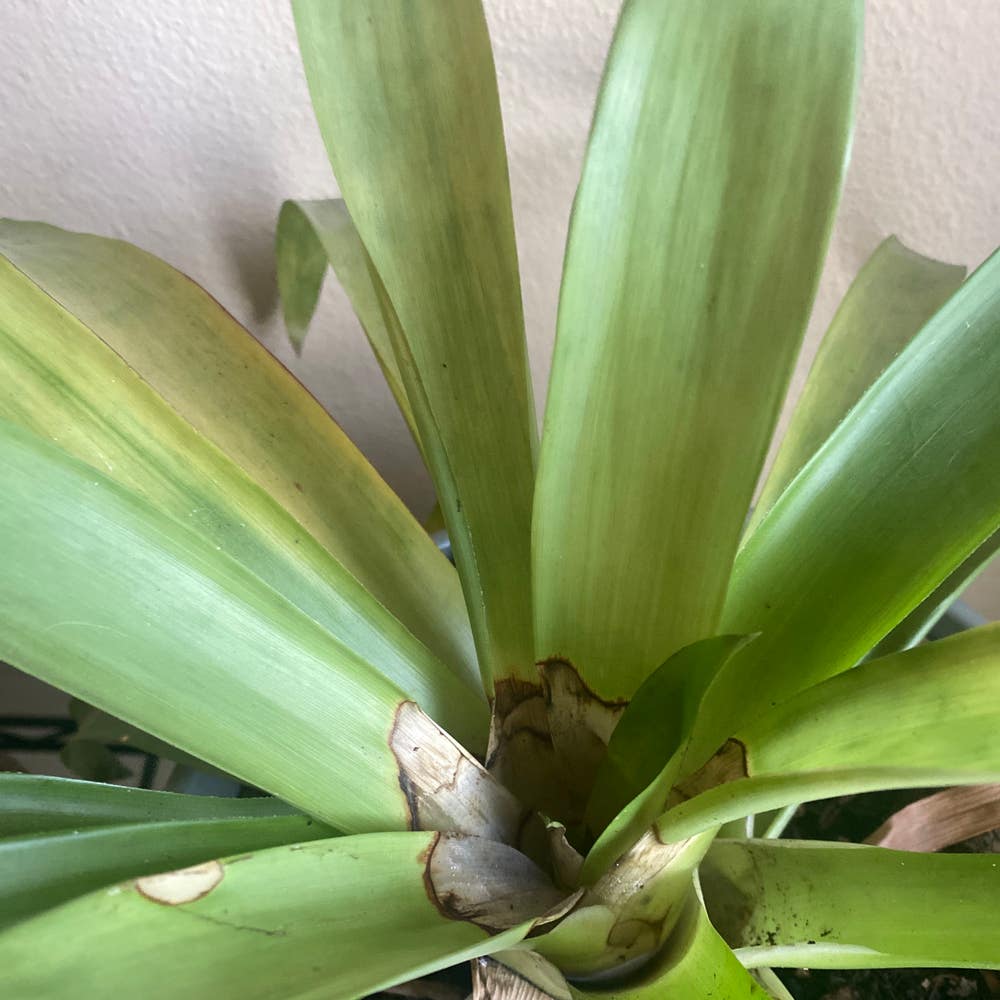
Why Are My Neoregelia laevis Leaves Turning Yellow? 🟡
Neoregelia laevis
By the Greg Editorial Team
Apr 14, 2024•5 min read
This article was created with the help of AI so we can cover more plants for you. May contain errors. See one? Report it here.
Unveil the secrets to reviving your Neoregelia's 🌿 yellow leaves for a lush, healthy glow.
- Yellow leaves signal trouble; address promptly and check for pests.
- 🌧️💧 Balance watering and lighting to prevent yellowing.
- Use balanced fertilizer to correct nutrient deficiencies.
Spotting Trouble: Identifying Yellow Leaves
🚨 Visual Symptoms
Yellow leaves on Neoregelia laevis are like the plant's version of a check engine light. Vibrant greens turning to pale yellows signal it's time for some TLC. Look for a uniform yellowing across leaves, which often points to a systemic issue, or for patterns such as spots or stripes that could indicate pests or diseases.
Immediate Actions
When yellow leaves make an unwelcome appearance, isolate the plant to prevent any potential spread of disease. Inspect for pests, and if you find any, remove affected leaves and treat with neem oil or a suitable pesticide. Keep a close eye on your plant after treatment to ensure the problem doesn't return.
The Root of the Problem: Common Causes of Yellowing Leaves
💧 Water Woes
🌊 Too Much Love: The Perils of Overwatering
Overwatering is like drowning your plant in affection. Root rot sets in when roots can't breathe, leading to yellow leaves. If the soil feels soggy, it's time to cut back on water and improve drainage.
🏜️ Thirsty Roots: The Signs and Solutions for Underwatering
Underwatering is just as harmful. Leaves turn yellow when they're parched. The soil should feel like a well-squeezed sponge—moist, not dry. If the soil is pulling away from the pot, it's time to water.
☀️ Light and Shadow Play
🌞 Sunburnt or Starved: Finding the Light Balance for Neoregelia laevis
Too much sun scorches leaves to a crisp yellow, while too little leaves them pale and wan. Neoregelia laevis needs bright, indirect light. Adjust the plant's position to avoid direct sunlight and prevent yellowing.
🍽️ Feeding Finesse
🍲 Hungry Plants: Recognizing and Rectifying Nutrient Deficiencies
Nutrient deficiencies turn leaves yellow. Look for yellowing between veins or at the edges for signs of hunger. A balanced fertilizer can replenish missing nutrients and restore leaf color.
Turning Over a New Leaf: Corrective Measures
🚿 Tailored Solutions
💧 Watering Wisdom
Overwatering is a common misstep; it's like giving your plant a drink when it's not thirsty. To avoid this, check the soil moisture before watering—dry an inch down is your cue. If you've been heavy-handed, let the soil dry out before the next watering session. Adjust your routine with the seasons: less in winter, more in summer.
☀️ Light Adjustments
Your Neoregelia laevis doesn't want to bake in the sun nor hide in the shadows. Strike a balance. Bright, indirect light is the sweet spot. If your plant is getting too much sun, move it to a spot with diffused light. Too little light? Inch it closer to the window, but avoid the harsh midday rays. Rotate the plant regularly for even exposure.
🍽️ Nutrient Know-How
Yellow leaves can scream "Feed me!" but don't overdo it. Use a balanced, water-soluble fertilizer, and remember, moderation is key. If you've gone overboard, flush the soil to prevent nutrient burn. Soil tests are your friend; they tell you what's missing. Amend the soil based on the test results for a custom nutrient cocktail tailored to your plant's needs.
Keeping the Green: Preventive Measures
🌱 Cultivating Care Routines
Consistency is your plant's best friend. Establish a routine that includes regular watering, lighting, and feeding to prevent yellow leaves. Think of it as the plant equivalent of brushing your teeth – do it regularly, and you'll avoid cavities, or in this case, yellowing leaves.
💧 Watering
Water like a pro: only when the soil feels dry to the touch. Overwatering is a surefire way to turn those leaves yellow. It's a delicate dance – give your Neoregelia laevis just enough to drink without drowning it.
☀️ Lighting
Find that sweet spot where the light is just right. Too much sun and your plant's leaves will throw a fit and turn yellow. Too little, and they'll sulk and fade. It's all about finding that Goldilocks zone of perfect lighting.
🌿 Feeding
Feed your plant, but don't go overboard. A balanced fertilizer during the growing season will keep it happy without the drama of yellow leaves. Remember, your plant isn't running a marathon – it doesn't need a carb load.
👀 Vigilant Monitoring
Keep your eyes peeled for any signs of yellowing. Regular checks are non-negotiable – it's like being the neighborhood watch for your plant. Spot a yellow leaf? It's time for that guy to go. Prune promptly and keep those shears clean to avoid any nasty infections.
📝 Keeping a Log
Track your plant's life like you're its biographer. A care log isn't just busywork; it's a strategic move to remember what works and what doesn't. Think of it as your plant's personal fitness tracker.
🍂 Seasonal Adjustments
As the seasons change, so should your care routine. Dial back on watering during the winter months and ensure the plant receives the right amount of light as days grow shorter or longer. It's like updating your wardrobe for the season – your plant needs to change its outfit too.
🔍 Regular Monitoring and Adjustments
Be the detective on the lookout for the slightest changes in your plant's well-being. Yellow leaves can signal an issue, so act promptly to adjust care practices. It's about being proactive, not reactive – catch the problem before it becomes a full-blown plant crisis.
⚠️ Safety First
This content is for general information and may contain errors, omissions, or outdated details. It is not medical, veterinary advice, or an endorsement of therapeutic claims.
Always consult a qualified healthcare professional before using any plant as food, medicine, or supplement.
Never eat any plant (or feed one to pets) without confirming its identity with at least two trusted sources.
If you suspect poisoning, call Poison Control (800) 222-1222, the Pet Poison Helpline (800) 213-6680, or your local emergency service immediately.
Spotted an error? Please report it here.
Keep your Neoregelia laevis radiant 🌿 by letting Greg tailor a care routine that prevents yellow leaves and promotes lush growth.