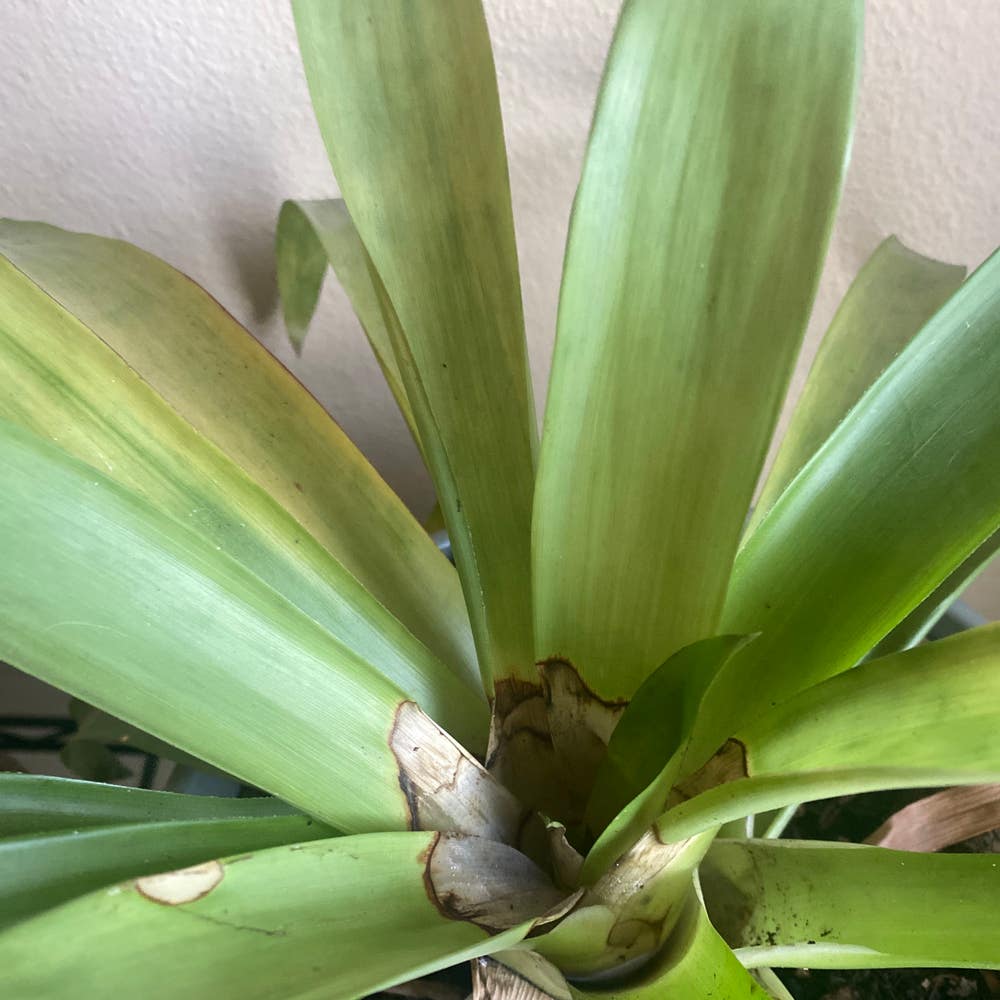
Why Are My Neoregelia laevis Leaves Curling?
Neoregelia laevis
By the Greg Editorial Team
Apr 14, 2024•5 min read
This article was created with the help of AI so we can cover more plants for you. May contain errors. See one? Report it here.
Unravel the mystery behind your Neoregelia's curling leaves and restore its lush flatness! 🌿
- 🌿 Light, temperature, water, humidity, soil all contribute to leaf curling.
- 💧 Proper watering and humidity levels are key to preventing curl.
- 📅 Routine care and monitoring help catch early signs of stress.
Pinpointing the Culprits Behind the Curl
🌞 Light and Temperature Tangles
In the quest to understand leaf curling in Neoregelia laevis, light and temperature play the lead roles. Too much light can cause leaves to curl up as if trying to shield themselves from a spotlight. Insufficient light, on the other hand, can lead to a pale and stretched appearance, with leaves curling in a futile reach for more.
Temperature stress is another drama queen. Leaves might curl into tight spirals when the mercury drops, or wilt when it's too high. Consistency is key; Neoregelia laevis despises temperature swings as much as we hate unexpected plot twists in our favorite shows.
💧 Water Woes and Humidity Havoc
Watering is less of a science and more of an art. Overwatering turns the soil into a swamp, suffocating roots and leading to curling leaves. Underwatering, however, leaves the plant parched and the leaves curling upwards, as if begging for a drink.
Humidity is the silent player, often overlooked but crucial. Too low, and leaves curl to conserve moisture; too high, and you're practically inviting fungal gatecrashers. Aim for that sweet spot of humidity that keeps your Neoregelia laevis neither too thirsty nor drowning in moisture.
🌱 Soil Snafus
Soil is the stage on which the root system performs, and it must be set just right. Poor drainage can lead to waterlogged roots, a surefire way to induce leaf curling. Conversely, soil that's too sandy can cause water to run through like a sieve, leaving roots dry and leaves curling. The right mix will support healthy roots and flat, happy leaves.
Turning Over a New Leaf: Solutions for Curling
💡 Light and Temperature Tweaks
Adjusting light exposure is crucial for preventing leaf curling in Neoregelia laevis. Ensure your plant receives bright, indirect light. Direct sunlight can be too intense, causing leaves to curl as a shield. If your space lacks natural light, consider using LED grow lights. They're energy-efficient and less likely to cause heat stress than traditional bulbs.
Maintaining a consistent temperature is just as important. Neoregelia laevis thrives in temperatures that mimic a temperate spring day. Avoid placing your plant near drafty windows or heat sources, which can cause sudden temperature fluctuations and stress the plant, leading to leaf curl.
🚰 Watering Wisdom and Humidity Hacks
When it comes to watering, think of the soil like a wrung-out sponge—moist but not soggy. Overwatering can drown the roots and under-watering can dehydrate them, both resulting in leaf curl. Use tools like moisture meters or the good old finger test to gauge the right time for watering.
Humidity is another piece of the puzzle. Aim for a 40-60% humidity level to keep your Neoregelia laevis happy. Use a humidifier or a pebble tray to increase moisture in the air. This simulates the plant's natural environment and can prevent leaves from curling as a reaction to dry air.
🌱 Soil Strategies
The right soil mix can make all the difference. Choose a well-draining mix that still retains some moisture. Amend your soil with organic matter if drainage is poor. This helps prevent water-related stress, which can cause leaves to curl. Remember, a happy root system leads to happy leaves.
By implementing these strategies, you can help your Neoregelia laevis overcome the challenge of curling leaves and thrive in its environment.
Proactive Plant Parenting: Preventing Leaf Curl
Establishing a routine to maintain ideal conditions is like setting an alarm clock for plant care—regular and reliable. Your Neoregelia laevis craves this consistency, from watering to fertilizing. It's not about coddling; it's about crafting a stable environment where your plant can flex its leaves without a single curl.
🕵️ Monitoring Plant Health
Vigilance is your best tool. Regularly inspect your plant like a detective on a stakeout, searching for early distress signals. Discoloration, strange patterns, or the beginnings of a curl should trigger your inner plant sleuth. It's about nipping potential problems in the bud before they spiral out of control.
📅 Establishing Care Routines
Create a care schedule that's as predictable as your morning coffee. Adjust watering and feeding with the seasons—less in the cool months, more when the sun's relentless. Remember, your plant's well-being hinges on the stability of its care, not on sporadic acts of attention.
🌡️ Environmental Control
Keep a thermometer and hygrometer handy to be the master of your plant's universe. Neoregelia laevis despises the cold; ensure temperatures stay cozy to prevent those leaves from taking on a defensive curl. And when it comes to humidity, think Goldilocks—not too dry, not too damp.
🛠️ Proactive Adjustments
Be ready to tweak your care based on your plant's feedback. It's a living, breathing entity, not a static ornament. If your green buddy's leaves start to curl, reassess your care strategy. It might be a sign to change up the watering routine or shuffle the plant to a spot with more suitable light.
📓 Care Journaling
Consider keeping a care journal. It might seem over the top, but tracking environmental conditions and your plant's responses can be a game-changer. This logbook can help you pinpoint what works and what doesn't, steering you clear of future leaf-curling episodes.
⚠️ Safety First
This content is for general information and may contain errors, omissions, or outdated details. It is not medical, veterinary advice, or an endorsement of therapeutic claims.
Always consult a qualified healthcare professional before using any plant as food, medicine, or supplement.
Never eat any plant (or feed one to pets) without confirming its identity with at least two trusted sources.
If you suspect poisoning, call Poison Control (800) 222-1222, the Pet Poison Helpline (800) 213-6680, or your local emergency service immediately.
Spotted an error? Please report it here.
Keep your Neoregelia laevis's leaves perfectly poised 🌿 by letting Greg monitor your plant's environment and guide your care routine to prevent curling.