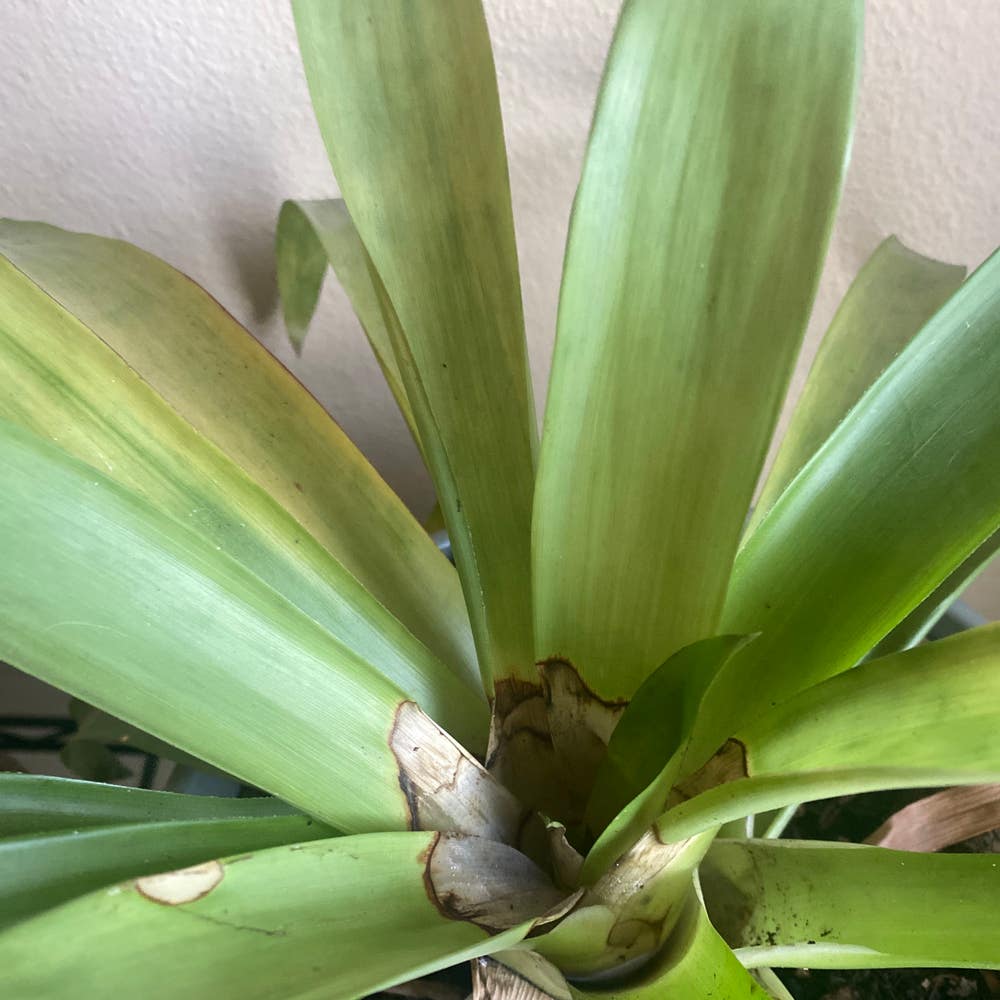
Why Are My Neoregelia laevis Leaves Droopy?
Neoregelia laevis
By the Greg Editorial Team
Apr 14, 2024•4 min read
This article was created with the help of AI so we can cover more plants for you. May contain errors. See one? Report it here.
Rescue your Neoregelia laevis from droop despair 🍂 by unlocking the secrets to perfect plant care!
- Over/underwatering and poor drainage cause droopy Neoregelia laevis leaves.
- Stable temperatures and draft protection are crucial for plant health.
- Consistent care and early action prevent and address droopiness.
Spotting the Signs of Droopiness
Identifying droopy leaves in Neoregelia laevis is more than a visual assessment; it's about recognizing a cry for help. When leaves that should stand proud begin to sag, it's time to pay attention.
🕵️ Visual Cues
A healthy Neoregelia laevis leaf will resist when you give it a gentle poke. If it flops over, think deflated balloon, not relaxed posture. Look for leaves that have lost their usual vigor and appear to dangle or bend unnaturally.
🚩 Beyond the Droop
But droopiness is just the beginning. Yellowing leaves, brown crispy edges, or any change in texture are red flags. If the soil feels too wet or bone-dry, your watering habits could be the culprit. A pot that's unexpectedly heavy or light can also hint at improper moisture levels. And don't forget to check for pests making themselves at home under the leaves or in the crevices of your plant.
🚨 Understanding the Urgency
Persistent droopiness isn't just an aesthetic issue; it's a distress signal. Pale leaves, spots, or leaves curling inward are serious symptoms. These aren't just quirks; they're urgent alerts that your plant is in distress and could indicate a range of issues from environmental stress to disease. Keep a vigilant eye out for these changes; they're crucial for the health and happiness of your Neoregelia laevis.
Troubleshooting Droopy Leaves
💧 Water Woes: Overwatering vs. Underwatering
Overwatering turns your Neoregelia laevis's soil into a swamp, while underwatering leaves it gasping for moisture. The key is to strike a balance.
The touch test
Check the soil moisture with a finger probe. If it's damp, skip the watering. If it's dry, it's time to quench your plant's thirst.
🚰 Drainage Dilemmas
Poor drainage is a silent killer, leading to limp leaves. It's not just about less water, it's about better flow.
Fixing the flow
Ensure your pot has drainage holes. Consider a mix of perlite or coarse sand to improve soil aeration.
🌡️ Temperature Tantrums
Neoregelia laevis dislikes temperature swings as much as we dislike unexpected bills.
Keeping it cozy
Maintain a stable temperature to avoid shocking your plant. No drafts, no sudden chills. Just steady warmth.
Reviving Your Neoregelia laevis
💧 Watering Revamp
Soak and dry—the mantra for Neoregelia laevis revival. Here's how to nail it:
- Drench the soil until water runs free from the drainage holes.
- Wait for the top inch of soil to dry before the next watering.
- Adapt your watering schedule with the changing seasons.
🌱 Soil and Repotting Solutions
Soil Check-Up
Is your plant's soil exhausted? Time for a refresh. Mix in perlite or coarse sand to boost drainage and aeration. Your plant's roots will thank you.
The Repotting Remedy
When your Neoregelia laevis feels cramped, it's repotting time. Gently transfer to a larger pot with fresh, well-draining soil. Hold off on watering for a day to let the roots settle.
🌡️ Climate Control
Draft-Proofing Your Plant Space
Neoregelia laevis despises drafts. Shield your plant from sudden temperature changes to prevent droopiness. Keep it in a stable environment, and your plant will stay snug and perky.
Keeping Your Neoregelia laevis Perky
📅 Consistent Care Schedule
Crafting a care calendar for your Neoregelia laevis isn't just about ticking boxes; it's about establishing a rhythm that keeps your plant thriving. Think of it as setting up regular coffee dates with your green buddy—non-negotiable and always on the agenda.
- Watering: Mark the days for hydration, adjusting for seasonal thirst changes.
- Feeding: Schedule monthly fertilizing during the growing season, no more, no less.
- Pruning: Regularly snip off any dead or yellowing leaves to maintain aesthetics and health.
🕵️♂️ Early Detection and Action
Stay vigilant. Catching droopiness early can mean the difference between a quick fix and a full-blown plant crisis.
- Leaf Check: Daily glances can reveal subtle changes, signaling when your plant's not quite itself.
- Responsive Action: Notice a droop? Don't wait. Adjust care immediately to nip issues in the bud.
Remember, a perky Neoregelia laevis is a happy one, and that's all down to the consistency of your care.
⚠️ Safety First
This content is for general information and may contain errors, omissions, or outdated details. It is not medical, veterinary advice, or an endorsement of therapeutic claims.
Always consult a qualified healthcare professional before using any plant as food, medicine, or supplement.
Never eat any plant (or feed one to pets) without confirming its identity with at least two trusted sources.
If you suspect poisoning, call Poison Control (800) 222-1222, the Pet Poison Helpline (800) 213-6680, or your local emergency service immediately.
Spotted an error? Please report it here.
Banish droopiness in your Neoregelia laevis with customized care reminders 📅 from Greg, ensuring your plant stays vibrant and upright.