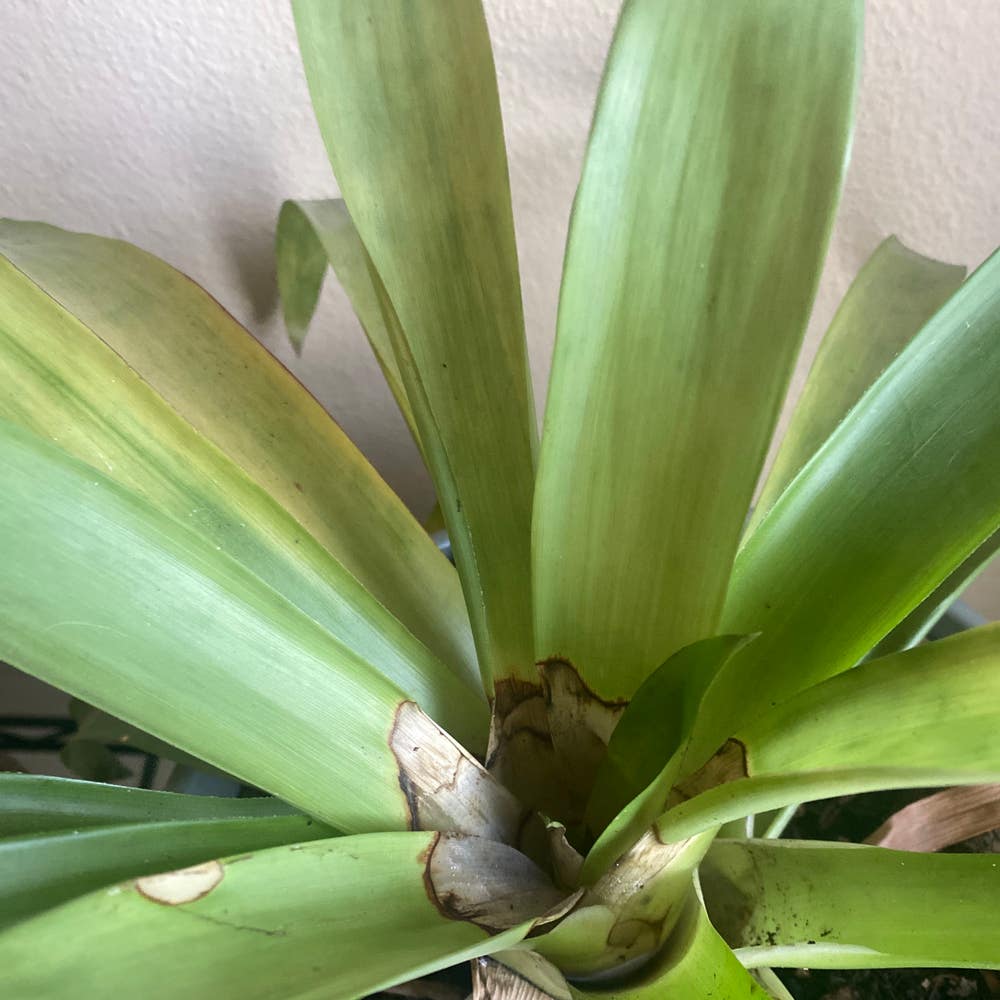
Why Are My Neoregelia laevis Leaves Mushy?
Neoregelia laevis
By the Greg Editorial Team
Apr 14, 2024•4 min read
This article was created with the help of AI so we can cover more plants for you. May contain errors. See one? Report it here.
Prevent Neoregelia despair 🌿—learn to tackle mushy leaves and root rot for a thriving plant!
- Overwatering causes mushy leaves, adjust your watering habits.
- Ensure proper drainage to prevent soggy leaves and root rot.
- Act swiftly against root rot by repotting in well-draining soil.
Spotting the Trouble: Signs Your Neoregelia laevis is Too Wet
🌊 Overwatering Woes
Mushy leaves on your Neoregelia laevis are a distress signal; they've had their fill of water and then some. Overwatering turns robust foliage into a soggy mess. It's a clear-cut sign that your watering enthusiasm needs to be dialed back.
🚰 Poor Drainage: A Recipe for Soggy Leaves
If your plant's pot feels like a mini swamp, you've got a drainage dilemma. A pot without proper drainage holes is a one-way ticket to mushy leaf city. Quick fixes include adding more holes or switching to a pot that doesn't hold water hostage.
To get your water flow back on track, consider a soil remix. A well-draining mix is like a backstage pass for excess water—it lets it out before the party gets out of hand. If your pot's heavier than your last dumbbell set, it's time to repot and let those roots breathe.
Root Rot: The Hidden Culprit Behind Mushy Leaves
🌱 Unearthing the Problem
Root rot is the nightmare for Neoregelia laevis enthusiasts. Dark, mushy roots are a clear sign that your plant is in distress. This condition leads to the dreaded mushiness in leaves, signaling a compromised root system.
🚑 Saving Your Plant from the Rot
When you suspect root rot, act swiftly. Remove the plant from its pot and snip off the affected roots with sterilized scissors. Repot in fresh, well-draining soil and adjust your watering habits—overwatering is often the root of the problem.
Turning Things Around: Rescuing Your Neoregelia laevis
💧 Adjusting Your Watering Technique
Finding the sweet spot for watering frequency is like hitting the bullseye in darts—it takes practice, but once you've got it, your Neoregelia laevis will thrive. Overwatering is the fast track to mushy leaves, so let's dial it back. Water thoroughly, then give the soil a chance to dry slightly before going in for another round. Remember, your plant's thirst varies with the seasons; adapt accordingly.
Best Practices for Watering Your Neoregelia laevis
Here's the skinny: water your plant when the top inch of soil feels dry. Stick your finger in; if it comes out clean, it's time to hydrate. Use room temperature water to avoid shocking the roots—think of it as serving a fine wine, not a cold beer. And always, always let excess water drain. No plant likes wet feet, least of all your Neoregelia laevis.
Upgrading Your Plant's Home
Choosing the right pot and soil is like picking a well-fitting pair of shoes; it can make all the difference. Go for a shallow, wide pot that says goodbye to excess water with ease. And the soil? A mix of peat moss, perlite, and orchid bark will keep your plant's roots as happy as a clam at high tide.
When and How to Repot to Prevent Future Mushiness
Every 2-3 years, it's time for a change of scenery. Gently tease out the roots and give them a new home in fresh soil. It's like a spa day for your plant—out with the old, in with the new. And while you're at it, trim any dead or dying leaves to keep your Neoregelia laevis looking sharp.
Keeping Your Neoregelia laevis Happy and Healthy
💧 Crafting the Perfect Watering Schedule
To prevent your Neoregelia laevis from becoming a mushy mess, precision in watering is key. Tools like moisture meters or the good old finger test—feeling the top inch of soil for dryness—can guide you. Watering should be a ritual, not a reaction. Set reminders to check soil moisture regularly, adapting to your plant's thirst levels which vary with seasons and indoor climates.
🌱 Vigilant Root Care
Routine checks are your plant's best defense against root rot. Gently unearth a bit of the root system every few months to ensure they're firm and white, not brown and squishy. If you spot early signs of distress, like a funky smell or a suspiciously light pot, act fast. This is not just about saving your plant; it's about being the Sherlock Holmes of horticulture.
⚠️ Safety First
This content is for general information and may contain errors, omissions, or outdated details. It is not medical, veterinary advice, or an endorsement of therapeutic claims.
Always consult a qualified healthcare professional before using any plant as food, medicine, or supplement.
Never eat any plant (or feed one to pets) without confirming its identity with at least two trusted sources.
If you suspect poisoning, call Poison Control (800) 222-1222, the Pet Poison Helpline (800) 213-6680, or your local emergency service immediately.
Spotted an error? Please report it here.
Avoid mushy leaves 🍂 on your Neoregelia laevis by letting Greg alert you with a custom watering plan tailored to your plant's needs!