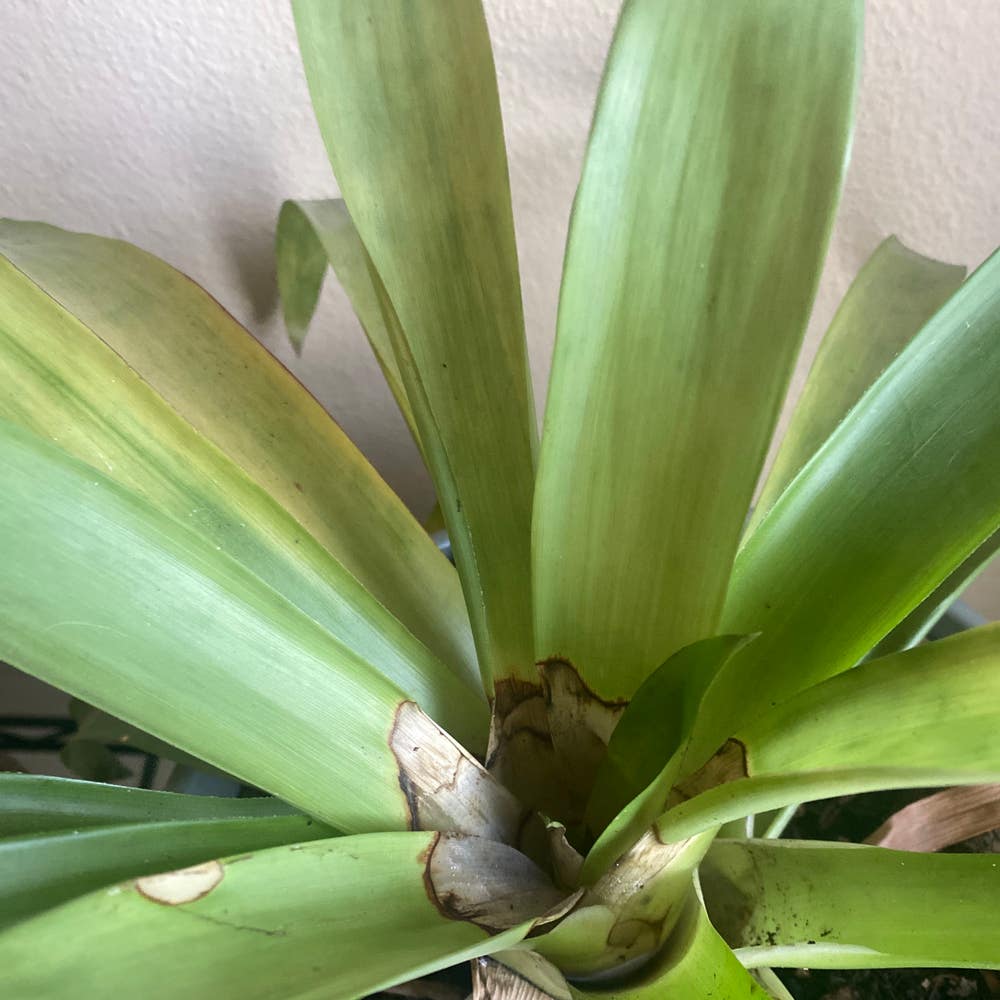
Common Neoregelia laevis Problems
Neoregelia laevis
By the Greg Editorial Team
Apr 14, 2024•4 min read
This article was created with the help of AI so we can cover more plants for you. May contain errors. See one? Report it here.
Prevent common Neoregelia woes 🌿 and ensure your plant thrives with these crucial care insights.
- Over-watering leads to yellow leaves and root rot; under-watering to crispy leaves.
- Bright, indirect light is best; avoid sunburn and cold drafts.
- Combat pests and mold with neem oil and good air circulation.
When Water Works Against You
💧 Over-watering Havoc
Yellowing leaves and a stinky situation—the classic signs of over-watering your Neoregelia laevis. If the plant feels like a damp sponge rather than firm, it's time to cut back on the H2O.
Steps to Rescue Your Waterlogged Neoregelia
- Cease watering immediately. Let the soil dry out, feeling lighter than your conscience after confessing to a houseplant homicide.
- Check for proper drainage; ensure the pot isn't holding water like a camel's hump.
- If root rot is suspected, repot with fresh, dry soil and trim any blackened or mushy roots.
🏜️ The Thirsty Plant Plight
Crispy leaves and stunted growth scream under-watering. Your Neoregelia is as parched as a tongue on a desert trek.
Quenching the Thirst
- Water thoroughly, allowing excess to escape through drainage holes. Don't let the plant sit in a puddle.
- Establish a watering routine but adjust for seasonal changes—your plant's thirst isn't static.
- Monitor soil moisture an inch down; aim for damp, not soggy or bone-dry.
Light and Temperature Tangles
🌞 The Sunburned Scenario
Burnt leaves and faded colors are distress signals from your Neoregelia laevis, indicating it's had too much sun. To prevent a botanical sunburn, observe your plant for crispy, brown patches on the foliage.
Bright, indirect light is the sweet spot for Neoregelia laevis. It's like finding the perfect parking spot—shaded yet close to the entrance. Ensure the plant is positioned to avoid the harsh midday sun, which can be more villainous to your plant than to any comic book hero.
❄️ Chilly Plant Blues
When your Neoregelia laevis starts to look droopy, it's not trying to win an award for best drama—it's too cold. Slow growth and a general appearance of being under the weather can mean the temperature has dropped too low for comfort.
To keep your Neoregelia laevis warm, maintain a room temperature between 60-80°F (15-27°C). Steer clear of drafty windows and doors. Think of your plant as a guest at a party—it doesn't want to be stuck by the cold entrance or right next to the blasting speakers (aka heating vents).
The Unseen Invaders: Pests and Diseases
🐛 Pests: The Tiny Terrors
Unwanted guests can turn your Neoregelia laevis into a pest party central. Spider mites, mealybugs, and scale insects are the main culprits. They're like ninjas, leaving behind subtle signs of their presence: webbing, white fluff, or sticky leaves.
🚪 Eviction notice
When it comes to kicking out these pests, think of neem oil as your friendly neighborhood watch. It's effective yet gentle. For a full-scale invasion, chemical pesticides are your last line of defense—like calling in the pest control SWAT team. Remember, prevention is your best strategy; keep a clean plant environment and stay vigilant.
🍄 Fungus Among Us
Mold and mildew love to crash the party, leaving a fuzzy calling card on your plant. They thrive in that sweet spot of excess moisture and poor air circulation. It's like they enjoy a good sauna at the expense of your Neoregelia.
🌬️ Clearing the air
To send these fungal freeloaders packing, boost airflow and consider fungicides—but only as a last resort. Think of it as turning on the exhaust fan in that sauna. Prevention is still your best bet; keep the foliage dry and the living space clean to stop mold and fungus from getting too comfortable.
Root Rot: The Silent Killer
🚨 The Root of the Problem: Detecting Early Signs of Root Rot
Detecting root rot early can mean the difference between plant resuscitation and a botanical funeral. Look for a plant that's stopped growing or has leaves that feel unexpectedly squishy. When roots resemble something out of a goth wardrobe—dark and slimy—it's a red flag.
🏥 Surgery and Recovery: How to Save Your Neoregelia from Root Demise
If your Neoregelia is giving off more of a zombie vibe than a tropical paradise, it's time for some plant surgery. Carefully remove the plant from its pot and brush off the soil to reveal the roots. Healthy roots should look ready for a workout—firm and white. The rotten ones? They'll be as mushy as overcooked noodles. Using sterilized shears, cut away all the dark, soft roots with the precision of a seasoned surgeon. After the amputation, repot your Neoregelia in fresh, well-draining soil and ensure the pot has adequate drainage. Watering should be like a well-timed joke—delivered just right, not overdone.
⚠️ Safety First
This content is for general information and may contain errors, omissions, or outdated details. It is not medical, veterinary advice, or an endorsement of therapeutic claims.
Always consult a qualified healthcare professional before using any plant as food, medicine, or supplement.
Never eat any plant (or feed one to pets) without confirming its identity with at least two trusted sources.
If you suspect poisoning, call Poison Control (800) 222-1222, the Pet Poison Helpline (800) 213-6680, or your local emergency service immediately.
Spotted an error? Please report it here.
Avoid the common woes of Neoregelia laevis by letting Greg tailor 🌱 your plant's care routine, ensuring just-right watering and perfect placement away from those pesky problems.