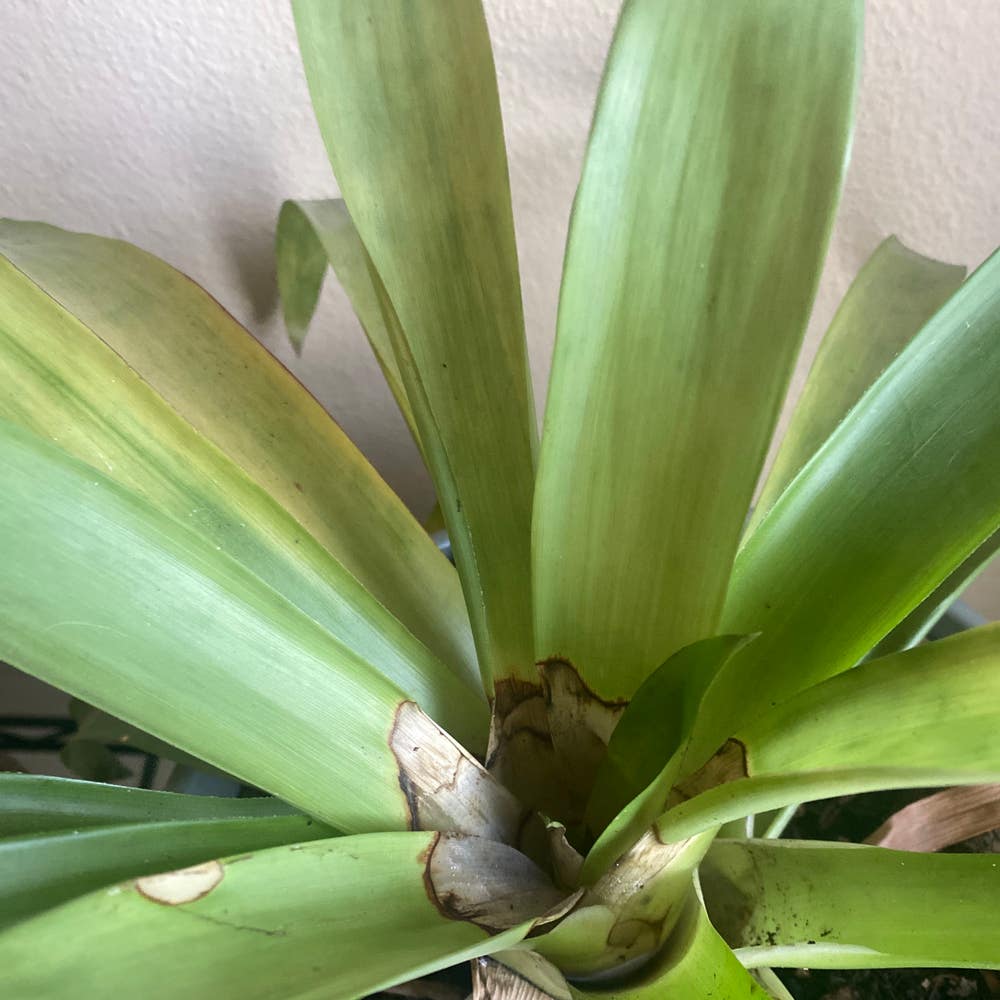
Why Are My Neoregelia laevis Leaves Falling Over?
Neoregelia laevis
By the Greg Editorial Team
Apr 14, 2024•4 min read
This article was created with the help of AI so we can cover more plants for you. May contain errors. See one? Report it here.
Transform your Neoregelia laevis from limp to lively 🌿 with our expert care secrets.
- 🚱 Overwatering causes yellow leaves; let soil dry before rewatering.
- 🌞 Bright, indirect light is ideal; protect from direct sunburn.
- 🌡️ Maintain 65°F-80°F temperature to prevent leaf droop.
When Watering Woes Make Leaves Limp
🌊 Overwatering Overwhelm
Yellow leaves and a squishy feel to your Neoregelia laevis are the alarm bells of overwatering. The roots should be firm, not mushy like overcooked noodles.
To rescue an overwatered plant, stop watering immediately. Let the soil dry out before giving it another drink. If the plant is severely affected, you may need to repot it with fresh, dry soil.
🚰 The Underwatering Undertow
Droopy leaves and bone-dry soil are the tell-tale signs of underwatering. Your plant's leaves should be vibrant, not hanging like laundry on a windless day.
To hydrate your Neoregelia laevis, give it a thorough watering until water runs out of the drainage holes. Then, let the excess water drain to avoid root rot. Going forward, establish a consistent watering routine to keep the soil evenly moist, not soggy or desert-dry.
Light and Temperature: The Balancing Act
🌞 Too Much Sun, Too Little Stability
Neoregelia laevis thrives in bright, indirect light, but too much sun can lead to a sunburned plant, not the summer tan you might hope for. Leaves curling up is a tell-tale sign they're trying to hide from the sun's harsh rays. Rotate your plant regularly to ensure even exposure and prevent a one-sided leaf burn.
To counteract intense light, consider relocating your plant to a spot that enjoys filtered sunlight. If that's not an option, get creative with sheer curtains or use other plants to cast a protective shadow. Remember, it's about giving each leaf its time to bask without the risk of a crisp.
❄️ Chilly Temperatures and Tropical Troubles
Your Neoregelia laevis doesn't want to shiver or sweat; it craves that steady tropical warmth. Sudden temperature changes are a big no-no. Drafty windows and heating vents? Think of them as the archenemies of your tropical buddy. Aim to keep the thermometer consistent, ideally between 65°F and 80°F.
Wilting or discolored leaves are your plant's version of sending an SOS. It's saying, "I'm not cool with this chill." Keep your plant away from temperature swings as if you're avoiding spoilers for the latest hit series. Use thermometers to monitor the climate like a hawk, ensuring your plant's environment is as stable as your love for it.
Feeding Your Neoregelia laevis: A Nutrient Nuance
🚨 Spotting Starvation Symptoms
Yellow leaves or stunted growth in your Neoregelia laevis? Nutrient deficiency could be the culprit. Brown spots and leaf tip burns are also distress signals. Your plant's visual cues are a cry for help, signaling it's time for a nutrient boost.
🌱 Crafting the Perfect Plant Diet
To prevent nutrient-related leaf droop, think of fertilizing as picking a multivitamin for your plant. A balanced mix of nitrogen, phosphorus, and potassium is crucial. Don't ignore micronutrients; they're key for vibrant growth. Apply fertilizer according to the recommended schedule, but stay vigilant. Your plant's response is the ultimate guide for dose adjustments.
Conduct a soil test to pinpoint what's missing. It's like a wellness check for your plant's diet. If you prefer organic options, consider compost or organic fertilizer pellets. They release nutrients slowly, akin to a time-released capsule for your plant's health. In a pinch, foliar feeding can provide a quick nutrient fix, delivering essentials directly to the leaves.
Remember, over-fertilization is like a nutrient hangover. Stick to a fertilizer tailored for Neoregelia laevis and observe your plant's response. Moderation is key; adjust your approach based on feedback to avoid the dreaded leaf drop.
Proactive Plant Parenting: Prevention is Key
📅 Crafting a Care Calendar
Setting up a care calendar is like programming your plant's fitness regimen. It's about syncing your Neoregelia laevis's needs with your daily life. Watering, lighting, and feeding should be as regular as your morning alarm.
- Water: Adjust frequency with the seasons—more in growth, less in rest.
- Light: Ensure consistent exposure, but not too intense to avoid scorch.
- Feeding: A balanced diet during growth periods keeps leaves firm.
🩺 Regular Health Check-ups
Routine inspections are the equivalent of a plant's annual physical. Catching early signs of stress keeps your Neoregelia laevis from becoming a botanical casualty.
- Look: For discoloration or weak growth.
- Touch: The soil before watering—moisture meters don't lie.
- Prune: Dead or dying foliage to focus the plant's energy.
Sterilize your tools; it's basic hygiene, like washing your hands after a subway ride. Remember, proactive beats reactive—your plant will thank you with upright, vibrant leaves.
⚠️ Safety First
This content is for general information and may contain errors, omissions, or outdated details. It is not medical, veterinary advice, or an endorsement of therapeutic claims.
Always consult a qualified healthcare professional before using any plant as food, medicine, or supplement.
Never eat any plant (or feed one to pets) without confirming its identity with at least two trusted sources.
If you suspect poisoning, call Poison Control (800) 222-1222, the Pet Poison Helpline (800) 213-6680, or your local emergency service immediately.
Spotted an error? Please report it here.
Keep your Neoregelia laevis from drooping by letting Greg craft a custom watering schedule 💧 that adapts to your home's unique environment, ensuring your plant stays upright and vibrant.