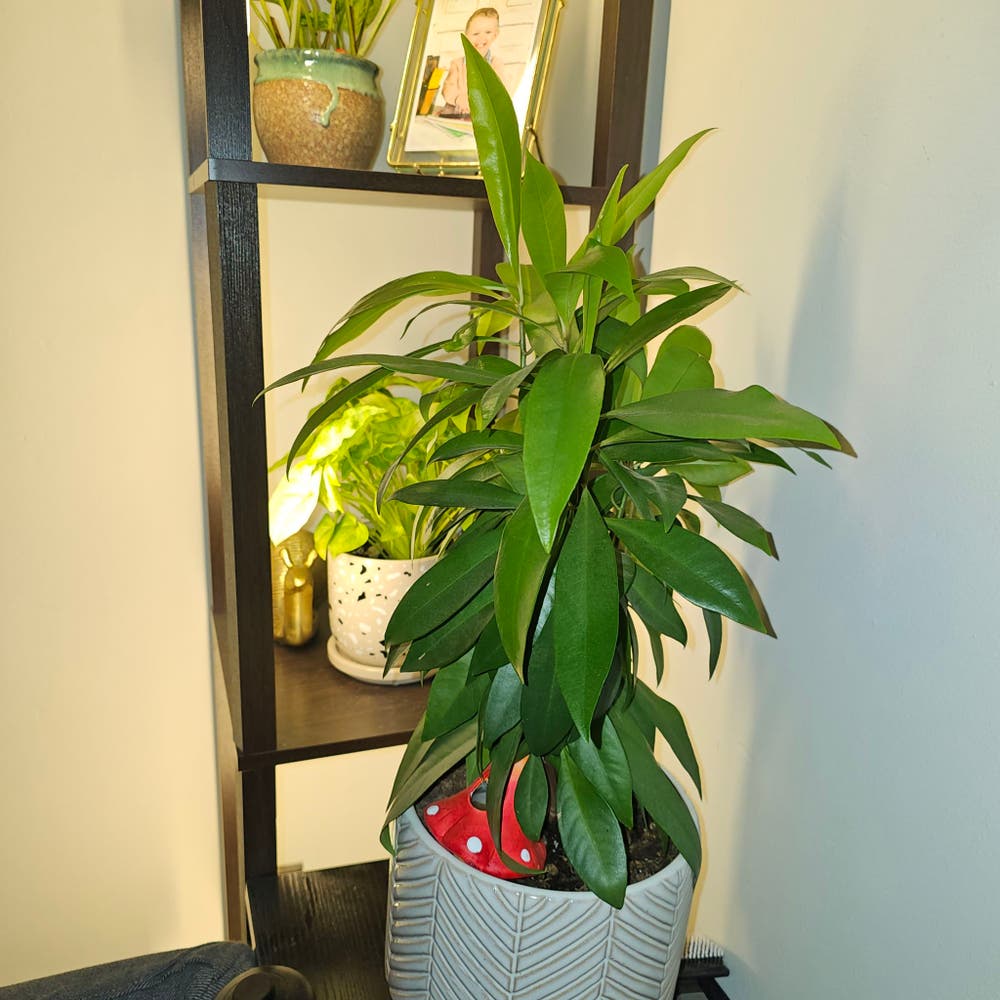
💧 How Do I Fix Japanese Ardisia Root Rot?
Ardisia japonica
By the Greg Editorial Team
Apr 15, 2024•3 min read
This article was created with the help of AI so we can cover more plants for you. May contain errors. See one? Report it here.
Save your Japanese Ardisia 🌿 from root rot with these life-saving plant care tips! 🚑
- 🍂 Yellow leaves and wilting signal root rot in Japanese Ardisia.
- 🌱 Choose well-draining pots and soil to prevent future rot.
- 🍄 Use fungicides wisely to combat and prevent fungal infections.
Spotting the Trouble Early
🚩 Visual Red Flags
Yellowing leaves and wilting are your first hints that your Japanese Ardisia might be suffering from root rot. Stunted growth and a lack of new shoots are also telling signs that all is not well beneath the soil.
🕵️ Beyond the Surface
To truly assess the health of your plant, you'll need to get your hands dirty. Gently remove the plant from its pot and examine the roots. Healthy roots should be firm and white or tan, not soft, brown, or black. A bad smell emanating from the roots is another dead giveaway of rot.
Section
Battling the Invisible Enemy: Fungal Infections
🛡️ Choosing the Right Fungicide
When your Japanese Ardisia is under fungal siege, selecting the right fungicide is like picking the best armor for battle. Copper-based fungicides are the broad-spectrum stalwarts, but don't just splash it on; apply it with precision. Follow the label like it's a treasure map, leading to plant health. Rotate your fungicides to keep the fungi guessing and resistance at bay.
🌬️ Cultural Practices to Keep Fungus at Bay
Air circulation is your silent guardian against fungal invasions. It's simple: keep the air moving and the fungi will find it tough to settle. Ensure your plant isn't marooned in stagnant air; a gentle breeze is a simple deterrent. Light exposure is also key—like a spotlight on a lurking villain, it helps keep the pathogens in check. Remember, creating a hostile environment for fungi is about being proactive, not reactive.
Keeping Your Japanese Ardisia Safe
💧 Water Wisely
Consistency is key when watering your Japanese Ardisia. Overwatering is a surefire way to drown those roots, but let it get too thirsty, and you'll have a different kind of crisis. The 'dry-out' method is your friend here: let the topsoil dry out before giving it another drink. Stick your finger in the soil—wet beyond the first inch? Hold off on the H2O.
🏡 The Right Home for Your Plant
Choosing the right pot is like picking a good apartment—it's all about location, location, location. And by location, I mean drainage. Ensure your pot has holes in the bottom; no one likes wet feet, least of all your plant. Size matters too; a pot too big is just a fancy swimming pool for root rot.
Soil selection is crucial. Go for a well-draining mix, and consider a gravel layer at the bottom for that extra drainage oomph. Keep the pot elevated to promote air circulation. Think of it as your plant's personal balcony—good airflow, less drama.
Remember, your plant's home should be a sanctuary, not a swamp.
⚠️ Safety First
This content is for general information and may contain errors, omissions, or outdated details. It is not medical, veterinary advice, or an endorsement of therapeutic claims.
Always consult a qualified healthcare professional before using any plant as food, medicine, or supplement.
Never eat any plant (or feed one to pets) without confirming its identity with at least two trusted sources.
If you suspect poisoning, call Poison Control (800) 222-1222, the Pet Poison Helpline (800) 213-6680, or your local emergency service immediately.
Spotted an error? Please report it here.
Combat Japanese Ardisia root rot with expert care tips and Greg's 🌱 soil moisture alerts to ensure your plant thrives with just the right amount of water.