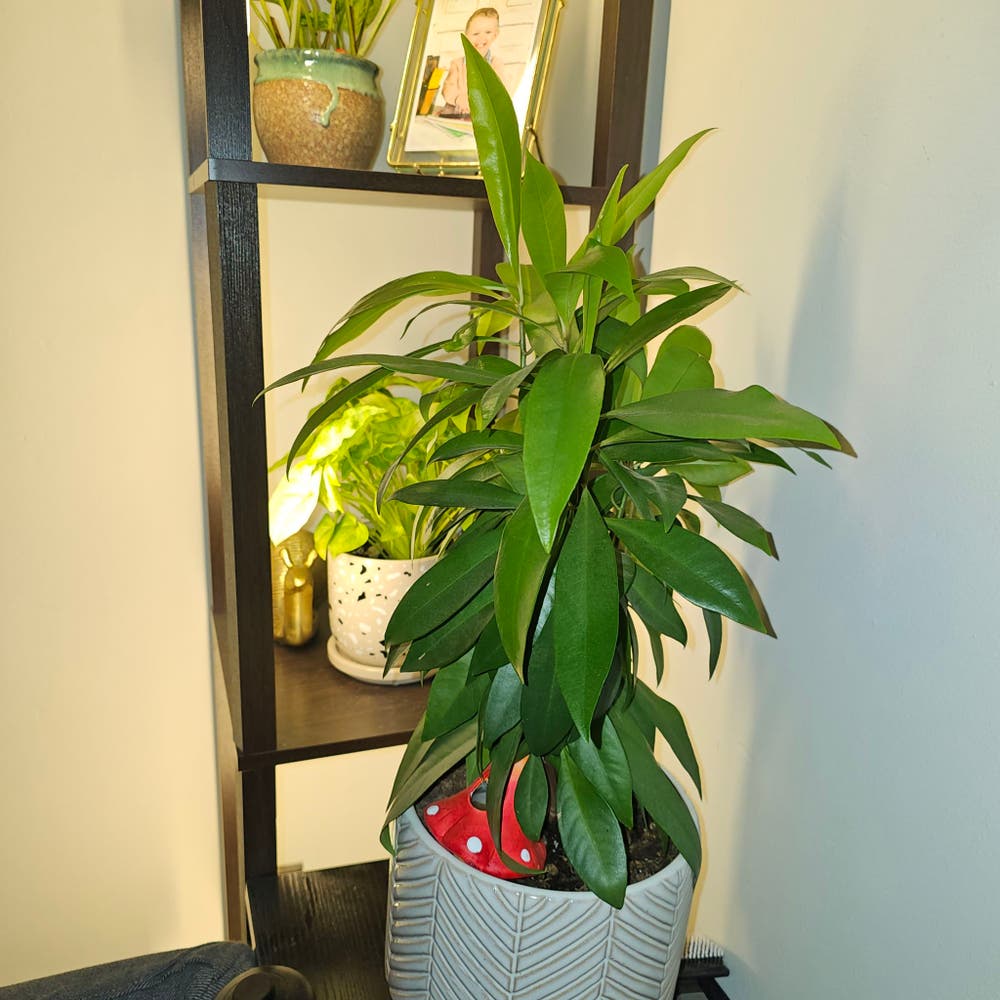
Black Spots on My Japanese Ardisia Leaves
Ardisia japonica
By the Greg Editorial Team
Apr 15, 2024•4 min read
This article was created with the help of AI so we can cover more plants for you. May contain errors. See one? Report it here.
Banish black spots 🍂 from your Japanese Ardisia and ensure its lush growth with our definitive care tips.
- Black spots signal disease; don't ignore crusty or soggy leaf spots.
- Isolate and prune to prevent spread and refocus plant energy.
- Adjust care and environment to support recovery and prevent recurrence.
Spotting Trouble: Identifying Black Spots
🕵️ Visual Clues: What Do Black Spots Look Like?
Black spots on Japanese Ardisia leaves are sneaky. They might masquerade as minor blemishes, but often they're a sign of something more sinister. These spots can range from tiny specks to larger blotches, sometimes surrounded by a telltale yellowish halo. Their appearance may vary from jet black to a more deceptive brownish tint.
🚨 Beyond the Spots: Recognizing Related Symptoms
It's not just about the spots. Keep an eye out for related symptoms like yellowing leaves or a general look of distress in your plant. If the spots are raised, sunken, or emit a foul odor, you're likely dealing with a serious issue. These spots can be the plant's cry for help, indicating an underlying disease that needs immediate attention.
🍄 Fungal vs. Bacterial: Tips to Tell Them Apart
Texture is a big tip-off. Fungal spots often have a crusty feel, like a loaf of bread that's seen better days, while bacterial spots might remind you of a damp, soggy mess. Fungal infections may show circular or angular spots, sometimes with a purple-red border. Bacterial issues, on the other hand, often look like water-soaked lesions with lighter centers. If you spot concentric rings or dark margins, it's time to roll up your sleeves and get to work—these are classic signs of a fungal fiesta.
First Aid for Your Ardisia: Immediate Actions
🔒 Isolating the Affected Plant
When black spots mar your Ardisia's leaves, isolation is key. Think quarantine: separate the sickly from the healthy to curb the spread.
✂️ Removing Infected Leaves Carefully
Next, prune the drama. Snip off those black-spotted leaves with sterilized scissors. It's a surgical strike against the disease, redirecting energy to the plant's healthier parts.
🧼 Cleaning Up: Sanitizing Tools and Surroundings
After surgery, it's cleanup time. Sanitize your tools with alcohol or a bleach solution—think of it as handwashing for plant care. Don't forget to clean the area around the plant; lingering spores are like uninvited guests at a party, ready to crash it again.
Battling the Blight: Treatment Strategies
🌿 Choosing the Right Fungicide or Antibacterial
Timing is crucial when combating black spots on your Japanese Ardisia. For fungal foes, select a fungicide that matches the infection's profile. Protectant fungicides work as a preemptive strike, forming a barrier against potential invaders. On the other hand, systemic fungicides act from within, halting the spread even post-infection.
When bacteria are the culprits, copper compounds and targeted bactericides are your allies. However, they're not cure-alls. Precision in matching the treatment to the bacterial strain is vital. Overuse can lead to antibiotic-resistant strains, so apply with a sniper's accuracy.
🌡️ Application Tips: How to Treat Your Plant Safely
Applying treatments requires a surgeon's sterility and an artist's touch. Don protective gear—gloves and goggles are non-negotiable. Ensure thorough coverage like you're painting a masterpiece, but avoid drenching. Think of it as an even coating that leaves no leaf unturned.
Follow the product label religiously; it's the law of the land in plant care. Apply treatments during the cooler hours to maximize effectiveness and minimize stress on your plant. Rotate between different fungicides to prevent resistance, keeping those pesky pathogens guessing.
🌱 Environmental Adjustments to Support Recovery
Post-treatment, it's all about creating a recovery-friendly environment. Boost air circulation and regulate humidity to discourage future outbreaks. Consider the strategic placement of your Ardisia to ensure it receives the ideal amount of sunlight.
Monitor your plant's progress with the vigilance of a hawk. Small adjustments can have significant impacts, so stay observant and ready to tweak conditions as needed. Remember, the goal is to create a stronghold where black spots dare not tread.
Keeping the Spots at Bay: Prevention Tactics
💧 Water Wisely: Avoiding Overhead Watering
Watering is a precision task. Check the soil's moisture before watering—think of it as a plant's thirst meter. Overhead watering? Forget it. It's like giving fungi a free pass to the leaf party. Water at the base to keep foliage dry, and do it in the early morning to let any accidental splashes evaporate.
💨 Airflow and Sunlight: Creating an Ideal Environment
Airflow is crucial. It's your plant's invisible shield against black spots. Place your Ardisia where it can bask in a gentle breeze, or use a fan on a low setting to simulate one. Sunlight should be bright but indirect—like a perfect day for a picnic, not a day at the beach. This balance helps prevent the leaves from becoming a fungal hotspot.
👩⚕️ Regular Check-ups: Catching Problems Early
Inspections are your secret weapon. Make them as routine as checking your phone in the morning. Adjust care with the seasons—less water in winter, more shade in summer. Remember, catching black spots early is like catching a typo before it's printed on a billboard.
⚠️ Safety First
This content is for general information and may contain errors, omissions, or outdated details. It is not medical, veterinary advice, or an endorsement of therapeutic claims.
Always consult a qualified healthcare professional before using any plant as food, medicine, or supplement.
Never eat any plant (or feed one to pets) without confirming its identity with at least two trusted sources.
If you suspect poisoning, call Poison Control (800) 222-1222, the Pet Poison Helpline (800) 213-6680, or your local emergency service immediately.
Spotted an error? Please report it here.
Eradicate those pesky black spots 🍂 on your Japanese Ardisia with Greg's tailored care reminders, helping you keep your plant's environment optimal for health and resilience.