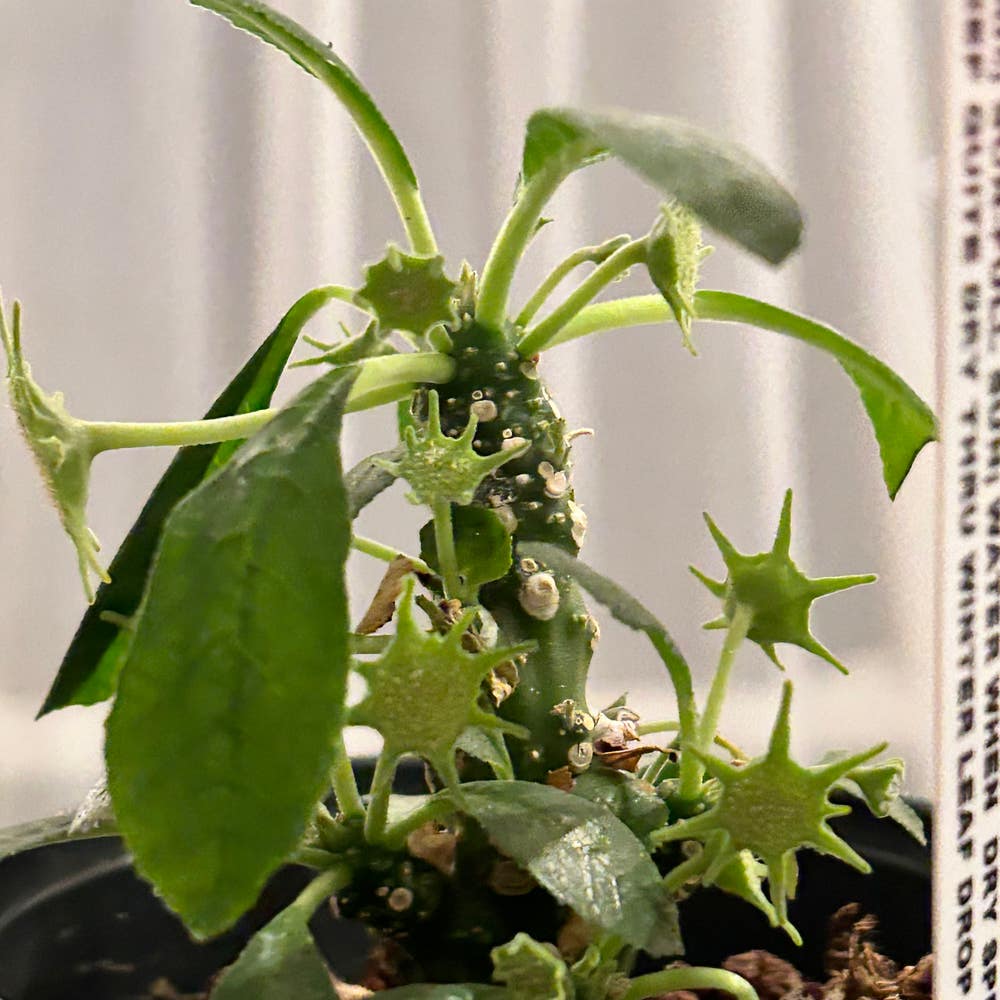
Ultimate Guide to Watering Your Dorstenia 💧
Dorstenia psilurus
By the Greg Editorial Team
Nov 07, 2024•3 min read
This article was created with the help of AI so we can cover more plants for you. May contain errors. See one? Report it here.
- 💧 Water Dorstenia every 1-2 weeks in spring/summer; 2-4 weeks in fall/winter.
- 🌡️ Temperature and humidity affect watering frequency; adjust accordingly for optimal health.
- 📱 Use apps or reminders to maintain a consistent watering schedule for your Dorstenia.
How Often to Water
🌊 General Watering Frequency
Watering your Dorstenia is crucial for its health. During the growing season in spring and summer, aim to water every 1-2 weeks.
As the plant enters dormancy in fall and winter, reduce this frequency to every 2-4 weeks. This adjustment helps your plant conserve energy and moisture.
📊 Factors Affecting Watering Frequency
Understanding the factors that influence watering frequency can enhance your plant care routine.
💡 Light Conditions
Light plays a significant role in how often you should water. If your Dorstenia is in bright, indirect light, it will need more frequent watering.
Conversely, if it’s in low light, you can water less often.
🌡️ Temperature
Temperature also affects watering needs. Warmer temperatures generally require you to increase watering frequency.
In cooler conditions, you can decrease how often you water.
💧 Humidity Levels
Humidity levels are another key factor. Higher humidity means less frequent watering is necessary.
On the other hand, lower humidity levels will require you to water more often to keep your plant hydrated.
🚨 Recognizing Watering Issues
Being able to identify watering issues is essential for maintaining a healthy Dorstenia.
⚠️ Signs of Over-Watering
Watch for signs of over-watering, such as yellowing leaves, which indicate excess moisture.
If you notice wilting despite wet soil, root rot may be present, and mushy stems suggest decaying tissue.
🌵 Signs of Under-Watering
Under-watering can also harm your plant. Drooping leaves indicate a lack of moisture, while crispy leaf edges signal dehydration.
Additionally, if the soil pulls away from the pot, it’s a clear sign of dry conditions.
💦 Watering Techniques
Employing effective watering techniques can significantly improve your plant's health.
🥤 Bottom-Watering Method
One effective method is bottom-watering, where you place the pot in a tray of water. This encourages deep root growth and prevents over-saturation of the topsoil.
To bottom-water, follow these steps:
- Fill a tray with water.
- Place the pot in the tray and allow it to absorb water for 15-30 minutes.
- Remove the pot and let any excess water drain.
🌱 Self-Watering Pots
Self-watering pots are another great option. These pots have a reservoir that allows plants to draw water as needed.
This method reduces the risk of over-watering and helps maintain consistent moisture levels.
📏 Measuring Soil Moisture
Knowing how to measure soil moisture is vital for proper watering.
👆 How to Check Soil Moisture Levels
You can check soil moisture through visual inspection—look for a dry soil surface and any drooping in the plant.
The finger test is also effective: insert your finger into the soil up to 2 inches; if it feels dry, it’s time to water.
🛠️ Tools for Measuring Soil Moisture
For more precise readings, consider using moisture meters. These devices provide a clear indication of soil moisture levels.
However, the finger test remains a simple and effective method for gauging moisture without any tools.
⏰ Watering Reminders
Setting up reminders can help you stay on track with your watering schedule.
📱 Using the Greg Plant Care App
The Greg Plant Care App is a fantastic tool for tailored watering reminders based on your plant's needs.
It helps you maintain consistent care and avoid the pitfalls of over or under-watering.
📅 Setting Up a Watering Schedule
To set up a watering schedule, input your plant type—specify Dorstenia for accurate reminders.
Adjust the frequency based on seasonal changes and environmental conditions to ensure your plant thrives.
With these tips, you’ll be well-equipped to keep your Dorstenia healthy and happy!
⚠️ Safety First
This content is for general information and may contain errors, omissions, or outdated details. It is not medical, veterinary advice, or an endorsement of therapeutic claims.
Always consult a qualified healthcare professional before using any plant as food, medicine, or supplement.
Never eat any plant (or feed one to pets) without confirming its identity with at least two trusted sources.
If you suspect poisoning, call Poison Control (800) 222-1222, the Pet Poison Helpline (800) 213-6680, or your local emergency service immediately.
Spotted an error? Please report it here.
Keep your Dorstenia thriving 🌱 with Greg's personalized watering reminders and expert tips tailored to your plant's unique needs!