5 Tips for Healing Brown Spots on Your Dorstenia 🩹
Dorstenia psilurus
By the Greg Editorial Team
Nov 07, 2024•5 min read
This article was created with the help of AI so we can cover more plants for you. May contain errors. See one? Report it here.
- 🌞 Bright, indirect light is crucial for preventing brown spots on Dorstenia leaves.
- 🌡️ Maintain 20-30°C temperatures to avoid leaf drop and discoloration.
- 💧 Humidity levels of 40-60% help prevent brown tips and edges on leaves.
Diagnosing the Problem
🌍 Environmental Factors
Light Requirements
Dorstenia thrives in bright, indirect light. If your plant is stretching or developing pale leaves, it’s a clear sign that it’s not getting enough light.
Temperature Fluctuations
The optimal temperature range for Dorstenia is between 20°C to 30°C (68°F to 86°F). If you notice leaf drop or discoloration, your plant may be experiencing temperature stress.
Humidity Levels
Maintaining humidity levels between 40-60% is crucial for your Dorstenia's health. Low humidity can lead to brown tips and edges on the leaves, indicating that your plant is thirsty for moisture.
🐛 Common Pests
Mealybugs
Look out for white cotton-like masses on your Dorstenia's leaves; these are mealybugs. They suck sap from the plant, weakening it over time.
Spider Mites
Fine webbing and stippling on leaves are signs of spider mites. These pests can reduce your plant's vigor and lead to leaf drop if not addressed promptly.
Scale Insects
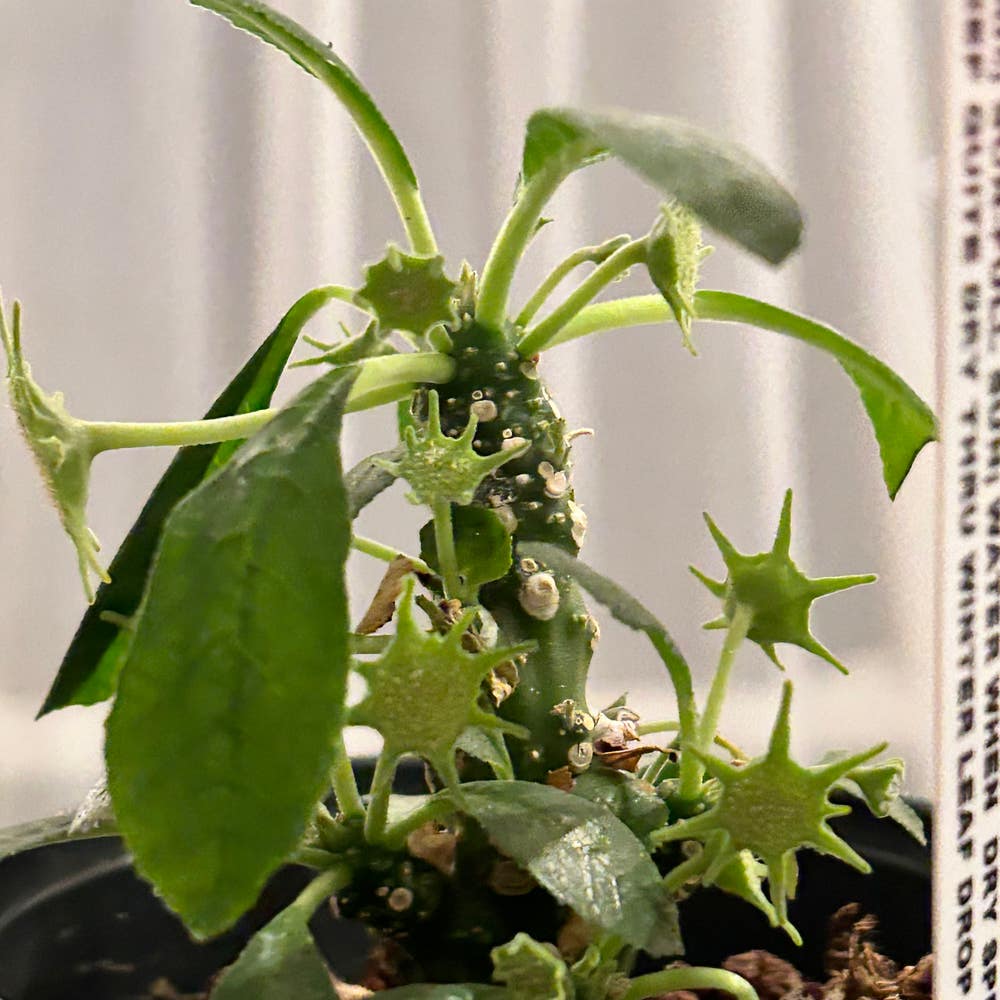
Scale insects appear as hard, shell-like bumps on stems and leaves. Like mealybugs, they cause stress to your plant by feeding on its sap.
🦠 Fungal and Bacterial Infections
Fungal Infections
Common fungal issues include powdery mildew and leaf spot fungi. You might notice a white powdery coating or dark spots on the leaves, signaling a fungal infection.
Bacterial Infections
Bacterial infections often manifest as water-soaked spots or leaf blight. These infections can spread rapidly, making immediate action essential to protect your plant.
Identifying the underlying issues affecting your Dorstenia is the first step toward healing those brown spots. Once you’ve diagnosed the problem, you can move on to effective treatment options that will restore your plant's health.
Treatment Options
Step-by-Step Guide to Treating Brown Spots 🌱
Treating brown spots on your Dorstenia starts with identifying the cause. Assess your plant's watering habits, light exposure, and check for any pest presence.
Next, adjust your watering schedule to ensure proper moisture levels. Overwatering or underwatering can both lead to stress and brown spots.
Improve light conditions by moving your plant to a location with bright, indirect sunlight. This small change can make a significant difference in your plant's health.
If pests are present, treat them promptly using insecticidal soap or neem oil. These treatments are effective and safe for your plant.
Finally, if fungal infections are suspected, apply fungicides as necessary. Always follow the product instructions carefully to avoid further issues.
Recommended Products for Treatment 🛒
When it comes to fungicides, consider using copper-based or systemic options. These are effective and should be applied every 7-14 days until the issue is resolved.
For pest control, insecticidal soap or neem oil are excellent choices. Spray these products directly on the affected areas for the best results.
Home Remedies 🌿
If you prefer natural solutions, try a neem oil spray. Mix 2 tablespoons of neem oil with 1 gallon of water and spray every 1-2 weeks to keep pests at bay.
Another effective remedy is a baking soda solution. Combine 1 tablespoon of baking soda with 1 gallon of water and spray it on your plant to combat fungal infections.
By following these treatment options and utilizing recommended products, you can effectively manage and heal brown spots on your Dorstenia. Now, let’s explore preventive measures to keep your plant thriving in the long run.
Preventive Measures
💧 Best Practices for Watering
Watering your Dorstenia correctly is crucial for its health. Allow the soil to dry out between waterings to prevent root rot.
Signs of proper watering include moist soil that isn’t soggy. Using distilled or rainwater is recommended to avoid harmful chemicals that tap water may contain.
☀️ Optimal Light Conditions
Light placement plays a significant role in your plant's vitality. Position your Dorstenia near east or west-facing windows for the best results.
Avoid direct midday sun exposure, as it can scorch the leaves. Be mindful of seasonal changes and move your plant as needed to maintain optimal light conditions.
🌱 Soil and Potting Considerations
Choosing the right soil is essential for your Dorstenia's growth. A well-draining cactus or succulent mix is ideal, with a pH level between slightly acidic to neutral (6.0-7.0).
When potting, ensure that containers have drainage holes to prevent water accumulation. Repot every 2-3 years or when the plant becomes root-bound to keep it thriving.
By following these preventive measures, you can create a nurturing environment for your Dorstenia, setting the stage for ongoing care and monitoring.
Ongoing Care and Monitoring
Regular Inspection 🕵️♂️
Regular inspections are crucial for maintaining the health of your Dorstenia. Aim for weekly checks to monitor leaf health, looking for color changes, texture issues, and any signs of pests.
Adjusting Care Based on Seasonal Changes 🌦️
Seasonal changes can significantly impact your plant's needs. In summer, increase watering frequency to counteract evaporation, while in winter, reduce watering and keep an eye out for low humidity.
Importance of Proper Humidity Levels 💧
Humidity plays a vital role in your plant's well-being. To maintain optimal growth, consider using a humidifier or placing pebble trays filled with water nearby, ensuring consistent humidity levels.
By staying vigilant and adjusting your care routine, you can help your Dorstenia thrive throughout the year. Next, let’s explore some best practices for watering to further enhance your plant care strategy.
⚠️ Safety First
This content is for general information and may contain errors, omissions, or outdated details. It is not medical, veterinary advice, or an endorsement of therapeutic claims.
Always consult a qualified healthcare professional before using any plant as food, medicine, or supplement.
Never eat any plant (or feed one to pets) without confirming its identity with at least two trusted sources.
If you suspect poisoning, call Poison Control (800) 222-1222, the Pet Poison Helpline (800) 213-6680, or your local emergency service immediately.
Spotted an error? Please report it here.
Heal those brown spots and ensure your Dorstenia thrives with Greg's tailored care tips 🌿, giving you the confidence to nurture your plant to its fullest potential!