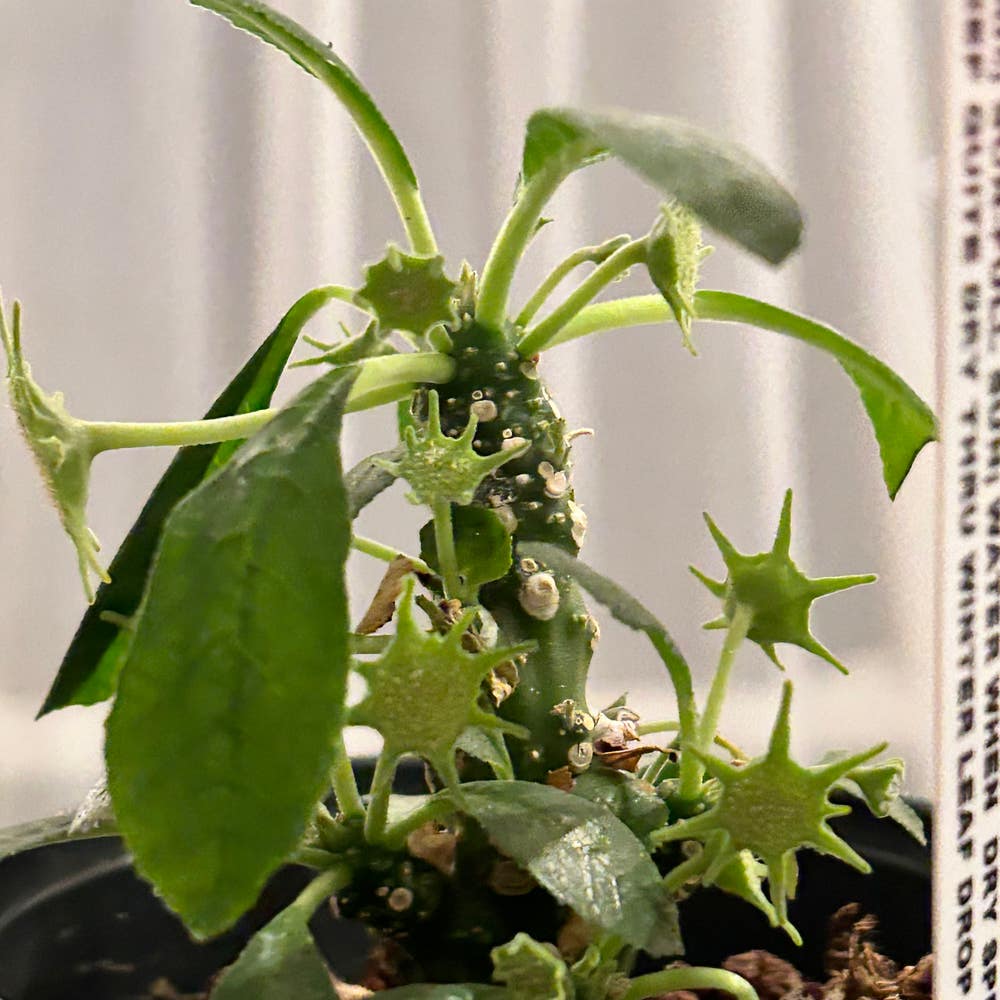
5 Tips for Healing Black Spots on Your Dorstenia 🩹
Dorstenia psilurus
By the Greg Editorial Team
Nov 07, 2024•5 min read
This article was created with the help of AI so we can cover more plants for you. May contain errors. See one? Report it here.
- 🔍 Inspect your Dorstenia regularly for black spots and pests to catch issues early.
- 💧 Balance watering - recognize signs of overwatering and underwatering for optimal health.
- 🌡️ Maintain ideal temperature and humidity to minimize stress and promote growth.
Diagnosing the Problem
How to Inspect for Black Spots 🕵️♂️
To effectively diagnose black spots on your Dorstenia, start with a thorough visual inspection. Look for patterns and the distribution of spots, as this can indicate the underlying issue.
Don't forget to check the undersides of the leaves. Pests and spores often hide there, making it crucial for a comprehensive assessment.
Signs of Overwatering vs. Underwatering 💧
Understanding the signs of overwatering is essential for your plant's health. Look for yellowing leaves, mushy stems, and root rot as clear indicators that your Dorstenia is getting too much water.
On the flip side, underwatering presents its own set of symptoms. Dry, crispy leaves and stunted growth signal that your plant needs more hydration.
Recognizing Environmental Stress Factors 🌡️
Environmental stress can significantly impact your Dorstenia's well-being. The ideal temperature range for these plants is between 20°C to 30°C (68°F to 86°F); anything outside this range can cause stress.
Humidity levels also play a vital role. Aim for an optimal humidity of 40%-60%, and watch for signs of low humidity stress, such as leaf curling or browning tips.
By diagnosing these issues early, you can take proactive steps to restore your Dorstenia's health. Next, let’s explore effective treatment options to tackle those pesky black spots.
Treatment Options
Step-by-Step Guide to Treating Black Spots 🌱
Treating black spots on your Dorstenia requires a systematic approach. Start by isolating affected plants to prevent the spread of any potential infections.
Next, remove severely affected leaves using sterilized scissors. This step is crucial to minimize further damage and promote healthy growth.
Finally, apply appropriate treatments based on your diagnosis. Whether it's a fungicide or a natural remedy, ensure you follow the guidelines for effective application.
Recommended Fungicides and Treatments 🧪
When it comes to chemical options, specific fungicides can effectively combat identified fungal infections. Look for products that target the specific type of fungus affecting your plant.
For safe and effective application, follow the manufacturer's instructions closely. This ensures you provide the best care while minimizing any risks to your plant or surrounding environment.
Natural Remedies for Black Spots 🌼
If you prefer a more natural approach, consider homemade solutions like neem oil and baking soda mixtures. These remedies can be effective in treating black spots without harsh chemicals.
For optimal results, apply these natural treatments regularly. Consistency is key, so establish a routine that works for you and your plant's needs.
With these treatment options, you can tackle black spots effectively and help your Dorstenia thrive. Next, let’s explore preventive measures to keep your plant healthy and vibrant.
Preventive Measures
🌊 Best Practices for Watering
Establishing a consistent watering schedule is crucial for your Dorstenia's health. Adjust the frequency and amount based on the season and the size of your plant to ensure it thrives.
To determine if you're watering correctly, check the soil moisture regularly. If the top inch feels dry, it's time to water, but always ensure proper drainage to prevent root rot.
🌫️ Ideal Humidity and Temperature Conditions
Maintaining the right humidity is essential for your plant's well-being. Consider using humidity trays or misting to keep levels between 40% and 60%.
Temperature control is equally important. Keep your Dorstenia in a stable environment, avoiding drafts and heat sources that could stress the plant.
☀️ Proper Light Exposure
Your Dorstenia needs the right amount of light to flourish. Aim for full sun to partial shade, depending on your specific plant's needs.
Watch for signs of inadequate light, such as etiolation (stretching towards the light) and leaf drop. Adjust its placement to ensure it gets the light it craves.
By following these preventive measures, you can create an optimal environment for your Dorstenia, reducing the risk of black spots and other issues. Next, let’s explore ongoing care and maintenance to keep your plant healthy year-round.
Ongoing Care and Maintenance
🕵️ Regular Inspection and Care Routines
To keep your Dorstenia thriving, conduct weekly inspections. This routine helps you catch any issues early, such as pests, diseases, or environmental stress.
During your checks, look closely for signs like discolored leaves or unusual spots. Early detection can make a significant difference in your plant's health.
🧼 Importance of Cleanliness in Plant Care
Maintaining cleanliness is crucial for your plant's well-being. Regularly clean the leaves to remove dust, which enhances photosynthesis and overall vitality.
Additionally, sterilize your gardening tools before use. This practice prevents the spread of diseases and ensures your plants stay healthy.
🌦️ Seasonal Adjustments to Care Practices
As the seasons change, so do your Dorstenia's needs. Adjust watering and humidity levels according to the weather; for instance, increase humidity during dry winter months.
Also, monitor light exposure closely. As the sun's angle shifts, you may need to reposition your plant to ensure it receives adequate light throughout the year.
By following these ongoing care and maintenance tips, you can help your Dorstenia flourish and prevent future issues. Next, let’s explore preventive measures to keep your plant in top shape.
⚠️ Safety First
This content is for general information and may contain errors, omissions, or outdated details. It is not medical, veterinary advice, or an endorsement of therapeutic claims.
Always consult a qualified healthcare professional before using any plant as food, medicine, or supplement.
Never eat any plant (or feed one to pets) without confirming its identity with at least two trusted sources.
If you suspect poisoning, call Poison Control (800) 222-1222, the Pet Poison Helpline (800) 213-6680, or your local emergency service immediately.
Spotted an error? Please report it here.
Heal those black spots on your Dorstenia and keep it thriving with Greg's personalized care reminders 🌿 that ensure your plant gets the attention it needs to flourish!