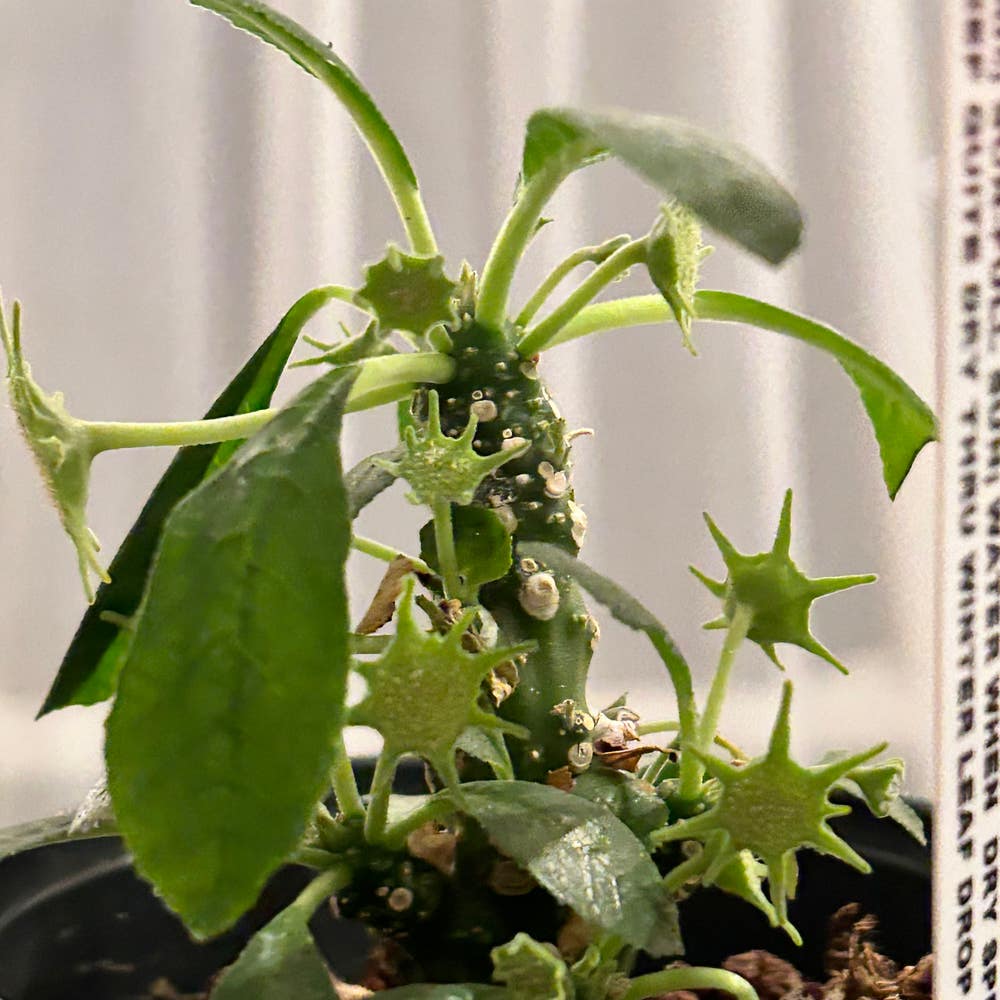
3 Tips for Healing Dropping Leaves on Your Dorstenia 🩹
Dorstenia psilurus
By the Greg Editorial Team
Nov 07, 2024•4 min read
This article was created with the help of AI so we can cover more plants for you. May contain errors. See one? Report it here.
- 🌱 Diagnose leaf drop causes like overwatering or pests for effective treatment.
- 💧 Maintain consistent watering and check soil moisture to prevent leaf drop.
- ☀️ Ensure bright, indirect sunlight for at least 6 hours daily for healthy growth.
Diagnosing the Problem
Identifying the specific cause of leaf drop is crucial for effective treatment. Understanding whether your Dorstenia is suffering from overwatering, underwatering, or pest infestations can guide you toward the right solutions.
🚰 Signs of Overwatering and Underwatering
Overwatering Symptoms
Overwatering can lead to several alarming signs. Look for yellowing leaves, a soft and mushy texture, and root rot, which presents as dark, mushy roots when inspected.
Underwatering Symptoms
On the flip side, underwatering manifests differently. You may notice wilting leaves, crispy dry edges, and leaf drop occurring from the bottom up.
🐛 Identifying Pest Infestations
Pests can wreak havoc on your Dorstenia's health. Common culprits include mealybugs, which appear as cotton-like masses on leaves, and spider mites, identifiable by fine webbing and stippled leaves.
Signs of infestation are often visible and include discoloration, leaf drop, and the presence of pests themselves. Regular inspections can help catch these issues early, allowing for timely intervention.
By diagnosing these problems accurately, you set the stage for effective solutions to restore your plant's vitality. Next, we’ll explore actionable solutions for leaf drop.
Solutions for Leaf Drop
Addressing the identified issues is essential for restoring leaf health. Here are some practical solutions to help your Dorstenia thrive.
🌊 Adjusting Watering Practices
- Establish a consistent watering schedule based on soil moisture. This helps prevent both overwatering and underwatering.
- Check soil moisture levels before watering using the finger test. Insert your finger 1-2 inches deep; if it feels dry, it’s time to water.
- Use well-draining soil to prevent waterlogging. This is crucial for maintaining healthy roots and avoiding root rot.
☀️ Improving Light Conditions
- Ensure the Dorstenia receives bright, indirect sunlight for at least 6 hours daily. This light is vital for photosynthesis and overall plant health.
- Rotate the plant periodically to promote even growth. This helps all sides of the plant receive adequate light.
- Consider using grow lights if natural light is insufficient. This can be particularly helpful during darker months.
💧 Managing Humidity Levels
- Increase humidity through regular misting of the leaves. This mimics the plant's natural environment and can help prevent leaf drop.
- Place a humidifier nearby to maintain consistent moisture in the air. This is especially beneficial in dry indoor conditions.
- Use a pebble tray filled with water under the pot. As the water evaporates, it increases humidity around the plant, creating a more favorable environment.
By implementing these solutions, you can significantly improve the health of your Dorstenia and reduce the chances of leaf drop. Next, let’s explore some preventative measures to keep your plant thriving in the long run.
Preventative Measures
Implementing best practices can help prevent future leaf drop in your Dorstenia. By staying proactive, you can ensure your plant thrives and maintains its lush appearance.
🌱 Best Practices for Dorstenia Care
Regularly check soil moisture and adjust your watering schedule accordingly. This simple habit can prevent both overwatering and underwatering, which are common culprits of leaf drop.
Maintain a consistent environment for your Dorstenia. Sudden temperature changes can stress the plant, leading to leaf issues.
Fertilize during the growing season with a balanced fertilizer to support healthy growth. This will provide essential nutrients that your plant needs to flourish.
🌦️ Seasonal Care Adjustments
Adjust your watering frequency based on the seasons. Increase watering during warmer months when the plant is actively growing, and reduce it in cooler months when growth slows.
Monitor light exposure as the seasons change. Ensure your Dorstenia receives adequate light year-round, adjusting its position if necessary to maximize sunlight.
By following these preventative measures, you can create a stable environment for your Dorstenia, reducing the likelihood of leaf drop and promoting overall health.
Next, let's explore how to monitor plant health effectively to catch any issues early on.
Monitoring Plant Health
Regular monitoring is key to maintaining the health of your Dorstenia. By keeping a close eye on your plant, you can catch potential issues early and ensure it thrives.
🕵️♂️ Regular Checks for Pests and Diseases
Inspect your Dorstenia leaves weekly for any signs of pests or disease. Look for discoloration, unusual spots, or visible pests like mealybugs and spider mites.
If you spot an infestation, act quickly. Organic pest control methods, such as neem oil, can effectively manage these issues without harming your plant.
🌱 Importance of Soil Health and Drainage
Proper drainage is essential for your Dorstenia's health. Always use pots with drainage holes to prevent water from accumulating at the bottom.
Additionally, refreshing the soil every 1-2 years is crucial. This practice helps maintain nutrient levels and prevents soil compaction, ensuring your plant has the best environment to grow.
By staying vigilant and proactive, you can keep your Dorstenia healthy and vibrant. Next, let’s explore some preventative measures to further safeguard your plant’s well-being.
⚠️ Safety First
This content is for general information and may contain errors, omissions, or outdated details. It is not medical, veterinary advice, or an endorsement of therapeutic claims.
Always consult a qualified healthcare professional before using any plant as food, medicine, or supplement.
Never eat any plant (or feed one to pets) without confirming its identity with at least two trusted sources.
If you suspect poisoning, call Poison Control (800) 222-1222, the Pet Poison Helpline (800) 213-6680, or your local emergency service immediately.
Spotted an error? Please report it here.
Keep your Dorstenia thriving 🌿 by diagnosing leaf drop issues and using Greg's tailored watering reminders to ensure it gets the perfect care it needs!