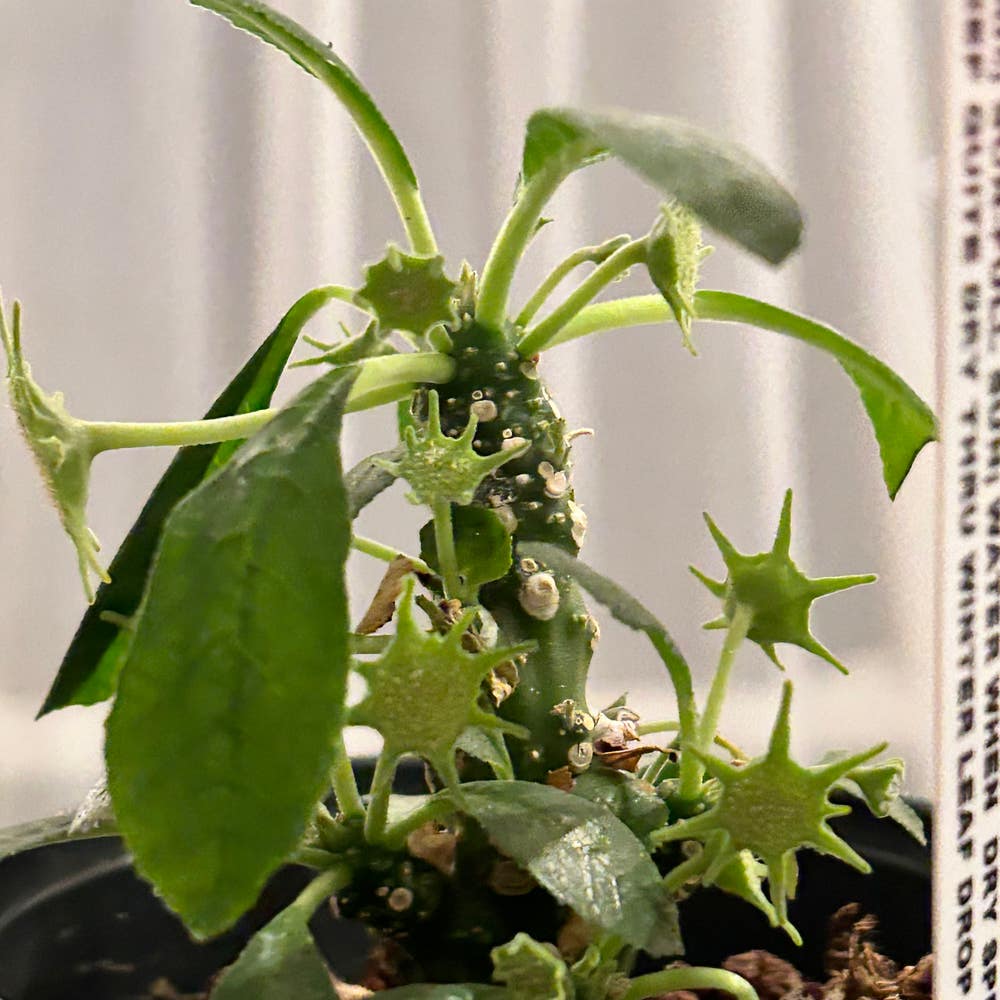
Best Tips for Dealing with Leaves Falling Over on Dorstenia 🍂
Dorstenia psilurus
By the Greg Editorial Team
Nov 07, 2024•5 min read
This article was created with the help of AI so we can cover more plants for you. May contain errors. See one? Report it here.
- 🌱 Dorstenia leaves fall due to stress, light, water, or pests.
- 💡 Bright, indirect light and humidity of 50-70% are essential for health.
- 📝 Regular care routines and monitoring prevent drooping and promote vitality.
Causes of Leaves Falling Over
Understanding why your Dorstenia's leaves are falling over is crucial for maintaining its health. Several factors can contribute to this issue, including environmental stress, watering practices, nutrient deficiencies, and pest or disease impacts.
🌍 Environmental Stress Factors
Light Conditions
Dorstenia thrives in bright, indirect light. Insufficient light can lead to drooping leaves and stunted growth, signaling that your plant needs a brighter spot.
Temperature Fluctuations
The optimal temperature range for Dorstenia is between 20°C to 30°C (68°F to 86°F). Extreme temperature changes can stress the plant, causing leaves to droop and lose vitality.
Humidity Levels
Dorstenia prefers humidity levels between 50% to 70%. Low humidity can result in leaf droop and desiccation, making it essential to maintain a suitable environment.
💧 Watering Issues
Overwatering Symptoms
Overwatering is a common issue, with signs including yellowing leaves, mushy stems, and root rot. Ensuring your soil is well-draining can help prevent water accumulation that leads to these problems.
Underwatering Symptoms
On the flip side, underwatering can cause wilting leaves and dry soil. Aim to water your Dorstenia every 1-2 weeks, adjusting based on environmental conditions.
🥦 Nutrient Deficiencies
Signs of Nutrient Deficiency
Common nutrient deficiencies in Dorstenia include nitrogen, potassium, and magnesium. Symptoms often manifest as yellowing leaves, stunted growth, and leaf drop, indicating a need for better nutrition.
Importance of Fertilization
Using balanced NPK fertilizers can help address these deficiencies. Fertilize every 4-6 weeks during the growing season to keep your plant healthy and thriving.
🐛 Pest and Disease Impacts
Common Pests Affecting Dorstenia
Pests like mealybugs, aphids, and spider mites can wreak havoc on your plant. Look for sticky residue, webbing, and leaf drop as signs of infestation.
Diseases That Cause Leaf Droop
Root rot and fungal infections are common diseases that can affect Dorstenia. Symptoms include wilting, discoloration, and mushy roots, which require immediate attention to save your plant.
By understanding these causes, you can take proactive steps to ensure your Dorstenia remains healthy and vibrant. Next, we’ll explore how to diagnose the specific problems affecting your plant.
Diagnosing the Problem
🧐 Identifying Symptoms of Drooping Leaves
When your Dorstenia starts drooping, it's crucial to pay attention. Look for visual signs like drooping, yellowing, and wilting leaves, as these can indicate underlying issues.
Early detection is key to effective treatment. The sooner you identify the problem, the better your chances of restoring your plant's health.
🌡️ Assessing Environmental Conditions
Next, evaluate the environmental conditions surrounding your plant. Check the light exposure, temperature, and humidity levels to ensure they meet your Dorstenia's needs.
Using tools like hygrometers and thermometers can help you measure humidity and temperature accurately. This data is essential for diagnosing potential stress factors affecting your plant.
🐛 Checking for Pests and Diseases
Inspecting your Dorstenia for pests is another critical step. Conduct visual checks for common pests like mealybugs and aphids, and consider using sticky traps to catch any hidden invaders.
Additionally, be on the lookout for signs of disease, such as discoloration, spots, or unusual growth patterns. Identifying these issues early can prevent more severe damage to your plant.
With a clear understanding of symptoms and environmental conditions, you're well on your way to addressing the challenges your Dorstenia faces. Next, let’s explore effective solutions and treatments to help your plant thrive.
Solutions and Treatments
🌞 Adjusting Light Exposure
To keep your Dorstenia thriving, place it near east or west-facing windows. This ensures it receives bright, indirect light, which is crucial for healthy growth.
Gradually adjust light levels if you need to move your plant. Sudden changes can shock the plant, leading to more drooping leaves.
💧 Watering Techniques
Establishing a consistent watering routine is key to your plant's health. Aim to water your Dorstenia every 1-2 weeks, allowing the top inch of soil to dry out between waterings.
This slight drying prevents overwatering, which can lead to root rot. Remember, it's better to underwater than overwater!
🌱 Nutrient Management
Choosing the right fertilizers can make a significant difference. Liquid and slow-release fertilizers are both excellent options for Dorstenia.
Balanced nutrients are essential for overall plant health. Fertilize every 4-6 weeks during the growing season to keep your plant nourished and vibrant.
🐞 Pest Control Methods
When it comes to pests, prevention is better than cure. Organic options like neem oil and insecticidal soap can effectively manage infestations without harsh chemicals.
If you find a severe infestation, chemical treatments may be necessary. Always follow application instructions carefully to ensure safety for both your plant and yourself.
By implementing these solutions, you can help your Dorstenia flourish and prevent future leaf drooping. Next, let’s explore preventative care to maintain your plant's health long-term.
Preventative Care
🌱 Best Practices for Maintaining Healthy Dorstenia
To keep your Dorstenia thriving, establish a regular care routine that includes consistent watering, fertilizing, and monitoring. This ensures that your plant receives the right nutrients and hydration it needs to flourish.
Proper potting and soil conditions are crucial as well. Use well-draining soil to prevent water accumulation, which can lead to root rot and other issues.
📅 Seasonal Care Tips
Adjust your care strategies based on seasonal changes. In warmer months, ensure your plant gets enough light and humidity, while in cooler months, you may need to reduce watering frequency.
If your Dorstenia goes dormant in winter, prepare it by minimizing water and keeping it in a stable environment. This helps the plant conserve energy and emerge healthy in spring.
🔍 Regular Monitoring and Adjustments
Regularly observing your plant's health is key to catching any issues early. Look for signs of stress, such as drooping leaves or discoloration, and adjust your care routine accordingly.
Consider keeping a care journal to track changes and adjustments. This practice not only helps you remember what works best for your plant but also enhances your overall gardening experience.
By implementing these preventative care strategies, you can ensure your Dorstenia remains vibrant and healthy, ready to tackle any challenges that come its way. Next, let’s dive into diagnosing potential problems with your plant.
⚠️ Safety First
This content is for general information and may contain errors, omissions, or outdated details. It is not medical, veterinary advice, or an endorsement of therapeutic claims.
Always consult a qualified healthcare professional before using any plant as food, medicine, or supplement.
Never eat any plant (or feed one to pets) without confirming its identity with at least two trusted sources.
If you suspect poisoning, call Poison Control (800) 222-1222, the Pet Poison Helpline (800) 213-6680, or your local emergency service immediately.
Spotted an error? Please report it here.
Keep your Dorstenia thriving 🌱 by using Greg's personalized care reminders to ensure optimal light, humidity, and a consistent watering routine for healthy, happy leaves!